
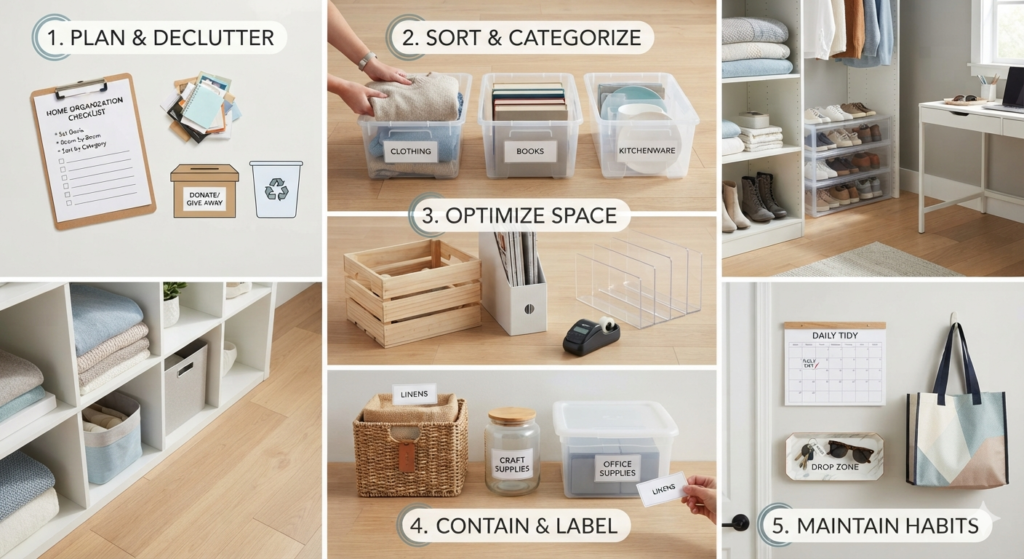
SEO Featured Snippet
Looking for the best steps to organize your home? Start by decluttering, sorting items into categories, creating functional storage zones, and maintaining simple daily habits. This step-by-step guide helps you organize every room efficiently, reduce stress, maximize space, and keep your home tidy for the long term.
Introduction
A cluttered home often leads to a cluttered mind. When every room feels overwhelming, it becomes difficult to focus, relax, or even enjoy your living space. The good news is that organizing your home doesn’t require expensive products or an entire weekend. By following practical steps to organize your home, you can transform even the messiest spaces into functional, peaceful environments.
Whether you’re tackling a single bedroom, organizing your kitchen, or planning a complete home makeover, this guide provides proven home organization strategies that work in real life. You’ll learn where to start, how to declutter without feeling overwhelmed, and how to build habits that keep your home organized for years.
Where to Start Organizing a Messy House When Overwhelmed
Starting is often the hardest part. Many people look at an entire house filled with clutter and immediately feel defeated. Instead of focusing on everything at once, concentrate on making one small improvement. Progress builds motivation, and motivation creates momentum.
The most effective steps to organize your home always begin with manageable tasks rather than trying to organize an entire house in one day.
Overcoming Decluttering Emotional Attachment
One of the biggest obstacles during home organization is emotional attachment to belongings. Many household items carry memories, making them difficult to part with—even if they no longer serve a purpose.
Instead of asking:
“Should I throw this away?”
Ask yourself:
- Does this item improve my daily life?
- Have I used it within the past year?
- Would someone else benefit from it more?
- Does it genuinely add value to my home?
Changing your mindset from losing possessions to gaining space, peace, and functionality makes decision-making much easier.
Why We Hold Onto Clutter
People often keep unnecessary items because of:
- Fear of needing them later
- Guilt about wasted money
- Family memories
- Sentimental value
- “Just in case” thinking
Understanding these psychological triggers helps you make smarter choices during the decluttering process.
Focus on What You Gain
Rather than concentrating on what leaves your home, think about what you’ll gain:
- More usable living space
- Easier cleaning routines
- Less stress
- Improved mental clarity
- Better room functionality
Every item you remove creates room for a more organized lifestyle.
What Should I Declutter First in a House?
If you’re wondering where to begin, avoid sentimental belongings first. Start with items that require little emotional decision-making.
Good beginner areas include:
- Bathroom cabinets
- Junk drawers
- Pantry shelves
- Kitchen countertops
- Entryway storage
- Laundry room supplies
These areas provide quick wins that build confidence.
Organize by Categories
Instead of randomly moving objects around, create simple organization categories:
- Keep
- Donate
- Recycle
- Toss
This method speeds up decisions and prevents unnecessary second-guessing.
Create Sorting Zones
Designate four clearly marked containers before you begin.
For example:
| Category | Purpose |
|---|---|
| Keep | Frequently used or valuable items |
| Donate | Items in good condition others can use |
| Recycle | Paper, plastics, electronics where applicable |
| Toss | Broken, expired, or unusable items |
Having dedicated sorting zones keeps your workflow efficient and reduces clutter during the organizing process.
How Do I Start Decluttering When Overwhelmed?
One of the biggest mistakes is trying to organize an entire room in a single day. Large projects quickly become exhausting.
Instead, divide every room into smaller sections.
Examples include:
- One kitchen drawer
- One bathroom shelf
- One nightstand
- One closet section
- One bookshelf
Completing these small tasks creates visible progress and keeps motivation high.
Use the 15-Minute Rule
Set a timer for just fifteen minutes.
During that time:
- Stay focused on one area.
- Ignore other clutter.
- Finish before moving elsewhere.
You’ll often find yourself continuing after the timer ends because getting started is usually the hardest part.
Reduce Decision Fatigue
Every decision drains mental energy.
Simplify the process by asking only three questions:
- Do I use it?
- Do I need it?
- Do I love it?
If the answer is “no” to all three, it’s probably time to let it go.
Dispose of Items Responsibly
Avoid sending everything to landfill.
Whenever possible:
- Donate usable clothing
- Recycle electronics
- Recycle cardboard and paper
- Sell valuable furniture
- Give household items to local charities
Responsible disposal supports sustainable living while reducing household waste.
What Are the Five Steps to Organizing a Room?
Every organized room follows the same simple system. Whether you’re organizing a bedroom, office, kitchen, or garage, these five proven steps to organize your home make the process easier and more sustainable.
Step 1 & 2: Empty the Space and Categorize
Begin by removing everything from the target area.
Although this initially makes the room look messier, it allows you to clearly see how much you actually own.
You’ll likely discover:
- Duplicate items
- Forgotten purchases
- Broken belongings
- Unused storage containers
- Expired products
Seeing everything together helps you make better decisions.
Sort by Category, Not Location
A principle popularized by Marie Kondo is sorting by category instead of room.
For example:
Instead of organizing one closet at a time, gather all clothing into one place.
Likewise, collect:
- Books
- Electronics
- Office supplies
- Cleaning products
- Toys
This approach reveals unnecessary duplicates and simplifies decluttering.
Evaluate Every Item
Ask yourself:
- Have I used this recently?
- Does it serve a purpose?
- Would I buy it again today?
- Does it deserve valuable storage space?
Only keep items that support your current lifestyle.

Step 3 & 4: Purge and Optimize the Layout
Once categories are complete, it’s time to reduce excess belongings and redesign your room for maximum functionality.
Apply the 20/20 Decluttering Rule
If an item can be replaced for:
- Under $20
- Within 20 minutes
…it probably doesn’t deserve permanent storage if you rarely use it.
This rule makes letting go much easier for inexpensive household items.
Optimize Room Layout
A well-organized room should encourage easy movement.
Consider these layout improvements:
- Keep walkways clear.
- Store daily essentials within easy reach.
- Place frequently used items at eye level.
- Reserve higher shelves for seasonal storage.
- Minimize visual clutter on countertops.
Open space creates the feeling of a larger, cleaner home.
Step 5: Assign Homes and Label
Once you’ve decluttered and optimized the room layout, the final step is ensuring every item has a permanent place. Without designated storage zones, clutter will slowly return no matter how well you organize.
One of the most effective steps to organize your home is creating logical storage systems based on how often you use each item.
Create Smart Home Storage Zones
Store belongings where they naturally belong instead of where there happens to be empty space.
For example:
- Keep cooking utensils near the stove.
- Store cleaning supplies close to the area where they’re used.
- Place office supplies near your workspace.
- Keep everyday shoes by the entryway.
- Store seasonal decorations in labeled attic or garage bins.
The easier it is to return an item, the more likely you’ll maintain an organized home.
Label Everything Clearly
Labels eliminate guesswork for everyone in the household.
You can label:
- Storage bins
- Pantry containers
- Closet baskets
- File folders
- Toy boxes
- Garage shelves
Simple labels make finding and returning items effortless, especially in busy family homes.
Keep Frequently Used Items Accessible
Arrange storage according to frequency of use:
- Daily Use: Eye-level shelves and easy-access drawers.
- Weekly Use: Middle cabinets and closets.
- Seasonal Items: Upper shelves, attic, or under-bed storage.
- Rarely Used Items: Garage or long-term storage containers.
This system saves time while preventing unnecessary mess.
How to Clear Clutter Without Throwing Everything Away
Many people hesitate to declutter because they assume organizing means getting rid of everything. Fortunately, that’s not true.
The goal isn’t to own less for the sake of minimalism—it’s to keep what genuinely adds value to your life.
How to Let Go of Sentimental Clutter Easily
Sentimental items are often the hardest to organize because they represent memories rather than practical belongings.
Instead of keeping every object, preserve the memory in smarter ways.
Take Digital Photos
Photograph items that hold emotional value before donating or recycling them.
Examples include:
- Children’s artwork
- School projects
- Old greeting cards
- Vacation souvenirs
- Handmade gifts
Digital memories require no physical storage while preserving their emotional significance.
Keep What Truly Matters
Ask yourself:
- Does this item still bring happiness?
- Is it connected to an important life event?
- Would I miss it if it disappeared tomorrow?
If not, consider letting it go.
Create One Memory Box
Rather than filling multiple closets with sentimental belongings, dedicate one memory box for each family member.
Once it’s full, choose meaningful keepsakes before adding anything new.
This healthy limit encourages intentional decision-making while preserving cherished memories.
Managing a Household Inventory Safely
After decluttering, maintaining an inventory prevents clutter from returning.
Knowing what you already own also reduces unnecessary purchases.
Create a Household Inventory
Maintain a simple list of valuable belongings such as:
- Electronics
- Important documents
- Kitchen appliances
- Seasonal decorations
- Power tools
- Emergency supplies
You can use a notebook, spreadsheet, or mobile app to track these items.
Set Storage Capacity Limits
Every storage space should have a maximum capacity.
For example:
- Closet full? Donate one item before adding another.
- Pantry overflowing? Finish existing food before buying more.
- Toy bin full? Rotate or donate unused toys.
- Bathroom cabinet packed? Discard expired products first.
These limits prevent clutter from gradually taking over your home again.
Best Way to Organize a Small Kitchen Closet and Tight Spaces
Small homes can feel surprisingly spacious when every inch is used wisely.
Instead of adding more furniture, maximize existing storage with creative organization techniques.
Smart Storage Solutions for Small Spaces
Vertical space is often the most underused area in a home.
Think upward instead of outward.
Maximize Vertical Storage
Use:
- Stackable storage bins
- Wall-mounted shelves
- Over-the-door organizers
- Hanging baskets
- Magnetic knife strips
- Pegboards for kitchen tools
These solutions free valuable countertop and cabinet space.
Organize Hidden Pantry Corners
Deep cabinets often waste space because items disappear behind one another.
Instead, use:
- Lazy Susans
- Pull-out baskets
- Clear acrylic containers
- Tiered shelf organizers
- Expandable cabinet shelves
These tools improve visibility and reduce forgotten food items.
Choose Clear Storage Containers
Transparent containers allow you to see exactly what’s inside.
Benefits include:
- Faster meal preparation
- Reduced food waste
- Easier grocery planning
- Cleaner pantry appearance
Label each container for even better organization.
How to Organize a Bedroom With No Closet Space
Limited closet space doesn’t mean you have to live with clutter.
The right storage solutions can dramatically increase your available room.
Use Under-Bed Storage
The area beneath your bed is ideal for storing:
- Seasonal clothing
- Extra bedding
- Shoes
- Holiday decorations
- Travel bags
Rolling storage containers make these items easy to access.
Build a Capsule Wardrobe
A capsule wardrobe focuses on versatile clothing pieces that mix and match easily.
Benefits include:
- Less laundry
- Faster morning routines
- Smaller storage needs
- Reduced clothing expenses
- Easier outfit planning
Keeping only clothes you regularly wear simplifies both organization and daily life.
Add Multi-Functional Furniture
Furniture with hidden storage offers double the value.
Examples include:
- Storage benches
- Lift-up beds
- Nightstands with drawers
- Ottomans with compartments
- Dressers that double as TV stands
These pieces help maximize space without overcrowding the room.
Step-by-Step Guide to Deep Cleaning Your Home on a Budget
Organizing and cleaning work best together. Once clutter is removed, deep cleaning becomes much faster and more effective.
The best part? You don’t need expensive products to achieve professional-looking results.
How to Organize Your Home on a Budget
Organization doesn’t have to cost hundreds of dollars.
Many effective storage solutions are already in your home.
Repurpose Everyday Items
Reuse household materials such as:
- Shoe boxes for drawer dividers
- Mason jars for office supplies
- Glass containers for pantry storage
- Amazon delivery boxes for closet organizers
- Empty baskets for bathroom essentials
Repurposing saves money while reducing waste.
Shop Smart for Storage
Affordable organization supplies can often be found at:
- Dollar stores
- Discount retailers
- Thrift shops
- Clearance sales
- Community marketplaces
Choose matching bins whenever possible to create a clean, uniform appearance without overspending.
Easy Ways to Organize a Family Living Room
The living room is one of the busiest spaces in any home, making it prone to daily clutter.
A few thoughtful systems can keep it tidy with minimal effort.
Invest in Dual-Purpose Furniture
Choose furniture that offers hidden storage, such as:
- Storage ottomans
- Coffee tables with shelves
- TV stands with cabinets
- Benches with lift-up lids
These pieces reduce visible clutter while keeping everyday essentials close at hand.
Create Kid-Friendly Storage
Make cleanup easier by giving children accessible storage options.
Use:
- Low toy bins
- Open baskets
- Color-coded containers
- Labeled shelves
When kids can easily reach their storage, they’re more likely to help keep the living room organized.

Interactive Home Organization Blueprint & Toolkit
A successful home organization plan starts with a clear roadmap. Instead of cleaning randomly, prioritize rooms based on how frequently they are used and how much clutter they accumulate. This blueprint helps you focus your time and energy where it matters most.
The Complete Home Organizing Checklist
Use the table below as your room-by-room action plan while following these steps to organize your home.
| Room Type | Priority Level | Key Focus Area | Recommended Storage Tool |
|---|---|---|---|
| Kitchen | High | Countertops & Pantry | Lazy Susans, Clear Bins |
| Bedroom | Medium | Closets & Under-bed Storage | Slim Hangers, Rolling Storage Boxes |
| Living Room | Medium | Media Centers & Toys | Storage Ottomans, Decorative Baskets |
| Bathroom | High | Medicine Cabinet & Vanity | Tiered Turntables, Drawer Dividers |
Quick Home Organization Checklist
Declutter one room at a time.
Sort items into Keep, Donate, Recycle, and Toss categories.
Assign every item a permanent storage location.
Label storage bins and shelves.
Maximize vertical storage space.
Donate usable items regularly.
Deep clean after organizing.
Maintain a simple daily reset routine.
Completing this checklist provides a solid foundation for a cleaner, more functional home.
Access Your Free Decluttering Checklist Printable
To stay consistent with your progress, create or download a printable decluttering checklist. A daily checklist keeps you accountable and helps break large organizing projects into smaller, achievable goals.
Suggested sections for your printable checklist include:
- Daily Decluttering Tasks
- Weekly Cleaning Schedule
- Monthly Deep Cleaning Tasks
- Donation Tracker
- Household Inventory Log
- Seasonal Organization Planner
CTA: Download your Free Decluttering Checklist Printable and track your progress toward a clutter-free home.
How to Maintain an Organized Home Every Day
Organizing your home is only half the journey. The real challenge is maintaining it. Developing simple daily habits prevents clutter from returning and makes cleaning far less stressful.
Establishing Daily Maintenance Habits
Small actions repeated consistently have a greater impact than occasional marathon cleaning sessions.
Follow the 10-Minute Nightly Reset
Spend just ten minutes each evening putting misplaced items back in their designated spots.
Focus on:
- Clearing kitchen countertops
- Folding blankets
- Returning shoes to storage
- Washing dishes
- Organizing mail and paperwork
A quick nightly reset helps you wake up to a tidy home every morning.
Use the “One In, One Out” Rule
Whenever you purchase something new, remove one similar item from your home.
Examples include:
- Buy a new shirt? Donate an old one.
- Purchase a new kitchen gadget? Remove one you no longer use.
- Add a decorative item? Relocate or donate another.
This habit keeps storage areas balanced and prevents unnecessary accumulation.
Schedule Weekly Mini Decluttering Sessions
Instead of waiting until clutter becomes overwhelming, dedicate 20–30 minutes each week to organizing one small area.
Good weekly tasks include:
- Cleaning one kitchen cabinet
- Organizing a bathroom drawer
- Sorting paperwork
- Decluttering a closet shelf
- Tidying the entryway
Regular maintenance saves hours of work later.
Involve the Whole Family
Home organization is easier when everyone contributes.
Assign age-appropriate responsibilities, such as:
- Children putting toys into labeled bins
- Teenagers organizing their bedrooms
- Adults maintaining shared spaces
Shared responsibility creates lasting habits and keeps the home organized with less effort.
Conclusion: Embrace Your New Clutter-Free Lifestyle
Following these steps to organize your home isn’t about achieving perfection—it’s about creating a space that supports your daily life. By starting with small tasks, decluttering thoughtfully, assigning every item a designated place, and building consistent habits, you can transform any home into a calm, organized environment.
Remember that home organization is an ongoing process, not a one-time project. Celebrate small victories, stay consistent, and adjust your systems as your family’s needs change. Over time, these simple practices will save you time, reduce stress, and help you enjoy a cleaner, more functional living space every day.
Frequently Asked Questions (FAQs)
The timeline depends on your home’s size and the amount of clutter. Most people can organize an average home over several weeks by working 15–30 minutes each day instead of trying to finish everything in one weekend.
Organize first by removing unnecessary items, then deep clean the space. Cleaning becomes much easier once surfaces and storage areas are free of clutter.
One common mistake is buying storage containers before decluttering. Always reduce excess belongings first, then purchase storage solutions based on what you actually need.
A quick decluttering session every week and a more thorough review every three to six months help keep your home organized without becoming overwhelming.

“Hi, I am Umer Hasib. I am a passionate blogger and content creator who loves exploring human psychology, social behaviors, and personal growth. Welcome to my inner space!”
“This guide is a lifesaver! I’ve been feeling completely paralyzed by the mess in my spare room for weeks and didn’t know where to begin. The 20/20 rule you mentioned is an absolute game-changer for someone like me who struggles with decision fatigue. I just tried it on one drawer and already feel lighter. Thanks for breaking this down into bite-sized, actionable steps!”
Thank you so much for sharing your breakthrough! I completely understand that feeling of paralysis—clutter has a sneaky way of weighing heavily on our minds before we even touch it. Decision fatigue is incredibly real, which is why the 20/20 rule works so beautifully to clear that mental roadblock.Taking action on just one drawer is a massive win, so give yourself credit for breaking the cycle! Keep that exact same momentum going by tackling just one small surface at a time. You’ve got this! Please keep me updated on how the rest of the room comes together!”
“Super thorough outline! I love the budget-friendly tips, especially reusing household boxes as dividers. Quick question regarding the ‘one in, one out’ rule: how do you realistically manage this when you have young kids who constantly bring home school projects and toys? I’d love to hear your strategies or if you plan to write a follow-up post on maintaining this with a family!”
Thank you so much! I’m thrilled you found the budget-friendly hacks useful—shoe boxes and jars truly are hidden organizational gems!You have asked an incredibly relatable question. Managing the ‘one in, one out’ rule with young kids is definitely a next-level challenge. Realistically, it requires a slightly modified approach for children. For toys, a great strategy is doing a ‘one in, one out’ swap specifically around birthdays or holidays when new toys arrive, making them part of the donation process. For school projects, I highly recommend creating a dedicated ‘Memory Box’ for each child; they can keep whatever fits inside, but once it is full, they have to choose which older project to let go of to make room for the new one.You’ve