
SEO Featured Snippet
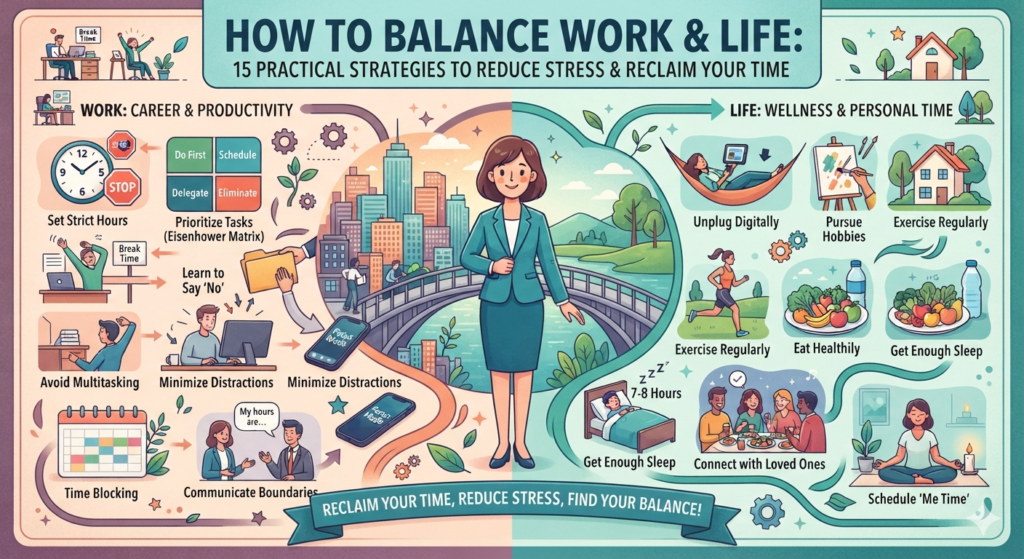
How to Balance Work and life starts with setting healthy boundaries, managing your time intentionally, and protecting your mental well-being. By recognizing the signs of burnout, creating daily routines, and disconnecting after work, you can improve productivity while enjoying a healthier, more fulfilling personal life.
Introduction
Modern work culture makes it easier than ever to stay connected. Emails arrive late at night, messages demand immediate replies, and the line between work and personal life often disappears. While staying productive is important, constantly being “on” can slowly drain your energy, motivation, and happiness.
Learning how to balance work and life isn’t about working fewer hours alone—it’s about working smarter, protecting your mental health, and making time for the people and activities that truly matter. A healthy work-life balance allows you to perform better professionally without sacrificing your physical or emotional well-being.
Whether you work in an office, remotely, or run your own business, this guide will help you identify unhealthy habits, establish stronger boundaries, and build a sustainable lifestyle that supports long-term success.
The Hidden Toll: What Happens if You Work Too Much?
Many professionals believe working longer hours leads to greater success. In reality, excessive workloads often produce the opposite effect. Chronic overworking increases stress hormones, weakens concentration, reduces creativity, and raises the risk of burnout.
When your body remains under continuous pressure, recovery becomes difficult. Sleep quality declines, emotional resilience weakens, and even simple daily tasks begin to feel overwhelming. Understanding how to balance work and life starts with recognizing these hidden consequences before they become serious health problems.
Long-term occupational stress may contribute to:
- Chronic fatigue
- Anxiety and depression
- Poor sleep quality
- Reduced productivity
- Lower job satisfaction
- Relationship conflicts
- Increased risk of cardiovascular disease
- Frequent headaches and muscle tension
Ignoring these warning signs often creates a cycle where working harder produces fewer results.

Identifying the Warning Signs of Emotional Exhaustion
Emotional exhaustion rarely happens overnight. Instead, it develops gradually through prolonged stress, unrealistic expectations, and insufficient recovery.
One of the biggest occupational stress risk factors is believing that constant availability equals commitment. When every notification demands attention, your brain never fully enters recovery mode.
Why Am I So Tired After Office Hours?
If you constantly ask yourself this question, the answer is often deeper than physical tiredness.
Mental fatigue builds throughout the day because your brain continuously switches between meetings, emails, deadlines, and unexpected interruptions. This process, known as cognitive overload, consumes significant mental energy.
Common symptoms include:
- Feeling mentally drained despite sitting most of the day
- Difficulty concentrating after work
- Forgetting simple tasks
- Losing motivation for hobbies
- Feeling emotionally numb
- Constantly thinking about unfinished work
- Irritability with family members
- Needing excessive caffeine to stay alert
Your body may be leaving the office, but your mind is still working overtime.
Another overlooked issue is decision fatigue. Every email, meeting, and small workplace decision gradually reduces your ability to think clearly. By evening, even choosing what to cook for dinner can feel exhausting.
Over time, emotional exhaustion affects:
- Confidence
- Memory
- Creativity
- Problem-solving skills
- Relationships
- Physical health
Recognizing these early signs allows you to intervene before they develop into workplace burnout.
Occupational Stress Risk Factors You Should Never Ignore
Certain workplace conditions significantly increase your risk of chronic stress.
These include:
- Unrealistic deadlines
- Lack of control over your schedule
- Poor communication from leadership
- Constant multitasking
- Fear of making mistakes
- Excessive overtime
- Lack of recognition
- Always being available through digital devices
The more of these factors you experience, the greater the importance of creating intentional recovery habits and learning effective work-life management techniques.
Crucial Signs You Have Poor Work Life Balance
Many people don’t realize they have poor work-life balance until their health or relationships begin to suffer.
A simple self-assessment can reveal whether work has started controlling your life instead of supporting it.
Red Flags That Shouldn’t Be Ignored
You may have an unhealthy balance if you regularly:
- Check work emails before getting out of bed.
- Respond to messages during family dinners.
- Skip meals because of deadlines.
- Cancel personal plans due to work.
- Feel guilty whenever you relax.
- Take your laptop on every vacation.
- Continue thinking about work before sleeping.
- Wake up already feeling anxious about the day.
- Work through lunch breaks.
- Believe your worth depends entirely on productivity.
These habits slowly replace healthy routines with constant pressure.
How Poor Work-Life Balance Affects Mental Health
Ignoring these warning signs can seriously disrupt your mental health self-care routine.
Without adequate recovery, stress hormones remain elevated, increasing your risk of:
- Anxiety disorders
- Emotional burnout
- Reduced emotional resilience
- Mood swings
- Sleep disturbances
- Reduced immune function
- Low motivation
- Chronic dissatisfaction
Healthy work-life balance isn’t about dividing every hour equally between work and home. Instead, it’s about creating a lifestyle where your career supports your personal well-being rather than competing against it.
The good news is that recognizing these patterns is the first step toward lasting change. Once you’re aware of what’s draining your energy, you can begin building healthier habits that restore focus, improve resilience, and make work feel sustainable again.
Setting Boundaries: How Do I Separate Work From Personal Life?
One of the biggest challenges professionals face today is mentally leaving work behind. Whether you’re in an office or working remotely, smartphones and collaboration apps make it tempting to stay connected long after your official workday ends.
If you’re serious about learning How to Balance Work and life, creating clear boundaries is essential. Healthy boundaries protect your time, reduce stress, and improve both professional performance and personal happiness.
Instead of thinking of boundaries as restrictions, consider them productivity tools. When your brain knows exactly when work starts and ends, it can focus more effectively during working hours and recover properly afterward.
Psychological Detachment From Work at the End of the Day
Many people physically leave work but continue carrying it mentally.
This is called psychological detachment, and research consistently shows it plays a major role in reducing stress, preventing burnout, and improving sleep quality.
How to Stop Thinking About Work at Home
If your mind keeps replaying meetings or worrying about tomorrow’s deadlines, try these practical techniques:
1. Create an End-of-Day Shutdown Ritual
Spend the last 10 minutes of your workday:
- Review completed tasks.
- Write tomorrow’s priorities.
- Close unnecessary browser tabs.
- Organize your workspace.
- Say to yourself, “Today’s work is complete.”
This simple routine signals to your brain that work has officially ended.
2. Practice a Digital Detox
Constant notifications prevent your brain from relaxing.
Try these digital detox protocols:
- Turn off work notifications after business hours.
- Remove work apps from your home screen.
- Keep your laptop in another room after work.
- Avoid checking email before bedtime.
- Use “Do Not Disturb” mode every evening.
Even one uninterrupted evening can noticeably improve your mood.
3. Replace Work Thoughts With Recovery Activities
Rather than scrolling through work messages, intentionally shift your attention by:
- Taking a walk outdoors
- Reading a book
- Exercising
- Cooking dinner
- Playing with your children
- Journaling
- Practicing meditation
- Listening to calming music
Recovery isn’t wasted time—it’s an investment in tomorrow’s productivity.
4. Build a Transition Routine
If you work from home, create a ritual that separates work from personal life.
Examples include:
- Changing into comfortable clothes
- Going for a 15-minute walk
- Stretching
- Making tea
- Listening to a favorite podcast
Small habits create powerful psychological separation.

How to Say No to Overtime Work Without Ruining Your Career
Many employees fear that refusing extra work will make them appear lazy or uncommitted.
In reality, respectful boundary-setting often increases professional credibility because it demonstrates organization, self-awareness, and realistic workload management.
Learning to say “no” doesn’t mean rejecting responsibility—it means protecting your ability to deliver high-quality work consistently.
Polite Scripts You Can Use
Instead of saying:
“I can’t.”
Try saying:
“I’d be happy to help. To give this project my full attention, which current priority should I pause?”
Or:
“My schedule is currently full. I can begin this tomorrow morning if that timeline works.”
Another professional response:
“I’d like to contribute, but taking this on today could affect the quality of my existing deadlines.”
These responses communicate cooperation without overcommitting.
Set Healthy Professional Boundaries
Strong professionals understand their limits.
Healthy professional boundaries include:
- Defining clear working hours.
- Taking your lunch break every day.
- Avoiding unnecessary overtime.
- Not responding to non-urgent emails late at night.
- Using vacation time without guilt.
- Protecting personal commitments.
Boundaries help prevent resentment while supporting long-term career growth.
Remote Work Mastery: Best Daily Routine for Remote Employees
Working remotely offers flexibility, but it also removes the natural separation between work and home.
Without intentional routines, many remote workers unknowingly extend their workdays by several hours.
Mastering remote work is one of the most practical ways to improve How to Balance Work and life while maintaining high performance.
Remote Work Time Management for Maximum Focus
Working longer doesn’t always mean accomplishing more.
Instead, focus on improving daily personal productivity through smarter scheduling.
Start Your Day With Intention
Before opening email:
- Review your priorities.
- Identify your three most important tasks.
- Schedule focused work blocks.
- Silence unnecessary notifications.
This prevents reactive work from dominating your day.
Use Time Blocking
Divide your calendar into dedicated sections.
For example:
- 8:30–10:00 Deep work
- 10:00–10:15 Break
- 10:15–11:30 Meetings
- 11:30–1:00 Project work
- 1:00 Lunch
- Afternoon Collaboration
Time blocking reduces decision fatigue and increases concentration.
Work in Focus Cycles
Many professionals benefit from:
- 50 minutes of focused work
- 10 minutes of recovery
or
- 25-minute Pomodoro sessions
- 5-minute breaks
Regular breaks improve creativity and reduce mental fatigue.
Separate Your Workspace
Even if you have limited space:
- Use one desk only for work.
- Avoid working from bed.
- Keep work equipment out of relaxation areas whenever possible.
Your brain associates environments with behaviors.
Flexible Work Schedule Options vs. Rigid 9-to-5
The traditional 9-to-5 schedule works well for some people but not everyone.
Today’s organizations increasingly value productivity and results over hours spent at a desk.
Flexible Work Models
Common options include:
- Hybrid work
- Compressed workweeks
- Flexible start and finish times
- Remote-first employment
- Four-day workweeks
These arrangements often improve employee satisfaction while maintaining productivity.
Is a 4-Day Work Week Better for Mental Health?
Many companies experimenting with four-day workweeks report encouraging outcomes.
Potential benefits include:
- Lower stress levels
- Improved sleep
- Better family relationships
- Increased employee engagement
- Higher job satisfaction
- Reduced burnout
- Greater work efficiency
However, success depends on maintaining realistic workloads rather than compressing excessive tasks into fewer days.
Choose a Schedule That Supports Your Lifestyle
There is no universal solution.
Parents, caregivers, students, entrepreneurs, and shift workers all have different needs.
The best schedule is one that allows you to:
- Meet professional expectations.
- Maintain physical health.
- Protect relationships.
- Pursue hobbies.
- Get adequate sleep.
- Enjoy consistent personal time.
Ultimately, balance comes from designing a routine that supports your priorities instead of constantly competing with them.

Strategic Recovery: Workplace Burnout Prevention Strategies
Preventing burnout isn’t something you do after reaching exhaustion—it requires small, consistent habits that protect your mental and physical energy every day.
If you’re learning How to Balance Work and life, recovery should become part of your routine rather than an occasional reward. Sustainable success comes from balancing effort with intentional rest.
Chronic Stress Management Techniques for Daily Relief
Stress is unavoidable, but chronic stress doesn’t have to become your normal.
Simple micro-habits practiced throughout the day can lower cortisol levels, improve focus, and reduce emotional fatigue.
Quick Exercises to Decompress After a Stressful Workday
When work feels overwhelming, try one or more of these strategies:
- Take a 10-minute walk without your phone.
- Practice deep breathing for five minutes.
- Stretch your neck, shoulders, and back.
- Listen to calming music during your commute.
- Write down three things you accomplished today.
- Drink water before reaching for another cup of coffee.
- Spend a few minutes outdoors in natural light.
These small actions help your body shift from “work mode” into recovery mode and make it easier to recharge for the next day.
Simple Habits to Reclaim Your Weekend
Weekends are not simply two extra workdays—they are essential for recovery, creativity, and maintaining healthy relationships. Unfortunately, many professionals spend Saturdays and Sundays catching up on emails or worrying about Monday’s workload.
To truly How to Balance Work and life, treat your weekends as protected time rather than overflow work hours.
How to Stop Letting Work Take Over Your Weekend
Use these practical habits to reclaim your personal time:
- Create a “Friday Finish” checklist before leaving work.
- Turn off work email and messaging notifications.
- Avoid opening your laptop unless it’s an emergency.
- Schedule activities you genuinely enjoy.
- Spend uninterrupted time with family and friends.
- Exercise, read, or explore a hobby.
- Prepare for Monday on Sunday evening for only 15–20 minutes—no more.
Healthy work-life integration doesn’t mean mixing work into every part of your life. It means allowing each area of your life to receive the attention it deserves.
Crucial Workplace Dialogues: How to Talk to Your Boss About Burnout
Many employees stay silent about burnout because they fear appearing weak or uncommitted. In reality, respectful communication often leads to better solutions for both employees and employers.
If your workload has become unsustainable, plan a calm and professional conversation instead of waiting until exhaustion affects your performance.
Presenting Solutions, Not Just Problems
Managers appreciate employees who identify challenges and propose realistic solutions.
Before scheduling a meeting:
- List your current responsibilities.
- Identify which tasks consume the most time.
- Gather examples of workload conflicts.
- Think about practical alternatives.
How to Approach the Conversation
Instead of saying:
“I’m overwhelmed.”
Try:
“I’d like to discuss my current workload. I’ve noticed that maintaining my current schedule is affecting the quality of my work. I have a few ideas that could help improve efficiency while keeping projects on track.”
This shifts the discussion toward collaboration instead of complaint.
Possible Solutions to Suggest
- Reprioritize projects based on urgency.
- Redistribute lower-priority tasks.
- Extend unrealistic deadlines.
- Automate repetitive work.
- Reduce unnecessary meetings.
- Request occasional work-from-home days if appropriate.
- Participate in available corporate wellness programs or employee assistance initiatives.
Advocating for your well-being is a sign of professionalism, not weakness.

Balancing Ambition: Can You Have a Successful Career and a Social Life?
One of the biggest myths promoted by hustle culture is that success requires sacrificing friendships, family, and personal happiness.
The truth is that long-term career growth depends on sustainability, not constant overwork.
Highly successful professionals often succeed because they:
- Prioritize high-impact work.
- Delegate when possible.
- Protect time for rest.
- Invest in relationships.
- Continue learning without overloading themselves.
Tips for Working Moms Balancing Career and Family
Working parents—especially mothers—often face additional responsibilities at home. A balanced approach can reduce stress without lowering professional ambitions.
Helpful strategies include:
- Share household responsibilities whenever possible.
- Use a shared family calendar.
- Prepare meals in advance.
- Set realistic expectations instead of aiming for perfection.
- Schedule uninterrupted family time.
- Accept help from trusted friends or relatives.
- Prioritize self-care without guilt.
Remember, children benefit from a healthy, emotionally present parent more than a constantly exhausted one.
A fulfilling career and a meaningful personal life are not mutually exclusive. With clear priorities and consistent boundaries, you can thrive in both.
Featured Snippet Optimization: Work-Life Balance Assessment Tool
Use this quick self-assessment to identify common signs of overwork and take immediate corrective action.
| Overwork Symptom | Underlying Risk Factor | Immediate Corrective Action |
|---|---|---|
| Can’t stop thinking about tasks | Lack of psychological detachment | Implement a 10-minute end-of-day review |
| Zero energy after 6:00 PM | Chronic stress accumulation | Schedule a hard digital detox after work |
| Inability to say no to projects | Poor professional boundaries | Use polite scripts to decline additional work |
| Frequently checking emails at night | Constant digital connection | Disable work notifications after office hours |
| Working every weekend | Lack of recovery time | Protect weekends for rest and personal activities |
| Difficulty sleeping | Mental overload | Create a relaxing bedtime routine without screens |
| Feeling irritable with loved ones | Emotional exhaustion | Schedule daily recovery activities and exercise |
Quick Self-Assessment Checklist
Give yourself 1 point for every statement that applies to you:
- ☐ I check work emails after business hours.
- ☐ I often skip breaks because of work.
- ☐ I struggle to relax on weekends.
- ☐ I think about work before sleeping.
- ☐ My relationships have suffered because of work.
- ☐ I regularly feel exhausted after work.
- ☐ I find it difficult to refuse extra work.
Results
- 0–2 points: Your work-life balance is generally healthy.
- 3–5 points: Some habits need improvement before stress increases.
- 6–7 points: You’re at a higher risk of burnout and should begin setting stronger boundaries immediately.
Conclusion: Taking Your First Step Toward True Work-Life Integration
Learning How to Balance Work and life is not about achieving a perfect 50–50 split between your career and personal life. Instead, it’s about making intentional choices that protect your health, relationships, and long-term goals.
Small, consistent actions—such as setting clear working hours, disconnecting after work, taking regular breaks, and communicating healthy boundaries—can dramatically improve your quality of life. Over time, these habits reduce stress, increase productivity, and help prevent burnout.
Remember, balance is a daily practice rather than a final destination. Some days work will require more attention, while other days your personal life will take priority. The key is to remain flexible without allowing one area to consistently consume the other.
Take Action Today
Don’t wait for burnout to force a change.
Choose one boundary you will enforce starting tomorrow morning. It could be turning off work notifications after 6 PM, taking your full lunch break, or ending your workday on time.
One small change today can create a healthier, happier, and more productive future.
Frequently Asked Questions (FAQs)
Yes. Employees who maintain a healthy work-life balance often experience better focus, higher creativity, improved decision-making, and fewer burnout symptoms, leading to greater productivity over time.
There’s no universal number, but most people benefit from working productive, focused hours while ensuring enough time for sleep, exercise, family, and personal interests. Consistent recovery is just as important as work itself.
Absolutely. Freelancers and entrepreneurs often have more flexibility but may also struggle to disconnect from work. Setting fixed working hours and scheduling regular breaks can help maintain healthier boundaries.
The biggest mistake is believing they must be available all the time. Constant availability increases stress, reduces efficiency, and makes it harder to recover mentally and physically.

“Hi, I am Umer Hasib. I am a passionate blogger and content creator who loves exploring human psychology, social behaviors, and personal growth. Welcome to my inner space!”
“This section about ‘How to stop thinking about work at home’ hits so close to home. Since switching to a remote role, my living room feels like a 24/7 office, and the emotional exhaustion is real. That tip about a strict 10-minute end-of-day review to mentally shut down is exactly what I need to try tonight. Thanks for calling out the myth of hustle culture!”
“Thank you so much for sharing your experience! You hit the nail on the head—when your living room doubles as your office, the physical boundaries completely vanish, making emotional exhaustion hit twice as hard.That 10-minute end-of-day review is a total game-changer because it signals to your brain that ‘the factory is closed for the day.’ Please let us know how it goes tonight! Remember, pushing back against hustle culture isn’t about working less; it’s about protecting your peace so you can sustain your career long-term. You’ve got this!”
“As a working mom, balancing career goals with family life always feels like a losing battle, so I really appreciated that section. Setting professional boundaries is easier said than done when you’re worried about career growth, but the script on how to say no to overtime politely is super helpful. Saving this layout for the weekend planner template!”
Thank you so much for opening up and sharing this! Please know that you are definitely not alone in feeling this way—balancing career ambition with family is incredibly challenging, and that feeling of a ‘losing battle’ is something so many working moms face daily.You are completely right; setting boundaries is terrifying when you worry it might stall your career growth. However, true leaders respect people who protect their time, and using those polite scripts is the best way to show you are professional yet firm. We are so glad the weekend planner template looks useful to you! Take it one small boundary at a time—you are doing an amazing job.”