
SEO Featured Snippet
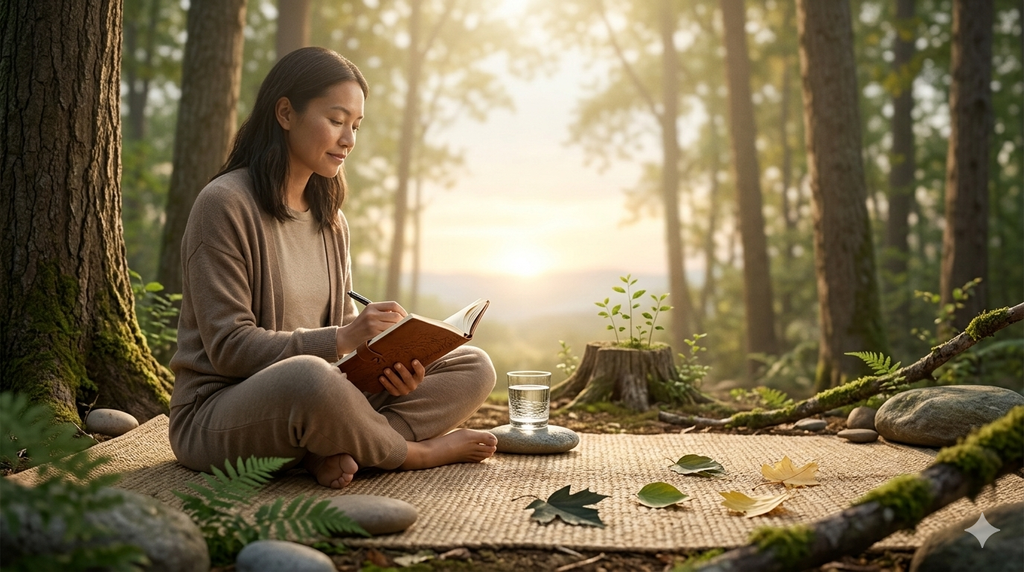
How Nature Inspires Creativity is closely linked to mental restoration, attention, sensory stimulation, and flexible thinking. Spending time around trees, water, gardens, or other natural environments can reduce mental fatigue, interrupt repetitive thought patterns, and create space for new associations, helping writers, artists, students, designers, and problem-solvers approach ideas from fresh perspectives.
Introduction
Creativity does not always disappear because you lack knowledge or talent. Sometimes, your mind simply needs a different environment. Hours of screens, notifications, deadlines, repetitive routines, and constant information can make original thinking feel surprisingly difficult.
This is where nature can become a powerful source of inspiration.
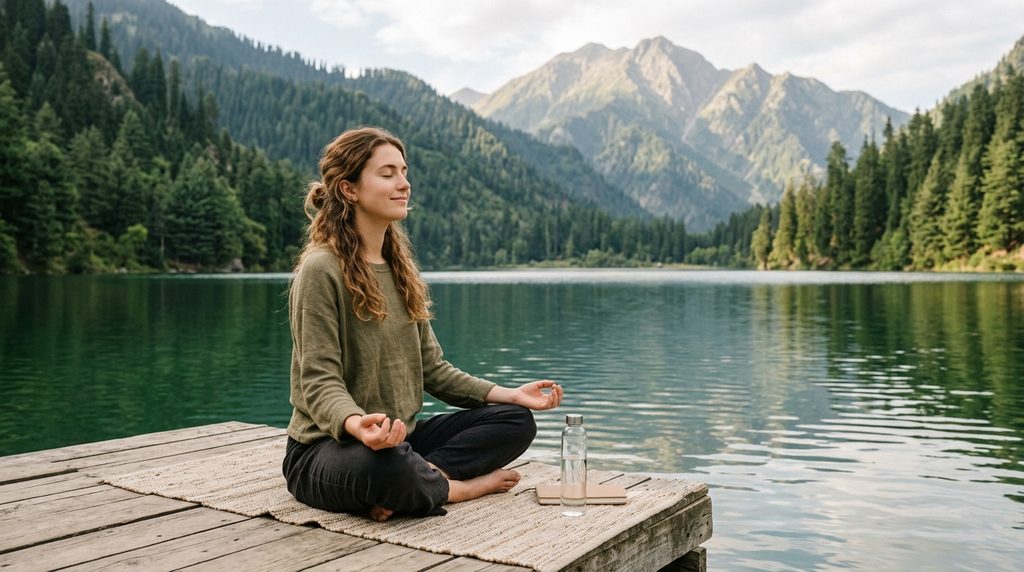
A walk through a park, time beside the ocean, sitting quietly in a garden, or simply observing trees outside your window can change the mental conditions in which ideas develop. Nature does not magically make someone creative, but it can provide an environment that supports attention recovery, reflection, curiosity, and flexible thinking.
So, how nature inspires creativity is not really about finding one magical landscape or waiting for inspiration to appear. It is about understanding how natural environments can help your mind step away from mental overload and notice possibilities that may have been hidden by routine.
How Nature Inspires Creativity When Your Mind Feels Stuck
Why Does Nature Inspire Creativity When Ideas Stop Flowing?
Creative blocks often happen when the brain becomes trapped in repetitive patterns. You may understand your subject, have plenty of information, and even know what you want to create—but nothing feels fresh.
This is where the relationship between nature and creative thinking becomes interesting.
Natural environments provide continuously changing sights, sounds, textures, movements, and patterns. Leaves move differently in the wind. Clouds change shape. Water reflects light differently from one moment to the next. Birds, insects, shadows, and weather introduce subtle variations that can capture attention without demanding intense concentration.
A change of environment can also create psychological distance from the problem you are trying to solve.
Instead of staring at the same screen and forcing yourself to produce an idea, you temporarily change the context. That shift may help loosen rigid thinking and create room for new mental connections.
Nature can therefore support creativity in several ways:
- It gives your attention a break from demanding tasks.
- Nature provides new sensory information.
- This interrupts repetitive routines.
- It creates opportunities for observation.
- Nature encourages reflection and curiosity.
- It can make brainstorming feel less pressured.
The key point is that nature is a supportive condition for creativity, not a substitute for knowledge, practice, or creative skill.
How Nature Reduces Mental Fatigue and Clears Mental Clutter
Modern life constantly competes for attention.
Emails, social media, advertisements, messages, news, work notifications, and digital entertainment can keep the mind switching between tasks. Even when you are physically resting, your attention may still be working.
This is one reason researchers have become interested in the restorative effects of nature.
Natural environments can offer a different kind of attention experience. Instead of forcing you to process hundreds of digital signals, nature often allows your attention to move naturally between interesting details.
You might notice a bird, then a tree, then the movement of clouds, then the sound of water.
This gentle engagement can provide a mental break.
When mental fatigue decreases, creative thinking may become easier because you have more cognitive space for imagining, connecting, evaluating, and generating ideas.
Can Spending Time Outdoors Improve Creativity?
Can spending time outdoors improve creativity? Potentially, yes—especially when outdoor time gives you distance from distractions and allows your attention to recover.
The important factor is not simply being outside. What you do while outside matters too.
Scrolling through social media while sitting in a park may provide a completely different experience from walking quietly without checking your phone.
This is why natural environments and creativity are often discussed together. A natural setting can change both your physical surroundings and your attentional habits.
Even a 15–30 minute outdoor session can become a useful opportunity to:
- Think about a difficult problem.
- Collect creative observations.
- Journal.
- Sketch.
- Brainstorm.
- Take photographs.
- Reflect on a project.
- Notice patterns that could inspire new ideas.
How Nature Affects the Brain and Creative Thinking
How Does Nature Boost Creativity?
How does nature boost creativity? One possible explanation is that natural environments support a balance between engagement and restoration.
Creative thinking requires more than intense concentration. You also need periods when your mind can explore connections, shift perspectives, and generate possibilities.
Nature can encourage this process by offering what might be described as soft fascination—interesting sights and sounds that capture attention without requiring the same level of deliberate effort as demanding work.
Imagine looking at waves on a beach.
You are paying attention, but you are not solving a complicated equation. Your mind has room to wander while still being connected to your surroundings.
This combination can create useful conditions for reflection and imagination.
Can Nature Improve Creative Thinking and Problem Solving?
Creative problem solving often requires moving beyond the first solution that comes to mind.
Instead of asking:
“What is the answer?”
creative thinking asks:
“Kind what else could work?”
That difference is important.
Can nature improve creative thinking? Natural environments may help by giving people psychological distance from a demanding problem. After stepping away, you may return with a different perspective.
This can be particularly useful for:
- Writers struggling with a storyline.
- Designers looking for new concepts.
- Entrepreneurs developing products.
- Students trying to understand difficult topics.
- Researchers approaching complex questions.
- Professionals searching for alternative solutions.
Nature does not solve the problem for you. Instead, it may help create the mental conditions in which different solutions become easier to consider.
The Psychology Behind Biophilia and Human Creativity
The concept of biophilia and human creativity explores the idea that humans have an inherent tendency to respond positively to aspects of the natural world.
People often show strong interest in landscapes, animals, plants, water, sunlight, and natural patterns.
From a creativity perspective, this relationship is fascinating because nature can stimulate:
- Curiosity
- Exploration
- Observation
- Wonder
- Imagination
- Reflection
- Pattern recognition
Consider how many creative disciplines use nature as a source of ideas.
Architecture can borrow forms from leaves and shells. Product designers can study animal movement. Artists can explore natural colors and textures. Writers can use forests, oceans, mountains, and weather as metaphors.
Nature becomes both an environment and a creative library.
Why Nature Walks and Green Spaces Spark New Ideas
Why Do Nature Walks Spark Ideas?
Why do nature walks spark ideas?
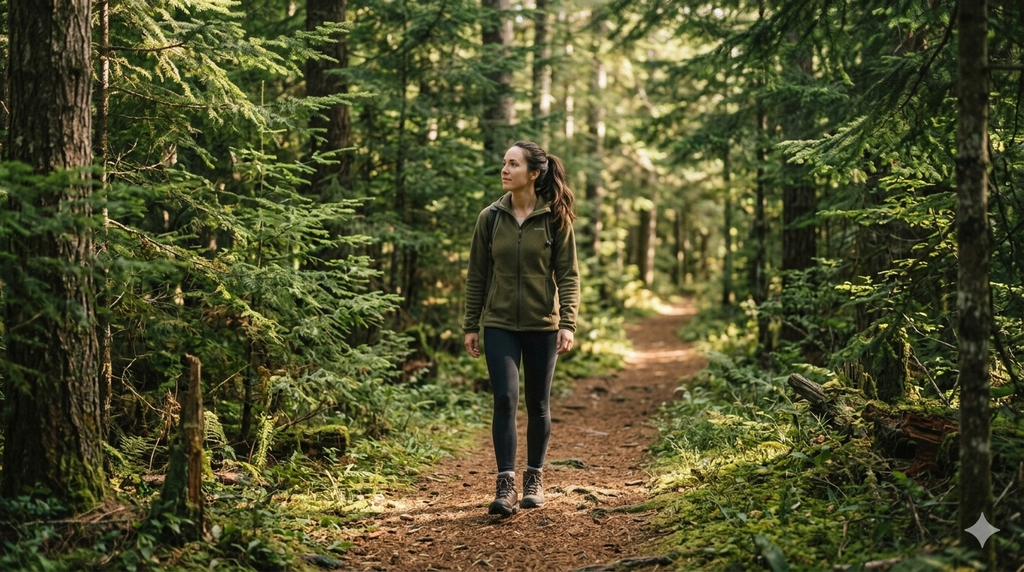
Walking combines several useful elements: physical movement, changing scenery, sensory stimulation, and a temporary break from your normal workspace.
When you walk, you are not staring at the same document or screen.
Your surroundings change every few seconds.
A tree becomes a building. A building becomes a garden. A garden becomes a street. Your attention naturally shifts.
This movement can help interrupt repetitive thought patterns.
That is why nature walks and creative thinking make such a useful combination.
Try turning your next walk into a creative session:
- Choose one problem you want to think about.
- Start walking without immediately searching for answers.
- Observe your surroundings.
- Allow different thoughts to appear.
- Record useful ideas when they emerge.
- Review your notes after returning.
You may discover that the best idea appears when you stop forcing yourself to have one.
How Green Spaces Affect Creativity
You do not need a national park or remote wilderness to benefit from nature.
How green spaces affect creativity can be considered at a much more practical level.
A city park, community garden, tree-lined street, balcony with plants, botanical garden, or quiet outdoor area can provide opportunities for nature exposure.
For someone living in a busy city, accessible green spaces may actually be more useful than waiting for the perfect weekend trip.
The goal is not to find the most spectacular landscape.
The goal is to create enough distance from your normal environment to allow your attention and imagination to shift.
Natural Settings and Potential Creative Benefits
| Natural Setting | Creative Opportunity | Potential Mental Benefit |
|---|---|---|
| Forest | Idea generation | Mental restoration |
| Park | Brainstorming | Reduced mental fatigue |
| Beach | Reflection | Relaxed attention |
| Garden | Creative writing | Sensory stimulation |
| Mountain landscape | Perspective thinking | Mental refreshment |
These benefits should be viewed as possibilities rather than guarantees. Different people respond differently to environments, and your creative results will also depend on the task, your mood, and your existing skills.
How to Use Nature for Inspiration and Creative Ideas
How to Use Nature for Inspiration
How to use nature for inspiration depends on your creative goal.
You do not have to sit under a tree waiting for a brilliant idea to appear. Instead, deliberately use your surroundings as creative material.
For Writers
Carry a small notebook and describe five things you notice.
For example:
- A strange sound.
- An unusual cloud formation.
- The behavior of an animal.
- A person’s interaction with the environment.
- An interesting combination of colors.
Then turn one observation into a character, setting, metaphor, or story idea.
For Artists
Study natural shapes rather than simply looking at the entire landscape.
Look at:
- Leaf structures.
- Tree bark.
- Shadows.
- Rocks.
- Flowers.
- Water reflections.
- Natural color combinations.
A single small detail can become the foundation for an illustration or visual concept.
For Designers
Nature provides countless examples of efficient structures.
Study how:
- Leaves distribute their surfaces.
- Birds move through air.
- Spider webs create strong patterns.
- Shells form protective structures.
- Plants adapt to limited space.
These observations can become starting points for nature inspired creative ideas.
For Entrepreneurs
Take a business problem outdoors.
Instead of staring at a business plan for another hour, walk while asking:
“What is another way to approach this?”
Changing your environment may help you think beyond your usual assumptions.
Best Nature Activities for Creativity
There is no single best activity for everyone. Choose something that makes you observant rather than distracted.
Some of the best nature activities for creativity include:
- Nature walks
- Outdoor journaling
- Nature photography
- Sketching landscapes
- Sitting quietly in a garden
- Outdoor brainstorming
- Cloud observation
- Wildlife observation
- Collecting visual references
- Listening carefully to natural sounds
The most important ingredient is active awareness.
Don’t just be outside.
Notice things.
A Simple Nature Creativity Checklist
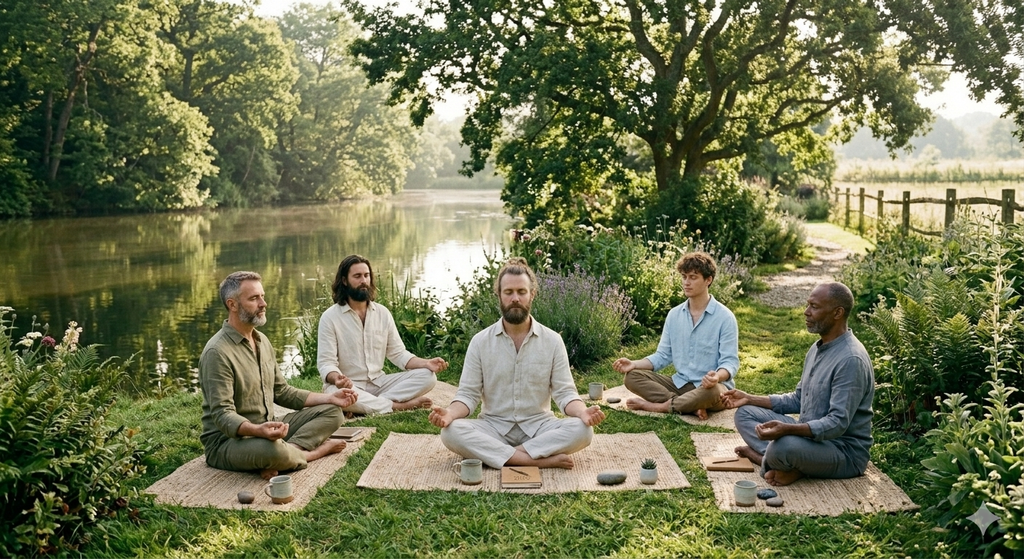
Use this simple routine whenever you feel creatively stuck:
- Leave your usual workspace.
- Spend 15–30 minutes outdoors.
- Observe five details around you.
- Put your phone away temporarily.
- Write down unexpected ideas.
- Ask one new question about your surroundings.
- Turn one observation into a creative concept.
- Review your ideas afterward.
This checklist works because it removes some of the pressure associated with “being creative.”
Instead of demanding a brilliant idea immediately, you give yourself a process.
How Nature Helps Overcome Creative Blocks
How Nature Helps Overcome Creative Blocks
One of the most frustrating creative experiences is knowing you should have an idea but being unable to produce anything that feels original.
You may think:
“I have ideas, but I can’t seem to create anything new.”
This often leads to more pressure.
And more pressure can make experimentation harder.
How nature helps overcome creative blocks is partly connected to changing this mental pattern.
Leaving your normal workspace creates a physical interruption. Walking provides movement. Natural surroundings provide new sensory information. A less demanding environment may make it easier to step back from the problem.
This can create a useful psychological reset.
For example, a writer stuck on a difficult chapter might stop working for 20 minutes and walk through a nearby park.
During the walk, they may notice an interaction between two people, hear an unusual sound, or suddenly think about their character differently.
The walk did not “write the chapter.”
It created space for the writer to return to the chapter with a different perspective.
Does Nature Help Creative Problem Solving?
Does nature help creative problem solving?
It can potentially support the process through psychological distance and incubation.
Sometimes the best strategy for a difficult problem is temporarily to stop attacking it directly.
You step away.
Your conscious attention moves toward something else.
Later, you return.
This is often called incubation in creativity research.
Nature can be particularly useful for this because it provides an environment where you can continue reflecting without staring directly at the problem.
Try this:
Before your walk: Write down the problem in one sentence.
During your walk: Do not force yourself to solve it. Observe and reflect.
After your walk: Write three possible solutions, including one unconventional option.
This turns nature exposure into a practical creative problem-solving method.
How Outdoor Environments Encourage Imagination
Outdoor environments contain an enormous amount of sensory information.
You can see:
- Colors
- Shapes
- Movement
- Patterns
- Shadows
- Light
You can hear:
- Wind
- Birds
- Water
- Insects
- Distant human activity
You can feel:
- Temperature
- Wind
- Different textures
- Changes in humidity
These experiences can create new associations.
A winding branch might suggest a design. The rhythm of waves might inspire a piece of music. The structure of a flower might influence an illustration.
This is how outdoor environments and imagination can work together.
The environment supplies stimuli; your mind transforms those stimuli into meaning.
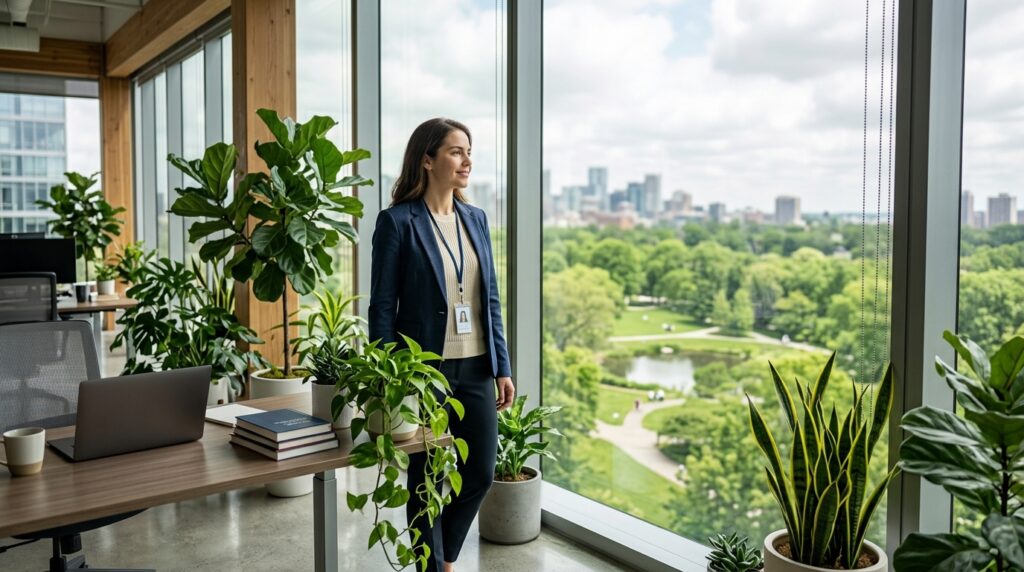
Why Creative People Seek Nature for Inspiration
Why Creative People Seek Nature
Why creative people seek nature has no single answer.
Writers, artists, photographers, designers, architects, scientists, and entrepreneurs may all use natural environments differently.
For some, nature provides solitude.
For others, it offers visual inspiration.
For others, it simply creates a break from routine.
The common factor is that nature can provide conditions that encourage observation and reflection.
Creative work requires both input and output.
You cannot continuously produce new ideas without collecting experiences, information, observations, and perspectives.
Nature can become one source of that input.
How Nature Experiences Generate Creative Ideas
Think of nature as a collection of thousands of creative prompts.
A simple observation can become a question:
Why does this leaf have this shape?
That question can lead to another:
Could this structure solve a design problem?
Then:
Could this idea be adapted to technology?
This chain—from observation to curiosity to association—is a basic pattern of creative thinking.
Natural patterns can inspire:
- Visual designs
- Story concepts
- Product ideas
- Metaphors
- Architecture
- Photography
- Scientific questions
- Educational activities
- Marketing concepts
The trick is to look beyond beauty.
Ask:
“What can this teach me?”
The Psychological Benefits of Nature for Creativity
The nature creativity psychological benefits are best understood as supportive rather than magical.
Nature may contribute to creativity by helping with several conditions associated with good thinking:
Mental restoration: Time away from demanding environments may reduce feelings of mental fatigue.
Attention: Natural surroundings can provide engaging but less demanding forms of stimulation.
Reflection: Outdoor environments can encourage people to slow down and think.
Imagination: New sensory experiences can create fresh associations.
Flexible thinking: A change of context may help people approach familiar problems differently.
Curiosity: Natural environments constantly provide details worth observing and questioning.
Together, these factors can create a healthier environment for creative work.
But creativity still requires practice.
A walk will not replace learning to write, draw, design, research, compose, code, or solve problems.
Nature can open the mental door.
You still have to walk through it.
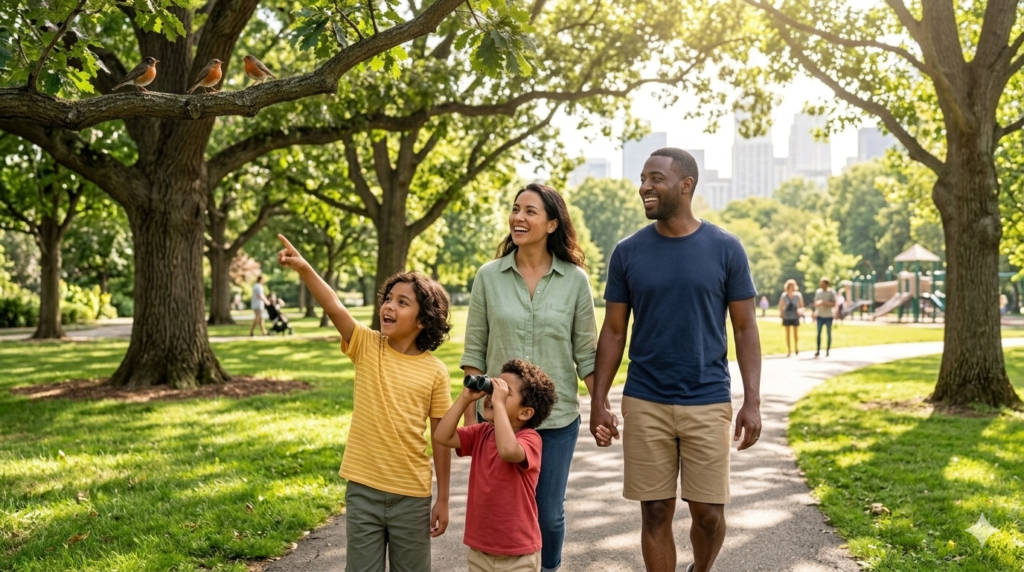
How to Build a Nature-Based Creativity Routine
You don’t need to completely redesign your lifestyle.
Start small.
The 15-Minute Method
If you are busy, spend just 15 minutes outdoors.
For the first five minutes, simply walk.
And for the next five, observe your environment.
So for the final five, write down ideas or questions.
The 30-Minute Brainstorm
For a larger creative problem:
- Write down the problem.
- Go outside for 30 minutes.
- Walk or sit somewhere natural.
- Avoid unnecessary phone use.
- Observe your surroundings.
- Let your thoughts wander.
- Record ideas immediately afterward.
- Select the three most interesting ideas.
- Develop one further at your desk.
This approach transforms nature from a passive escape into a deliberate creative practice.
Does Everyone Become More Creative in Nature?
No.
This is an important distinction.
The evidence surrounding nature, attention, mood, and creativity suggests potential benefits, but individual experiences vary.
Some people become highly inspired outdoors.
Others think more clearly in quiet indoor environments.
Some creative tasks benefit from movement and exploration, while others require concentrated isolation.
So don’t treat nature as a guaranteed creativity formula.
Instead, experiment.
Try different environments and notice where your thinking feels most flexible.
The goal is to discover what helps your creative process.
How Nature Inspires Creativity in Everyday Life
The biggest lesson is that creativity does not always require more information.
Sometimes it requires less noise and more observation.
A natural environment can give your mind a chance to step away from repetitive tasks, recover from mental fatigue, and encounter new sensory experiences.
You don’t need a mountain expedition.
You don’t need an expensive vacation.
You don’t even need a forest.
A local park, garden, quiet street with trees, beach, outdoor café surrounded by greenery, or small collection of plants can become a starting point.
The next time you feel creatively stuck, don’t immediately open another browser tab.
Step outside.
Walk for 15–30 minutes.
Notice five things.
Write down three observations.
Then turn one observation into a question, concept, image, sentence, or solution.
That simple habit may give your thinking the change of environment it needs.
Conclusion: How Nature Inspires Creativity in Everyday Life
How Nature Inspires Creativity ultimately comes down to creating better conditions for the mind to explore.
Nature can offer mental restoration, sensory stimulation, physical movement, psychological distance, and opportunities for observation. These conditions may help people step away from repetitive thinking and approach creative challenges with greater flexibility.
And the best part?
You don’t need a remote wilderness adventure.
Start with a 15–30 minute nature walk, outdoor observation session, or quiet green space.
Today, spend some time outside. Record three things you notice, then turn one observation into a new idea.
Sometimes creativity isn’t hiding very far away.
Sometimes you just need to step outside long enough to notice it.
Frequently Asked Questions
There is no universally best natural environment for creativity. Forests, parks, gardens, beaches, mountains, and even small urban green spaces can provide useful opportunities for reflection and observation. The best environment is usually one where you feel comfortable, have manageable distractions, and can pay attention to your surroundings.
You do not necessarily need hours outdoors. A focused 15–30 minute nature session can be a practical starting point. Longer periods may be useful when you have more time, but consistency and active observation can matter more than simply spending a large amount of time outside.
Yes, it can provide visual stimulation and a brief mental break, although the experience may differ from actually being outdoors. Looking at trees, clouds, plants, sunlight, or changing weather through a window can still provide opportunities for observation and creative reflection.
Nature can provide children with open-ended opportunities to explore, observe, imagine, experiment, and ask questions. Activities such as outdoor play, collecting observations, drawing plants, watching insects, and exploring natural textures can encourage curiosity without requiring a fixed “correct” outcome.

“Hi, I am Umer Hasib. I am a passionate blogger and content creator who loves exploring human psychology, social behaviors, and personal growth. Welcome to my inner space!”
Emily Carter:
“Really enjoyed this article! I especially liked the idea that nature can help clear mental clutter and create space for fresh ideas. The simple 15–30 minute nature walk is something I can actually add to my daily routine.”
Thank you, Emily! I’m glad you found the 15–30 minute nature walk practical. Sometimes a short break outdoors is all we need to clear our minds and look at our ideas from a fresh perspective. I hope it becomes a useful part of your daily routine!
James Anderson:
“This was an insightful read. The connection between nature walks, mental restoration, and creative problem-solving was particularly interesting. I’m definitely going to try the observation exercise the next time I feel stuck creatively.”
Thank you, James! I’m glad you found the connection between nature, mental restoration, and creative problem-solving interesting. The observation exercise is a simple but powerful way to look at familiar surroundings differently. I hope it helps spark some fresh ideas the next time you feel creatively stuck!