

Featured Snippet
How Subconscious Mind Works can be understood through automatic mental processes that operate outside immediate conscious awareness. These processes include implicit memories, learned associations, emotional responses, habits, and rapid pattern recognition. They can influence thoughts and behavior without completely controlling choices, while awareness, repetition, and intentional behavior change can gradually reshape many learned patterns.
Introduction
How Subconscious Mind Works can be understood by looking at the mental processes that operate outside our immediate conscious awareness. These processes include automatic habits, learned associations, implicit memories, emotional reactions, and rapid decision-making. They can influence how we respond to situations, but they do not completely control our choices. Awareness and intentional practice can help change many learned patterns over time.
Have you ever reacted to a situation before you had time to think about it? Maybe a particular sound makes you uncomfortable, you automatically reach for your phone when you feel bored, or you become nervous in a situation that reminds you of something from the past.
These experiences raise an interesting question: How does the subconscious mind work?
The word “subconscious” is commonly used to describe mental activity outside immediate conscious awareness. In psychology and neuroscience, researchers more often discuss concepts such as implicit memory, automatic processing, unconscious cognition, emotional learning, attention, and habit formation.
Understanding these processes can make everyday behavior easier to understand. Instead of assuming that every reaction is random or that an invisible force controls your life, you can examine the experiences, cues, beliefs, memories, and habits that may contribute to your responses.
This practical guide explains how subconscious mental processing works, why patterns repeat, how habits develop, how implicit memories influence behavior, and what you can realistically do to build healthier patterns.
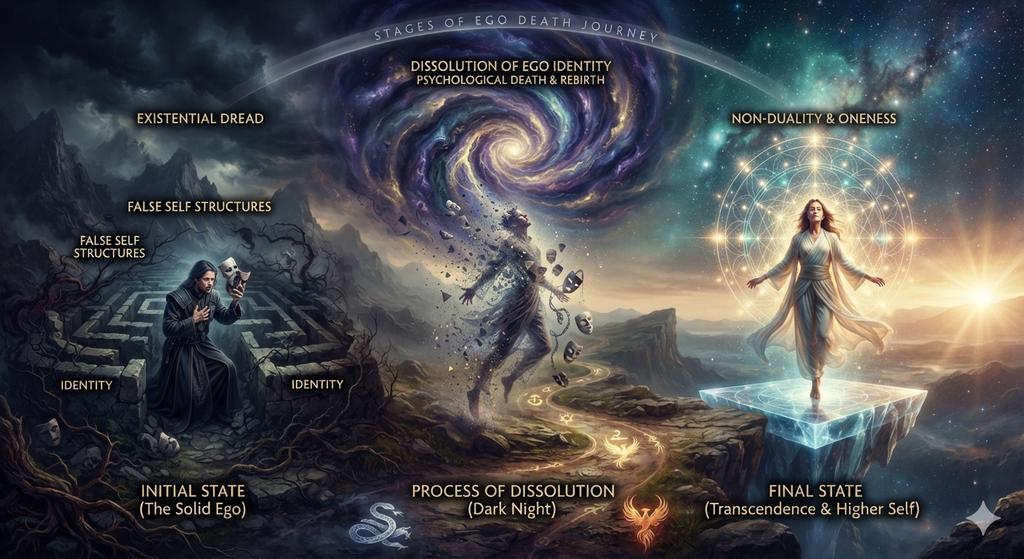
Why Do Subconscious Patterns Repeat?
Repeated behavior rarely comes from one single cause. Automatic responses can develop through learning, repetition, environmental cues, emotional experiences, and associations formed over time.
Once a response becomes familiar, the brain may produce it with relatively little deliberate thought.
Understanding Unconscious Thought Patterns
Unconscious Thought Patterns are mental processes that occur without requiring deliberate attention. They may involve recognizing familiar situations, interpreting social signals, retrieving learned associations, or preparing an automatic response.
For example, an experienced driver does not consciously think through every small movement required to operate a familiar vehicle. Much of the behavior has become practiced and automatic.
The same general principle can apply to everyday psychological patterns.
A person who repeatedly checks their phone whenever they feel bored may eventually perform the behavior almost automatically. The sequence can become:
Trigger → urge → behavior → temporary reward
Over time, the connection between the trigger and behavior may become stronger.
These Subconscious Behavioral Patterns are not necessarily permanent. They are learned responses, which means many can be modified when a person becomes aware of them and consistently practices an alternative.
Why Automatic Thought Processes Feel Automatic
Automatic Thought Processes happen quickly and with limited conscious effort. They differ from deliberate thinking, which requires focused attention and intentional reasoning.
Imagine walking into a familiar room and immediately noticing that something has changed. You may recognize the difference before consciously identifying exactly what changed.
Similarly, Subconscious Emotional Responses can occur before you have fully analyzed a situation.
Automatic processing can be useful because the brain cannot consciously examine every piece of information it encounters. Fast processing allows people to respond efficiently to familiar situations.
However, automatic responses can sometimes be inaccurate.
A person might interpret a neutral facial expression as negative because of previous experiences. Another person might automatically avoid a situation because they associate it with discomfort.
The important point is that an automatic response is not always an objective reflection of reality.
How Childhood Experiences Affect Subconscious
How Childhood Experiences Affect Subconscious processing is an important question because early experiences can contribute to learned expectations, emotional associations, and behavioral habits.
Children learn by observing people, experiencing consequences, repeating behaviors, and forming associations.
For example, if a child repeatedly receives encouragement for asking questions, they may develop a positive association with curiosity. If a particular situation repeatedly produces criticism or fear, that situation may later trigger discomfort.
This does not mean every childhood experience permanently determines adult behavior.
Instead, early experiences can become part of a person’s learning history. Later experiences can reinforce, weaken, or modify these patterns.
Emotional Memory Processing is particularly relevant because emotionally meaningful experiences can influence how people respond to similar situations later.
Can You Control Your Subconscious Mind?
You cannot consciously control every mental process occurring in your brain. However, you can influence many automatic behaviors by changing your environment, practicing new responses, examining assumptions, and developing greater awareness.
Can Subconscious Mind Control Behavior?
The question Can Subconscious Mind Control Behavior is better answered with “influence” rather than “control.”
Automatic mental processes can influence:
- Habits
- Emotional reactions
- Attention
- Preferences
- Social responses
- Decision-making
- Learned behaviors
- Expectations
For example, someone may automatically feel uncomfortable when speaking in public because previous experiences created an association between public speaking and anxiety.
That automatic response can influence behavior, but it does not necessarily determine what the person ultimately does.
This distinction matters.
Subconscious Mind Influence can shape the starting point of a response without eliminating conscious choice.
A person can notice the automatic reaction, reconsider the situation, and choose a different action.
Can Subconscious Thoughts Change?
Can Subconscious Thoughts Change? Yes, many learned mental and behavioral patterns can change.
Change usually does not happen because someone simply tells themselves to “think positively.” More durable change often involves identifying the existing pattern and repeatedly practicing a more useful response.
Several factors can support this process:
- Awareness — recognizing the automatic pattern.
- Identification of triggers — noticing what activates it.
- Cognitive restructuring — questioning inaccurate assumptions.
- Behavioral practice — repeatedly acting differently.
- Environmental changes — reducing cues that reinforce unwanted habits.
- Consistency — giving the new behavior enough opportunities to become familiar.
These approaches work with Subconscious Mind Processes rather than attempting to magically control the unconscious mind.
Why Does the Subconscious Matter?
Why Does the Subconscious Matter if we cannot directly control it?
Because automatic processing is part of everyday human cognition.
People constantly recognize patterns, retrieve memories, regulate attention, learn behaviors, respond emotionally, and make decisions without consciously analyzing every mental step.
Understanding Cognitive Processing Systems can therefore improve self-awareness.
Instead of saying:
“I am just like this.”
You can ask:
“What experience, trigger, assumption, or learned response might be contributing to this reaction?”
That shift can create room for change.
How Does the Subconscious Work?
To understand How Subconscious Mind Works, it helps to stop thinking about the subconscious as a separate person or hidden personality inside the brain.
It is more useful to think about multiple mental processes that operate outside immediate conscious awareness.
How Does Your Subconscious Mind Work?
How Does Your Subconscious Mind Work?
Your brain continuously processes information. Some information receives conscious attention, while other information is processed with little or no conscious awareness.
For example, while reading this article, you are consciously focusing on the words. At the same time, your brain is performing numerous other processes related to vision, language, memory, attention, and prediction.
These Cognitive Processing Systems work together to help you interact with the environment.
Automatic processing can involve:
- Recognizing familiar objects
- Retrieving learned information
- Detecting patterns
- Responding to familiar cues
- Performing practiced skills
- Associating experiences with emotions
- Guiding attention toward relevant information
The subconscious is therefore not a single “hidden brain.” It is a broad everyday term for mental activity that occurs outside immediate conscious awareness.
Conscious And Subconscious Mind Compared
The Conscious And Subconscious Mind are often presented as two completely separate systems, but real mental processing is more complicated.
Conscious awareness generally involves information you are actively attending to and thinking about.
Automatic or implicit processing can occur without deliberate attention.
Consider learning to ride a bicycle.
At first, you may consciously think about balance, steering, and movement. After extensive practice, many parts of the activity become more automatic.
The skill has not disappeared from conscious control. Instead, practiced processes require less conscious attention.
This illustrates how Subconscious Mind Processes can develop through learning and repetition.
How Subconscious Thoughts Affect Behavior
How Subconscious Thoughts Affect Behavior becomes clearer when we consider learned associations.
Suppose someone repeatedly experiences rejection when trying to make new friends. Over time, they may develop expectations that social situations will be uncomfortable.
When they enter a new social environment, an automatic thought or emotional reaction may appear.
That reaction could influence whether they:
- Start conversations
- Avoid eye contact
- Leave early
- Remain quiet
- Interpret ambiguous behavior negatively
This is an example of Subconscious Mind Influence.
The automatic response may be understandable based on previous learning, but it does not necessarily mean the current situation will produce the same outcome.
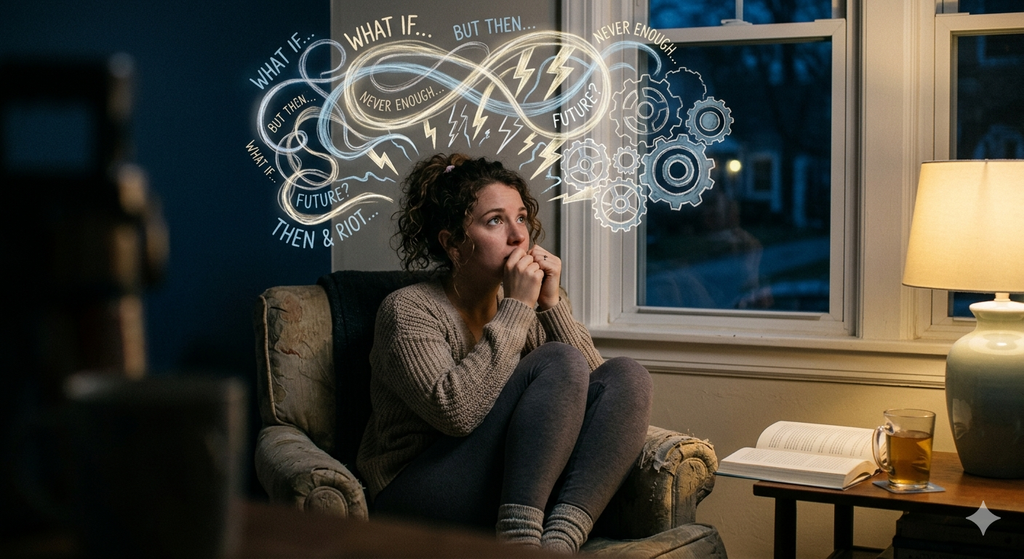
How Does Subconscious Memory Work?
Memory is one of the most important areas for understanding automatic behavior.
Not everything you learn is consciously remembered as a specific event.
Understanding Implicit Memory Formation
Implicit Memory Formation refers broadly to learning that can influence behavior without requiring conscious recollection of the original learning experience.
One familiar example is procedural learning.
After enough practice, you can perform certain skills without consciously remembering every individual practice session.
Implicit learning can also influence responses to familiar patterns and situations.
This explains why someone may be comfortable performing a skill even though they cannot describe every step involved in learning it.
Memory therefore does more than store conscious autobiographical stories.
Some forms of learning become reflected in behavior, expectations, skills, and automatic responses.
How Emotional Memory Processing Works
Emotional Memory Processing involves the relationship between emotionally significant experiences and later responses.
When an experience is strongly associated with fear, excitement, embarrassment, safety, or reward, related cues may later trigger emotional responses.
For example, someone who had a frightening experience with dogs may feel nervous around dogs later, even when encountering a calm and friendly animal.
This illustrates how Subconscious Emotional Responses can be connected to learned associations.
Importantly, an emotional reaction does not prove that the current situation is dangerous.
The brain can respond based on previously learned associations before conscious reasoning has fully evaluated the present circumstances.
How Implicit Learning Mechanisms Influence Behavior
Implicit Learning Mechanisms allow people to acquire information and patterns without deliberately memorizing them.
You may gradually learn:
- Social expectations
- Language patterns
- Environmental regularities
- Motor skills
- Preferences
- Behavioral routines
For instance, people often learn the rhythm of a familiar activity through repeated exposure rather than formal instruction.
This type of learning can eventually contribute to automatic behavior.
How Subconscious Habits Develop
Habits are among the easiest ways to observe automatic mental processes in everyday life.
Understanding Habit Formation Psychology
Habit Formation Psychology examines how repeated behaviors can become increasingly automatic in response to consistent cues.
A simple habit loop can be represented as:
Cue → Behavior → Consequence
For example:
Notification → Check phone → Receive information or stimulation
If the consequence is rewarding, the behavior may become more likely to happen again.
Over many repetitions, the person may begin checking the phone with little deliberate thought.
However, habit formation is not simply about repetition.
Context, reward, emotional state, motivation, environment, and the specific behavior all matter.
How Subconscious Behavioral Patterns Form
Subconscious Behavioral Patterns can develop when behaviors repeatedly occur in similar circumstances.
Environmental cues are particularly important.
For example:
- Sitting at a desk may trigger checking email.
- Entering the kitchen may trigger snacking.
- Getting into bed may trigger scrolling.
- Feeling stressed may trigger avoidance.
- Hearing a notification may trigger checking a phone.
These patterns can become closely associated with Automatic Thought Processes.
The good news is that changing the cue or response can gradually weaken the old routine.
Why the Priming Effect Matters
The Priming Effect Psychology explores how previous exposure to certain information can sometimes influence subsequent responses.
For example, exposure to a particular concept may make related information easier to recognize or process.
Priming is often discussed in popular psychology, but individual priming effects can be highly dependent on context and experimental conditions.
It should therefore not be treated as proof that hidden words, advertisements, or random environmental signals can secretly control people’s behavior.
A more reasonable interpretation is that previous exposure can sometimes influence how information is processed.

How To Reprogram Subconscious Thoughts
The phrase “reprogram your subconscious” is popular online, but it can create unrealistic expectations.
A more evidence-based approach is to change learned patterns through awareness, cognitive change, behavioral practice, and environmental design.
How To Change Subconscious Beliefs
How To Change Subconscious Beliefs starts with identifying the assumptions behind recurring reactions.
Consider someone who automatically thinks:
“I always fail.”
Instead of accepting that thought as a fact, they can examine the evidence.
Ask:
- Is this belief always true?
- What experiences created it?
- Are there exceptions?
- What evidence contradicts it?
- What would be a more realistic interpretation?
- What action would support the new interpretation?
This process can help replace exaggerated or inaccurate assumptions with more balanced thinking.
The goal is not to force yourself to believe something unrealistic.
The goal is to develop thoughts that are accurate, useful, and supported by evidence.
How To Reprogram Subconscious Thoughts
How To Reprogram Subconscious Thoughts through practical behavior change involves working with both thoughts and actions.
A useful process is:
1. Notice the Pattern
Identify a recurring reaction instead of immediately trying to eliminate it.
2. Identify the Trigger
Ask what happens immediately before the thought, emotion, or behavior.
3. Name the Automatic Response
Write down the first thought or feeling that appears.
4. Question the Interpretation
Ask whether your automatic interpretation is supported by evidence.
5. Choose a Different Response
Select a realistic behavior that aligns with your goal.
6. Repeat the New Response
Practice consistently in situations where the old pattern normally appears.
This approach addresses Can Subconscious Thoughts Change in a practical way.
Rather than imagining that one affirmation can instantly rewrite the brain, think of change as a learning process.
Building New Automatic Thought Processes
Automatic Thought Processes can become more adaptive through repeated practice.
For example, someone who automatically avoids difficult tasks might practice breaking a task into a five-minute starting point.
The new sequence becomes:
Difficulty → Pause → Break task down → Start for five minutes
With repetition, the alternative response may become easier to initiate.
This is how Subconscious Mind Processes can gradually interact with intentional behavior change.
The objective is not to eliminate automatic processing. Automatic processing is useful.
The goal is to develop healthier automatic responses where possible.
Subconscious Mind: Key Facts at a Glance
The following table provides a quick overview of the main concepts discussed in this guide.
| Question | Short Answer |
|---|---|
| How does the subconscious work? | It refers broadly to mental processes occurring outside immediate conscious awareness. |
| Can subconscious processes affect behavior? | Yes. Automatic learning, memories, associations, and emotional responses can influence behavior. |
| Can subconscious patterns change? | Many learned patterns can change through awareness, practice, and behavioral interventions. |
| How do subconscious habits develop? | Repetition and learned cues can make behaviors increasingly automatic. |
| Can you control the subconscious mind? | You cannot directly control every unconscious process, but you can influence habits, thoughts, and responses. |
Quick Self-Reflection Checklist
If you want to understand one of your own recurring patterns, start with these questions:
- What repeated behavior do I want to understand?
- When does this behavior usually happen?
- What situation or cue appears beforehand?
- What thought appears automatically?
- What emotion do I notice?
- What action usually follows?
- What short-term consequence reinforces the behavior?
- What healthier response could I practice instead?
You do not need to change everything at once.
Start with one recurring pattern.

What Influences Subconscious Mental Processing?
Automatic mental processing is influenced by many interacting factors rather than one hidden mechanism.
Understanding Subconscious Mind Influence
Subconscious Mind Influence can involve:
- Previous experiences
- Learning
- Memory
- Emotional associations
- Environmental cues
- Context
- Attention
- Expectations
- Repeated behavior
- Social experiences
Imagine two people entering the same unfamiliar environment.
One person may interpret the situation as exciting, while another may interpret it as threatening.
Their different responses can partly reflect differences in previous learning, expectations, experiences, and current emotional state.
This demonstrates why automatic processing should be understood within context.
How Cognitive Processing Systems Work
Cognitive Processing Systems help the brain manage enormous amounts of information.
Attention determines what receives greater processing priority.
Memory allows previous learning to influence current interpretation.
Learning changes future responses based on experience.
Decision-making combines information, goals, expectations, emotions, and context.
These processes do not operate in complete isolation.
A person’s automatic response may influence conscious thinking, while conscious attention and intentional practice can also modify future automatic responses.
How Emotional Responses Become Automatic
Subconscious Emotional Responses can develop through repeated emotional learning.
Suppose a particular environment repeatedly becomes associated with stressful experiences.
Later, simply entering a similar environment may produce tension before the person consciously identifies why.
This does not mean the brain is malfunctioning.
It may be responding to an association learned from previous experiences.
Emotional Memory Processing can therefore influence present reactions, but the response can sometimes be updated when new experiences provide different information.
Repeated safe experiences, cognitive evaluation, and new behavioral responses can help create alternative associations.
How To Build Better Subconscious Patterns
Changing automatic patterns starts with observing them rather than fighting them blindly.
Recognizing Automatic Responses
The first step is awareness.
When you notice a recurring reaction, pause before immediately acting on it.
Ask:
What just happened?
Then ask:
What did I think?
And:
What did I feel?
Finally:
What did I do?
This simple sequence can reveal Automatic Thought Processes that might otherwise go unnoticed.
A journal can be useful for identifying patterns across several days or weeks.
You may discover that the same behavior appears in similar situations.
Replacing Unhelpful Behavioral Patterns
Once you identify a pattern, choose a replacement behavior that is realistic.
For example:
Old pattern: Stress → procrastination → more stress
Alternative pattern: Stress → pause → choose one small task → begin
Another example:
Old pattern: Criticism → automatic defensiveness → argument
Alternative pattern: Criticism → pause → ask for clarification → respond
These changes are not instant “subconscious reprogramming.”
They are examples of deliberately practicing new responses that may become easier and more automatic with repetition.
Strengthening Healthier Habits
Healthy automatic patterns can be supported through:
- Consistent routines
- Clear environmental cues
- Realistic goals
- Repetition
- Immediate feedback
- Removing unnecessary friction
- Tracking progress
- Practicing alternative responses
Habit Formation Psychology suggests that the environment can play a major role.
If you want to read more, for example, keeping a book visible and your phone farther away can make the desired behavior easier and the distracting behavior slightly harder.
Likewise, Implicit Learning Mechanisms can contribute to learning through repeated exposure and practice.
The most effective strategy is usually not dramatic.
It is consistent.
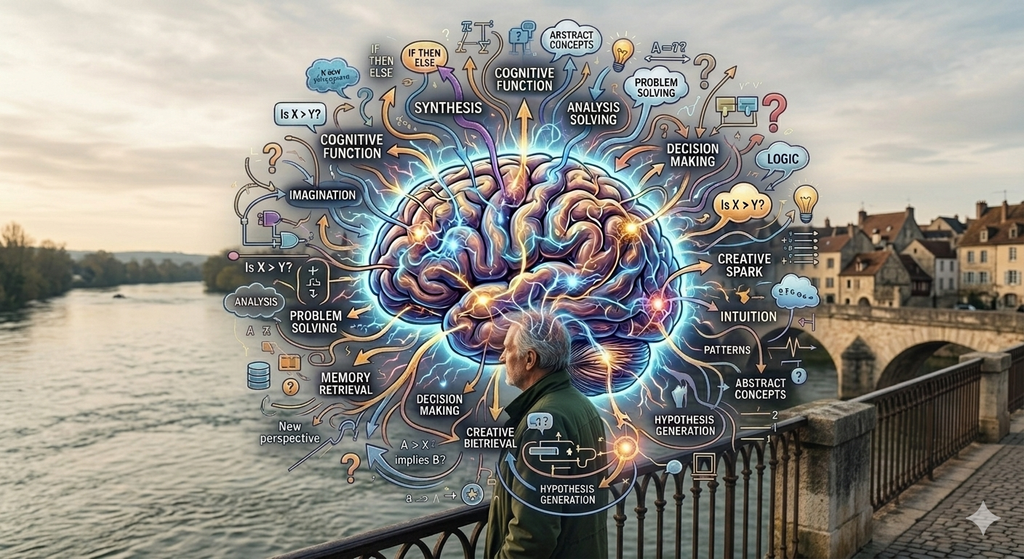
A Practical Guide to Understanding Your Own Automatic Patterns
If you want to apply everything in this article, use this five-step framework.
Step 1: Choose One Pattern
Do not try to analyze your entire personality.
Choose one behavior that repeatedly causes difficulty.
Step 2: Find the Trigger
Look for the situation, emotion, thought, person, location, time, or environmental cue that tends to appear first.
Step 3: Observe the Automatic Sequence
Write it down:
Trigger → Thought → Emotion → Behavior → Consequence
This makes an invisible pattern easier to see.
Step 4: Create a Better Response
Choose one alternative response that is realistic enough to perform in the moment.
The replacement should be specific.
Instead of:
“I will be more confident.”
Try:
“When I notice myself avoiding the conversation, I will ask one simple question.”
Step 5: Practice Consistently
Expect gradual change rather than instant transformation.
A new behavior becomes easier through repeated practice, especially when the environment supports it.
If the pattern involves significant distress, trauma-related reactions, or serious impairment in daily life, working with a qualified mental-health professional may be more appropriate than trying to change it alone.
Conclusion: How Subconscious Mind Works in Everyday Life
Understanding How Subconscious Mind Works means understanding how automatic thought processes, implicit memory, emotional learning, habits, associations, and behavioral patterns interact.
The subconscious is not a mysterious controller that determines everything you think or do. Instead, many mental processes operate outside immediate conscious awareness and can influence how you interpret situations, experience emotions, form habits, and respond to familiar cues.
Some automatic patterns are useful. Others may become unhelpful when they are based on outdated assumptions, repeated avoidance, or learned associations that no longer fit the present situation.
The practical solution is not to attempt instant “mind reprogramming.”
Start smaller.
Notice one recurring pattern. Identify its triggers. Observe the automatic response. Question unhelpful assumptions. Practice a healthier behavior consistently.
Over time, awareness + consistent practice + intentional behavior change can help reshape many learned patterns.
Your automatic responses are part of your learning history—but they do not have to define your future choices.
Frequently Asked Questions
Not exactly. “Subconscious” is a common everyday term for mental activity outside immediate conscious awareness, while psychology often uses more specific concepts such as unconscious processing, implicit memory, and automatic cognition.
Some research suggests that certain aspects of decision-making and response preparation can occur before a person becomes consciously aware of the process. However, this does not mean that all decisions are secretly made by the unconscious mind or that conscious choice is meaningless.
No. Dreams can involve memories, emotions, imagination, and many other forms of mental activity. A dream should not automatically be interpreted as a hidden message or literal representation of an unconscious belief.
There is no universal timeline. The time required depends on the behavior, repetition, environment, motivation, and individual circumstances. Consistent practice over time is generally more realistic than expecting an automatic pattern to disappear immediately.

“Hi, I am Umer Hasib. I am a passionate blogger and content creator who loves exploring human psychology, social behaviors, and personal growth. Welcome to my inner space!”
Emily Carter
“I really enjoyed how this article explains the subconscious without making it sound mysterious or magical. The connection between habits, memories, and automatic responses was especially interesting.”
Thank you, Emily! I’m glad you found the connection between habits, memories, and automatic responses interesting. Understanding these patterns can be a great first step toward becoming more aware of our everyday thoughts and behaviors.
Emily Carter
“I really enjoyed how this article explains the subconscious without making it sound mysterious or magical. The connection between habits, memories, and automatic responses was especially interesting.”
Thank you, Emily! I’m glad you enjoyed the practical approach. The way habits, memories, and automatic responses work together really can explain many of our everyday reactions. I appreciate you sharing your thoughts!