

Featured Snippet
How habits affect psychology is closely connected to repetition, reward, emotion, and automatic behavior. Habits can strengthen behavioral patterns, influence mood and stress, shape attention and decision-making, and affect how people see themselves. Healthy routines may support psychological wellbeing, while harmful habits can reinforce stress, avoidance, and unhelpful patterns over time.
Why Is Changing Habits So Difficult?
Changing a habit sounds simple: stop doing one thing and start doing another. In reality, established habits can be surprisingly persistent because the brain learns to associate specific situations with familiar responses.
A habit is not simply a behavior repeated many times. It is a learned behavioral pattern that can become increasingly automatic when the same action occurs in a consistent context.
This is why someone may check their phone without consciously deciding to do so, reach for a snack when stressed, or automatically follow the same morning routine every day.
Understanding the psychology behind habits makes behavior change much easier because it shifts the question from “Why can’t I use more willpower?” to “What is triggering this behavior, and what function does it serve?”
Why Do Habits Become Automatic?
Automatic behavior develops when a behavior is repeatedly performed in a particular context.
A simplified habit loop can be described as:
Cue → Routine → Reward
- Cue: Something triggers the behavior.
- Routine: The person performs the behavior.
- Reward: The outcome provides some form of reinforcement.
For example, imagine someone feels bored while working.
Cue: Boredom
Routine: Checking social media
Reward: Stimulation or temporary relief from boredom
When this pattern happens repeatedly, the cue can begin to activate the behavioral response with less conscious deliberation.
The behavior becomes easier to initiate because the brain has learned the association.
This does not mean the person has lost control. Rather, automaticity means that conscious attention is required less often to initiate a familiar behavior.
Why Do Bad Habits Feel So Hard to Break?
The psychology of negative habits often involves behavioral reinforcement.
If a behavior produces an immediate reward, relief, stimulation, or emotional escape, the brain has a reason to repeat it.
For instance, procrastination may temporarily reduce anxiety about a difficult task. Although avoiding the task creates problems later, the immediate reduction in discomfort can reinforce avoidance.
This creates a frustrating cycle:
Discomfort → Avoidance → Immediate relief → Greater likelihood of avoidance later
The key insight is that unhealthy habits often survive because they provide a short-term benefit—even when their long-term consequences are negative.
How Bad Habits Affect Your Mind
Repeated unhealthy behaviors can influence psychological functioning in several ways.
They may contribute to:
- Increased stress
- Reduced motivation
- Disrupted sleep
- Difficulty concentrating
- Emotional reactivity
- Avoidance behavior
- Reduced confidence in self-control
- Repetitive negative thinking
However, habits should not be treated as the sole explanation for mental health difficulties. Psychological wellbeing is influenced by many factors, including biology, environment, relationships, life circumstances, and individual differences.
The important point is that repeated behavior can become part of a broader pattern that either supports or interferes with wellbeing.
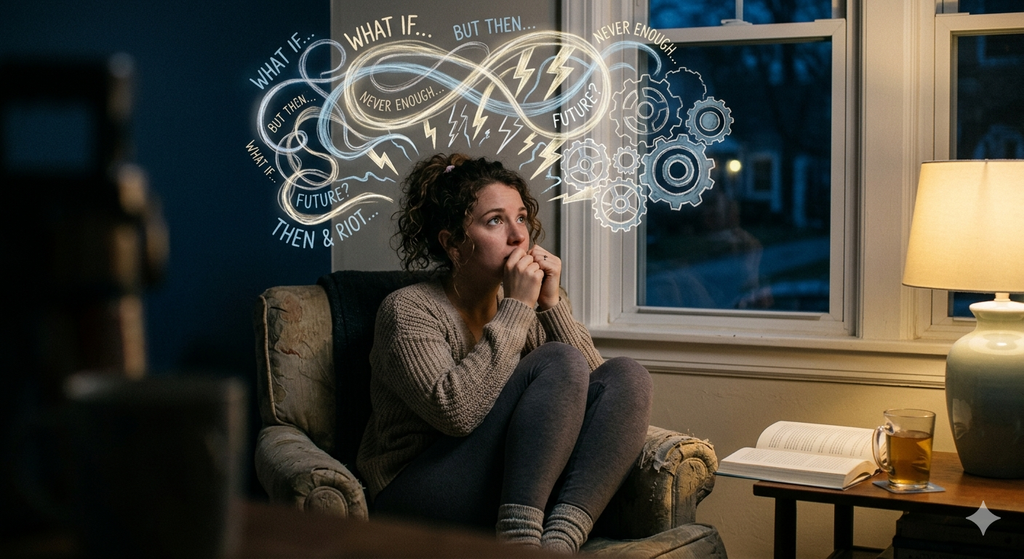
How Habits Affect Your Brain
The brain is highly adaptive. Repeated experiences can influence which responses become easier, more familiar, and more automatic.
That is one reason understanding neural pathways and habits is important.
How Do Neural Pathways Influence Habits?
When you repeatedly perform a behavior, the brain becomes increasingly efficient at processing the sequence associated with it.
Think about learning to drive.
At first, you consciously think about mirrors, pedals, steering, traffic, and road signs. With practice, many components become more automatic.
Habits can develop through a similar learning process.
Repeated behavior strengthens the association between:
Context → Action → Outcome
This is sometimes described informally as strengthening a neural pathway.
It is important not to interpret this as a literal “habit pathway” that permanently locks behavior into the brain. The brain remains capable of learning and changing.
That flexibility is one reason new habits can eventually become easier with consistent practice.
What Role Does Dopamine Play in Habit Formation?
Dopamine and habit formation are often discussed together, but dopamine is more complicated than simply being a “pleasure chemical.”
Dopamine is involved in motivation, learning, reward prediction, and the brain’s response to experiences that are relevant to reinforcement.
When an action repeatedly produces a meaningful outcome, the brain can learn to anticipate that outcome.
For example:
Notification → Anticipation → Checking phone → New information
Over time, the anticipation itself can become motivating.
This helps explain why some behaviors are difficult to resist even before the reward actually occurs.
The important lesson is that habit formation is not simply about chasing pleasure. It involves learning, prediction, context, motivation, and reinforcement.
How Habits Change Your Behavior
Repeated actions can gradually influence behavioral patterns.
If you repeatedly choose a certain response in a particular situation, that response may become increasingly familiar.
For example:
- Repeatedly exercising after work can make exercise part of an evening routine.
- Repeatedly planning tomorrow before bed can make preparation automatic.
- Repeatedly avoiding difficult conversations can strengthen avoidance as a coping response.
- Repeatedly practicing a skill can make parts of the skill more automatic.
This is central to habit formation psychology: behavior is influenced not only by conscious decisions but also by learned associations and environmental cues.
How Daily Habits Affect Mental Health
Daily behavior can influence psychological wellbeing because ordinary routines determine many of the conditions in which the mind operates.
Sleep, movement, social connection, work patterns, relaxation, learning, and screen use can all become recurring behavioral patterns.
How Good Habits Improve Mental Health
Healthy routines can provide structure and predictability.
Examples include:
Consistent sleep: A stable sleep schedule can support healthy sleep patterns and daytime functioning.
Physical activity: Regular movement can support physical and psychological wellbeing.
Social connection: Maintaining meaningful relationships can provide emotional support and belonging.
Learning: Reading, studying, practicing skills, or exploring new subjects can provide stimulation and a sense of progress.
Structured routines: Regular routines can reduce unnecessary decision-making and make important behaviors easier to maintain.
These examples illustrate the connection between positive habits and psychology.
A single healthy action rarely transforms someone’s psychological wellbeing overnight. The greater value often comes from repetition.
How Habits Affect Emotional Wellbeing
Habits can influence how people respond to emotional experiences.
Consider two possible patterns when someone feels stressed:
Pattern A: Stress → rumination → social withdrawal → more rumination
Pattern B: Stress → short walk → reflection → conversation with a supportive person
Both involve repeated responses to emotional discomfort, but they may lead to different outcomes.
This is where habits and emotional regulation intersect.
Healthy coping behaviors can create alternative responses to emotional triggers. Over time, these responses may become easier to access.
However, emotional regulation is not about suppressing emotions. The goal is to respond to emotions in flexible and constructive ways.
Can Habits Reduce Daily Stress?
Yes, certain routines can habits reduce daily stress by increasing predictability and reducing unnecessary decisions.
For example, preparing clothes the night before, maintaining a consistent morning routine, organizing frequently used items, or scheduling regular exercise can remove small decisions from the day.
This may reduce what is commonly called decision fatigue.
Routines can also provide behavioral anchors during busy periods.
A simple evening routine might be:
- Finish major tasks.
- Prepare for tomorrow.
- Reduce stimulating activities.
- Spend time relaxing.
- Follow a consistent bedtime.
The routine itself does not guarantee lower stress, but predictable behaviors can make daily life easier to manage.

How Habits Influence Thinking and Personality
Habits don’t only affect what people do. Repeated behaviors can also influence how they think about themselves and how they approach everyday situations.
Can Habits Change Your Personality?
Can habits change your personality? To some extent, repeated behaviors may contribute to personality development, but habits are not the same thing as personality traits.
Personality describes relatively enduring patterns in thoughts, feelings, and behavior.
A person who develops a habit of exercising regularly has changed a behavior. That does not automatically mean their entire personality has changed.
However, repeated behaviors can contribute to identity.
For example:
“I am trying to become organized.”
can gradually become:
“I am an organized person.”
That shift matters because identity can influence future behavior.
Repeated actions can therefore participate in a feedback loop:
Behavior → Experience → Self-perception → Future behavior
This is one reason identity-based behavior change can be powerful.
How Habits Affect Cognitive Function
The relationship between habits and cognitive function is particularly important.
Routine can sometimes conserve mental effort. When familiar behaviors become automatic, conscious attention can be redirected toward more complex tasks.
For example, an established morning routine may require less decision-making than constantly deciding what to do next.
On the other hand, certain habits may interfere with cognitive performance.
Examples can include:
- Constant notification checking
- Multitasking
- Irregular sleep routines
- Frequent task switching
- Habitual procrastination
The effect depends on the behavior, context, frequency, and individual.
Understanding the Psychology of Daily Habits
The psychology of daily habits becomes clearer when individual actions are viewed as part of larger behavioral systems.
A five-minute behavior may seem insignificant.
But repeated hundreds of times, it becomes a meaningful part of everyday life.
For example:
One reading session is small.
Reading every evening for months becomes a routine.
Consistently learning can contribute to a stronger sense of identity as someone who values knowledge.
This is how small behaviors can accumulate into broader patterns.
How Long Does Habit Formation Take?
One of the most common questions about behavior change is: how long does habit formation take?
There is no scientifically valid universal number of days that applies to every habit.
Habit formation varies according to:
- The complexity of the behavior
- How frequently it is repeated
- The consistency of the context
- Environmental cues
- Personal motivation
- The reward associated with the behavior
- Individual differences
- How difficult the behavior is
Simple behaviors may become automatic more quickly than complicated ones.
For example, placing your keys in the same location may be easier to automate than developing a complex exercise program.
The popular idea that every habit takes exactly 21 days is an oversimplification and should not be treated as a universal scientific rule.
What Makes a New Habit Stick?
Successful habit change and behavior psychology usually involve more than motivation.
Several factors can make a new behavior easier to repeat.
1. Consistency
Perform the behavior in a similar context whenever practical.
2. Clear cues
Connect the new behavior to an existing routine.
3. Small steps
Make the behavior realistic enough to repeat.
4. Immediate reinforcement
Give yourself a meaningful, healthy reward or acknowledgment after completing the behavior.
5. Environmental design
Make desirable behaviors easier and undesirable behaviors harder.
6. Reduced friction
Prepare the environment in advance.
For example, if you want to exercise in the morning, putting workout clothes where you can easily see them reduces the number of steps between waking up and starting.
Habit Formation Factors
| Factor | Effect on Habit Formation |
|---|---|
| Repetition | Strengthens behavioral patterns |
| Consistent cues | Encourages automatic responses |
| Immediate rewards | Reinforces behavior |
| Environment | Can make habits easier or harder |
| Behavior difficulty | Influences consistency |
| Motivation | Helps initiate behavior |
| Routine stability | Supports repetition |
How long does habit formation take? There is no fixed timetable. Habit development depends on the behavior, repetition, context, environment, and individual. The more consistently a behavior is practiced in a stable context, the more likely it is to become familiar and automatic.

How to Build Better Mental Habits
Changing habits becomes more practical when you focus on designing your environment rather than depending entirely on willpower.
How to Build Better Mental Habits
Start with one behavior.
Trying to change ten habits simultaneously can create unnecessary complexity.
Instead:
Step 1: Identify the pattern.
Ask:
What do I repeatedly do that I want to change?
Step 2: Identify the cue.
When does the behavior usually happen?
Step 3: Identify the reward.
What does the behavior give you—relief, stimulation, comfort, entertainment, avoidance, or something else?
Step 4: Choose a replacement.
Find another behavior that can provide a healthier response to the same situation.
Step 5: Make it easy.
Reduce the number of steps required to perform the new behavior.
Step 6: Repeat.
Consistency matters more than perfection.
How to Break Unhealthy Habits
Learning how to break unhealthy habits requires understanding why the behavior exists.
Instead of asking only:
“How do I stop?”
also ask:
“What triggers this behavior?”
Suppose someone automatically opens social media whenever they experience boredom.
Simply saying “I won’t use social media” may not address the underlying cue.
A better approach could be:
Boredom → Put phone away → Read for five minutes
or:
Stress → Step away from screen → Take a short walk
The goal is not always to eliminate the cue. Sometimes the more realistic strategy is to change the response.
Creating Positive Habits That Last
Long-term positive habits and psychology work best when the desired behavior fits naturally into everyday life.
Useful strategies include:
- Habit stacking
- Environmental design
- Behavioral tracking
- Small goals
- Consistent cues
- Immediate reinforcement
- Realistic expectations
- Flexible recovery after missed days
Habit stacking means attaching a new behavior to an existing routine.
For example:
After brushing my teeth → I will spend two minutes planning tomorrow.
The existing behavior becomes the cue for the new one.
Psychology of Habits: From Repetition to Identity
The deeper psychology of habits becomes visible when repeated behaviors begin influencing emotional responses, self-perception, and everyday decision-making.
How Behavioral Reinforcement Shapes Daily Routines
Behavioral reinforcement and habits are connected because consequences can influence whether a behavior is repeated.
If a behavior consistently produces a desirable outcome, it may become more likely to occur again.
But reinforcement does not always involve pleasure.
Relief can also reinforce behavior.
For example:
Anxiety → Avoid difficult task → Immediate relief
The relief may unintentionally reinforce avoidance.
Understanding this mechanism helps explain why some habits persist even when people consciously dislike their consequences.
How Habits Influence Emotional Regulation
Repeated coping behaviors can become automatic responses to emotional triggers.
Someone who consistently responds to stress by exercising, journaling, talking to a friend, or taking a quiet break may develop healthier coping routines.
Another person might repeatedly respond to stress through avoidance, excessive scrolling, emotional eating, or other unhelpful behaviors.
The important distinction is that a coping habit can provide short-term relief while still creating long-term problems.
Developing healthier alternatives gives the brain additional behavioral options.
How Habits Support Long-Term Mental Wellbeing
Consistent routines can contribute to habits and mental wellbeing by creating structure around behaviors that support everyday functioning.
Examples include:
- Maintaining regular sleep habits
- Staying physically active
- Making time for relationships
- Practicing relaxation
- Learning new skills
- Spending time outdoors
- Managing digital distractions
- Scheduling meaningful activities
These behaviors should not be viewed as guaranteed treatments for mental health conditions.
Rather, they are components of broader psychological self-care and healthy daily functioning.

A Practical Guide to Changing Your Habits
Now that we’ve explored what habits are and how they affect psychology, let’s turn the science into an actionable process.
Step 1: Choose One Habit
Don’t start with an enormous transformation.
Choose one behavior that matters.
For example:
“I want to reduce unnecessary phone checking.”
is more actionable than:
“I want to completely change my lifestyle.”
Step 2: Find the Trigger
Track when the behavior happens.
Ask:
- Where am I?
- What time is it?
- What happened immediately before?
- What emotion am I experiencing?
- Who am I with?
- What do I expect to gain from the behavior?
Patterns often become obvious once they are written down.
Step 3: Understand the Reward
Every persistent habit serves some function.
The reward might be:
- Relief
- Stimulation
- Comfort
- Connection
- Avoidance
- Achievement
- Entertainment
Understanding that function helps you choose a better replacement.
Step 4: Design the Environment
Environment can be more reliable than willpower.
If you want to read more:
Make books visible.
If you want to use your phone less:
Move distracting apps away from the home screen.
If you want to exercise:
Prepare your equipment beforehand.
The goal is to make the desired behavior easier to start.
Step 5: Make the Habit Smaller
A tiny behavior is often easier to repeat than an ambitious one.
Instead of:
“I will exercise for one hour every day.”
start with:
“I will move for five minutes.”
Once the behavior becomes established, you can gradually increase it.
Step 6: Track Progress Without Chasing Perfection
Missing one day doesn’t erase previous progress.
A useful mindset is:
Miss once → return quickly.
The objective is not an uninterrupted streak at all costs. It is developing a sustainable pattern.
Step 7: Connect Behavior With Identity
Instead of focusing only on outcomes, ask:
“What kind of person am I becoming through this behavior?”
For example:
- “I am becoming someone who protects their sleep.”
- “I am becoming someone who follows through.”
- “I am becoming someone who manages stress constructively.”
Identity can make a repeated behavior feel personally meaningful.
How Habits Affect Psychology Over Time
So, how habits affect psychology ultimately comes down to the interaction between repeated behavior, learning, environment, emotion, cognition, and identity.
Habits can influence:
- Brain processes by reinforcing learned behavioral associations.
- Behavior by making familiar responses easier to initiate.
- Emotions by shaping repeated coping patterns.
- Cognition by affecting attention, decision-making, and mental effort.
- Identity by influencing how people interpret their repeated actions.
- Wellbeing by supporting or interfering with healthy daily functioning.
The biggest lesson is that habits are not merely things you do automatically.
They can become part of the psychological environment in which you make decisions, regulate emotions, interpret experiences, and understand yourself.
That doesn’t mean you’re permanently trapped by your existing routines. Human behavior remains adaptable.
If one habit isn’t serving you, start small:
Identify one unhealthy pattern → choose one replacement behavior → make the replacement easy → repeat it consistently.
Small actions may look insignificant today, but repeated behavior can become meaningful psychological change over time.
Conclusion
Habits are more than repeated daily actions—they can influence behavior, emotions, attention, decision-making, coping patterns, and even how people see themselves. Understanding how habits affect psychology helps explain why some routines become automatic and why replacing unhealthy patterns can require more than willpower.
The good news is that habits can change. By identifying triggers, replacing unhelpful routines, designing a supportive environment, and starting with small repeatable actions, you can gradually develop healthier behavioral patterns.
If you want to begin today, choose one unhealthy habit, identify what triggers it, select one healthier replacement behavior, and practice that response consistently. Small changes repeated over time can contribute to meaningful personal growth and psychological wellbeing.
Frequently Asked Questions
Not always. Established habits can become relatively automatic, meaning they require less conscious attention. However, people can still consciously interrupt, modify, or replace habitual responses.
Yes. Environmental cues can strongly influence behavior. Changing what is visible, accessible, convenient, or rewarding can make some behaviors easier and others more difficult.
Stress can make familiar behavioral responses more attractive because they require less decision-making. If an old behavior has previously provided relief or another immediate reward, stress may increase the likelihood of repeating it.
Healthy behaviors can become counterproductive when they become excessively rigid or interfere with normal life. Balance and flexibility are important. A useful routine should support your life rather than control it.

“Hi, I am Umer Hasib. I am a passionate blogger and content creator who loves exploring human psychology, social behaviors, and personal growth. Welcome to my inner space!”
Fatima A.
“I really enjoyed how this article explains the psychology behind everyday habits. The habit loop and the connection between repeated behavior, emotions, and identity were especially helpful.”
Thank you, Fatima! I’m glad you found the connection between the habit loop, emotions, and identity helpful. Understanding these patterns can make lasting behavior change feel much more practical and achievable.
James Anderson
“This was a practical and insightful read. I liked the section on breaking unhealthy habits because it shows why replacing a behavior can be more effective than relying on willpower alone.”
Thank you, James! I’m glad you found that section useful. Replacing an unhealthy habit with a practical alternative can make behavior change more sustainable, especially when the new routine addresses the same trigger in a healthier way.