

High-stakes adventure sports push people beyond comfort by combining extreme physical strain, fear management, and survival decision-making. From desert marathons to technical rock climbing, these challenges build mental toughness, resilience, and confidence. Many athletes also use transformative adventure travel to heal trauma, proving the human spirit can grow stronger through adversity.
What Makes High-Stakes Adventure Sports So Dangerous Yet Addictive?
High-stakes adventure sports are not just hobbies—they are extreme environments where the margin for error is often razor-thin. These sports include brutal endurance races, technical climbing, survival challenges, and long-distance solo expeditions where failure can mean injury, evacuation, or even death.
But the strange truth is that people continue to chase them. In fact, the more difficult and dangerous the challenge becomes, the more attractive it feels to certain individuals.
Why?
Because these sports create something rare in modern life: real consequences. When you’re hanging on a cliff wall, running across a desert, or navigating a mountain trail alone at night, your brain becomes completely present. No distractions. No fake pressure. Just pure focus.
The psychology behind extreme risk and adrenaline
The human brain is wired to respond intensely to danger. When faced with fear, the body releases adrenaline and cortisol. Your senses sharpen, your heart rate rises, and your mind enters survival mode.
In controlled doses, this experience can feel powerful. Many athletes describe it as “feeling alive” in a way everyday life cannot provide.
Why some people crave discomfort and survival pressure
Discomfort forces growth. It destroys excuses. It exposes weaknesses. For many, this is not punishment—it is transformation. In high-stakes adventure sports, discomfort becomes a tool for discovering the strongest version of yourself.
Navigating Life-Threatening Risks in High-Stakes Adventure Sports
One of the biggest myths about high-stakes adventure sports is that participants are reckless. In reality, the best adventurers are often the most cautious and calculated.
Risk is always present—but professionals learn how to navigate danger intelligently.
Decision-making under stress
When the body is exhausted and the mind is overloaded, decision-making becomes harder. People make impulsive choices, ignore warning signs, and underestimate the environment.
That’s why experienced athletes train their mind to ask questions like:
- Is this risk necessary?
- Am I thinking clearly or emotionally?
- What is the safest next step?
In extreme sports, mental discipline is not motivation—it is survival.
Managing weather, terrain, and unpredictable hazards
The wilderness is never stable. Weather changes quickly, rocks shift, snow collapses, and dehydration hits silently. Adventure athletes learn to respect the unpredictability of nature.
They prepare by studying maps, tracking forecasts, and knowing escape routes. Most importantly, they understand that nature does not negotiate.
How professionals reduce risk without killing the thrill
Professionals reduce danger through:
- safety gear and backups
- experience-based planning
- pacing and energy management
- knowing when to stop
The goal is not to “avoid fear,” but to control it.
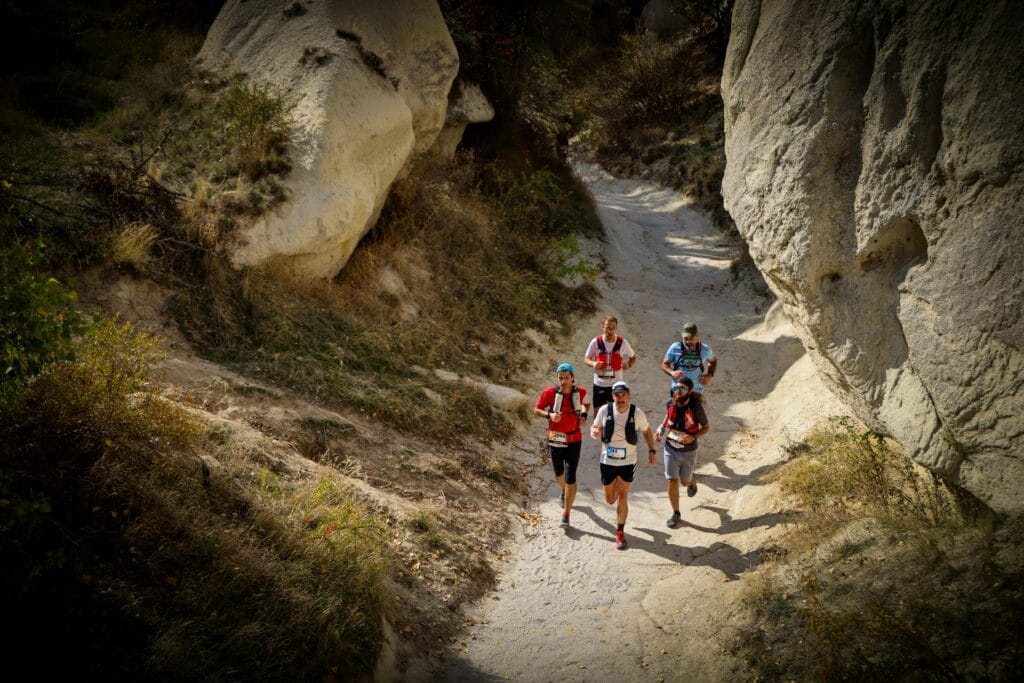
Pushing Physical Limits in Brutal Multi Stage Desert Marathons
Few endurance events are as savage as multi stage desert marathons. These races often stretch across days, forcing runners to cover massive distances under extreme heat while carrying survival supplies.
It’s not just running. It’s suffering management.
Heat exhaustion, dehydration, and nutrition battles
Desert marathons punish the body through:
- dehydration
- muscle breakdown
- salt imbalance
- blisters and foot damage
- mental collapse due to heat stress
Athletes often lose their appetite, yet must eat to survive. They must drink carefully, yet avoid overhydration. Every step becomes a battle against your own body.
Training strategies that actually work
Preparing for desert endurance requires more than long runs. It demands:
- heat adaptation training
- strength workouts for carrying weight
- electrolyte planning
- foot care practice
- mental rehearsal for extreme discomfort
Without planning, the desert wins.
The mindset required to keep moving
At some point, every runner asks the same question:
“Why am I doing this?”
The answer is rarely logical. It is emotional. It is personal. And that reason becomes fuel when the body is begging to stop.
Developing Mental Toughness During Solo Long Distance Hiking
Solo long-distance hiking is one of the purest mental toughness challenges. There is no audience, no applause, and no teammate to carry you.
It’s just you and the trail.
Loneliness, fear, and mental fatigue
The hardest part isn’t always the walking—it’s the silence. Long solo hikes force people to confront:
- loneliness
- fear of animals or injury
- overthinking
- boredom
- emotional memories
The trail becomes a mirror.
How to stay motivated when nobody is watching
Solo hikers survive mentally by focusing on small goals:
- “Reach the next water source.”
- “Make it to the next ridge.”
- “Just walk 30 more minutes.”
Big goals feel overwhelming. Small goals keep you alive.
Mental toughness techniques used by elite hikers
Some powerful techniques include:
- breath control during panic
- mental storytelling (“I am building strength”)
- repeating mantras
- avoiding negative self-talk
- practicing gratitude during suffering
Over time, hiking teaches that the mind is often the biggest obstacle—not the trail.
Testing Human Limits in 24 Hour Mountain Endurance Races
A 24-hour mountain endurance race is not a race against others. It’s a race against exhaustion.
The body enters a place where pain becomes constant, and time loses meaning.
Sleep deprivation and hallucinations
When sleep disappears, the brain begins to malfunction. Athletes may experience:
- hallucinations
- confusion
- emotional breakdowns
- loss of coordination
The mountain becomes a psychological battlefield.
Pain tolerance vs injury awareness
One of the most dangerous parts is learning the difference between:
- pain that can be pushed through
- pain that signals serious injury
Elite endurance athletes learn to listen carefully to their body, because ignoring the wrong pain can permanently destroy performance—or life.
What endurance athletes learn about their mind
These races reveal something shocking:
Most people quit not because the body fails, but because the mind convinces them it’s over.
When athletes survive the 24-hour test, they learn that their limits were never real—they were mental walls.
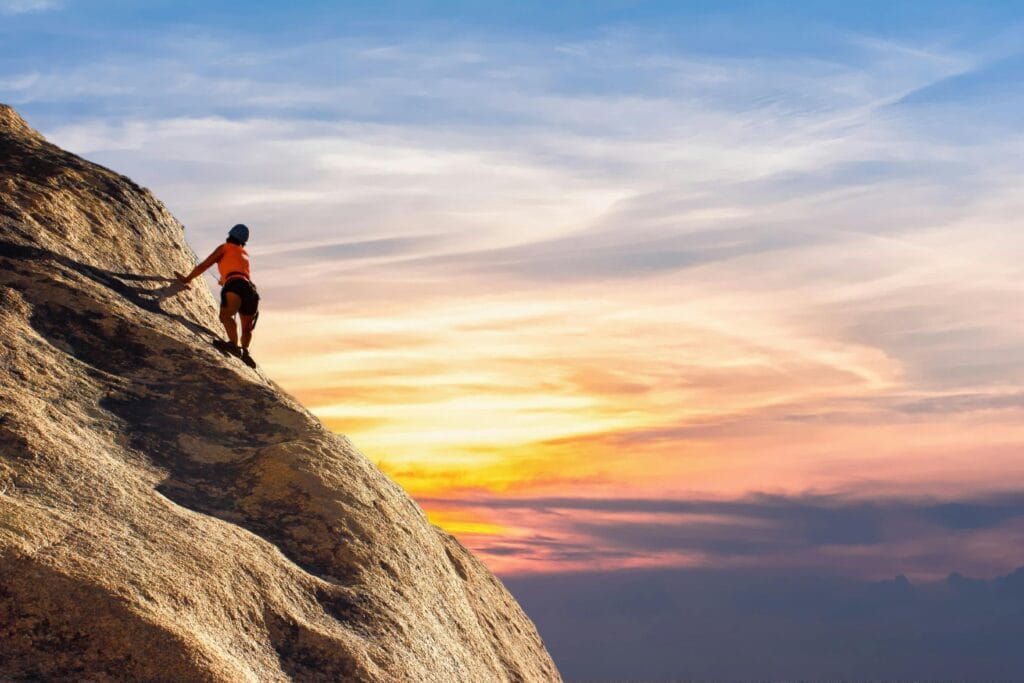
Conquering Fear of Heights in Technical Rock Climbing
Technical rock climbing is one of the clearest examples of fear control. The fear of falling is natural. The fear of heights is primal.
But climbers learn to operate with fear, not against it.
Why fear is normal (and useful)
Fear is not weakness. It’s a survival signal. The goal is not to remove fear, but to prevent fear from controlling your decisions.
A climber who feels nothing is often a climber who makes mistakes.
Mental training to climb safely with confidence
Climbers build confidence through:
- repeated exposure to height
- controlled practice falls
- breathing techniques
- visualization of movements
- learning how gear works
Knowledge reduces fear because it replaces imagination with facts.
Building trust in gear, body, and breath
Eventually, climbers realize the real battle is trust. Trust in the rope. Trust in the anchor. Trust in your own grip. Trust in your breathing.
Once that trust is built, fear becomes manageable.
Building Physical and Mental Resilience Through Wilderness Survival
Wilderness survival isn’t just about outdoor skills—it’s about staying calm when everything goes wrong.
Survival situations test emotional control more than strength.
Survival basics: shelter, water, fire, navigation
In survival challenges, priorities are simple:
- Shelter
- Water
- Fire
- Navigation
- Food
Without these, the body collapses fast. But survival experts know the most important skill is not building fire—it is staying mentally stable.
Psychological resilience during isolation
Isolation can destroy the mind quickly. Many people begin to panic, make rushed decisions, or lose hope.
Resilient survivors do the opposite: they slow down, plan, and conserve energy.
Staying calm when everything goes wrong
In survival scenarios, calmness is power. Panic wastes energy and creates bad decisions. Resilience means accepting reality and focusing on the next best action.
Overcoming Mental Barriers in Extreme Mountain Climbing
Extreme mountain climbing is one of the most brutal tests of endurance and mental strength. High altitude reduces oxygen, weakens muscles, and makes simple tasks exhausting.
The mountain doesn’t care about motivation.
Oxygen deprivation and “summit fever”
At high altitude, judgment becomes poor. Climbers experience “summit fever”—an obsession with reaching the top even when conditions become dangerous.
This is where tragedy happens.
Fighting doubt and panic at high altitude
Mental barriers in extreme mountain climbing include:
- fear of death
- anxiety attacks
- overwhelming exhaustion
- hopelessness
Climbers survive by breaking the climb into small steps and focusing on breathing.
When turning back becomes the strongest decision
The most mentally strong climbers are not those who always reach the summit. They are the ones who can turn back when necessary.
In high-stakes adventure sports, quitting is sometimes wisdom—not weakness.
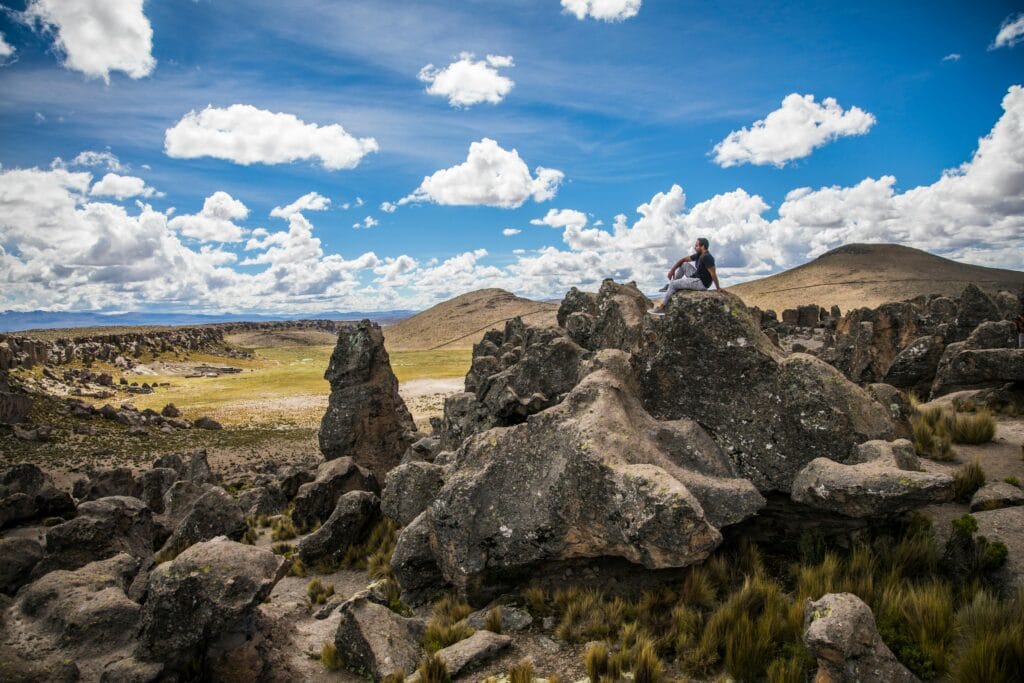
Healing Personal Trauma Through Transformative Adventure Travel
Transformative adventure travel is growing because many people are not chasing thrill—they are chasing healing.
Trauma can trap people in fear, sadness, and emotional numbness. Adventure forces the brain to reset.
Why hardship-based travel creates emotional breakthroughs
When you face hardship outdoors, you begin to feel something again: control, confidence, and purpose.
You realize you can survive discomfort. That realization changes everything.
Adventure therapy vs escapism
Adventure travel can be healing, but it can also be escapism if used to avoid real emotional work.
True healing happens when the experience teaches:
- self-trust
- emotional release
- forgiveness
- identity rebuilding
Rebuilding identity through outdoor challenges
Many trauma survivors describe outdoor adventure as a turning point. The trail becomes a place where they stop being “broken” and start becoming “strong again.”
The environment does not judge you. It only challenges you.
Stories of the Human Spirit Triumphing Over Outdoor Adversity
The most powerful part of adventure sports isn’t the medals. It’s the stories—moments where people refuse to quit even when everything collapses.
The most common moments where people almost quit
These moments usually happen when:
- the body is exhausted
- fear feels uncontrollable
- weather becomes dangerous
- loneliness becomes unbearable
- the finish line feels impossible
That is the real test.
What survivors and athletes all have in common
Across all sports, the same qualities appear:
- discipline
- emotional control
- adaptability
- humility
- deep personal purpose
These traits define the human spirit more than any physical strength.
Conclusion:
High-stakes adventure sports are not just about danger, adrenaline, or proving toughness. They are about confronting reality in its rawest form—heat, height, pain, hunger, exhaustion, fear, and uncertainty. In the modern world, where life has become comfortable and predictable, these sports pull people into a space where nothing is guaranteed.
Desert marathons teach the body how to survive brutal conditions and teach the mind that pain is not always a stop sign. Solo long-distance hiking teaches self-reliance, emotional endurance, and the ability to keep moving even when nobody is cheering. Rock climbing forces you to face fear of heights directly, turning panic into calm focus. Wilderness survival teaches resilience, patience, and how to think clearly when everything goes wrong. Mountain endurance races show that exhaustion is not the end—often it’s just the beginning. And extreme mountain climbing proves that the strongest decision isn’t always pushing forward; sometimes it’s knowing when to turn back.
Most importantly, transformative adventure travel has shown the world something powerful: outdoor hardship can heal. People who carry emotional trauma often struggle with confidence, trust, and inner peace. But when they step into a harsh environment and survive it, their identity changes. They stop seeing themselves as fragile. They start seeing themselves as capable.
That is why stories of the human spirit triumphing over outdoor adversity inspire us so deeply. Because they remind us that the human mind is stronger than fear, and the human heart is stronger than pain.
In the end, high-stakes adventure sports are not about chasing death. They are about chasing life—the purest, most honest version of it. They remind us that limits are often mental walls built by comfort. And once those walls break, a person discovers something rare: not just strength, but unstoppable resilience.
FAQs:
1. Are high-stakes adventure sports worth the risk?
Yes, but only if risk is managed with proper training, safety gear, planning, and experience. The goal is controlled challenge, not reckless danger.
2. What is the safest extreme sport for beginners?
Hiking, guided rock climbing, and beginner endurance trail events are safer entry-level options. Starting with expert supervision reduces risk significantly.
3. How do athletes stay calm in life-threatening outdoor situations?
They rely on preparation, breathing control, survival training, and mental rehearsal. Calmness comes from repeated exposure and confidence in skills.

“Hi, I am Umer Hasib. I am a passionate blogger and content creator who loves exploring human psychology, social behaviors, and personal growth. Welcome to my inner space!”