

Digital burnout signs are physical, emotional, and mental symptoms caused by excessive screen exposure and nonstop digital activity. Common signs include chronic fatigue, anxiety, poor focus, and sleep disturbances. Recognizing these digital burnout signs early is essential to restoring mental health and productivity in today’s hyperconnected remote work environment.
Introduction
Modern life depends heavily on screens. From remote work meetings to endless scrolling on social media, people spend more time online than ever before. While technology improves communication and productivity, it also creates mental overload. Many individuals now experience digital exhaustion without realizing it.
Digital burnout signs often appear slowly. At first, they may seem like normal stress or tiredness. However, constant notifications, multitasking, and online pressure can deeply affect emotional stability, concentration, and physical health. Understanding these warning signs is important because early action can prevent long-term mental fatigue and emotional exhaustion.
This guide explains the most common digital burnout signs, how they affect remote workers and mental health, and the best strategies to recover focus and balance in 2026.
What Are Digital Burnout Signs?
Digital burnout signs are emotional, mental, and physical symptoms caused by excessive use of digital devices. These symptoms develop when the brain receives continuous stimulation without enough rest.
Unlike normal tiredness, digital burnout affects motivation, mood, concentration, and even relationships. It often happens when people stay connected to screens for long periods without proper breaks.
Why Digital Burnout Is Increasing in 2026
Several modern habits contribute to rising burnout levels:
- Remote work culture
- Constant social media exposure
- 24/7 online communication
- Information overload
- Fear of missing out (FOMO)
- Excessive multitasking
Technology itself is not the problem. The real issue is the lack of healthy digital boundaries.
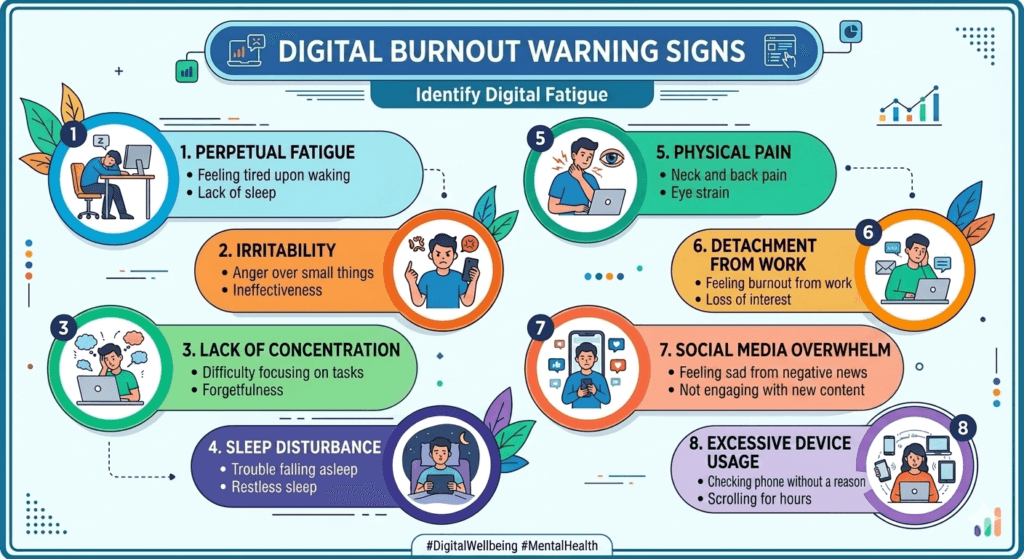
Physical and Emotional Digital Burnout Signs to Watch For
Digital burnout affects both the body and mind. Many people notice physical symptoms before emotional exhaustion becomes obvious.
Physical Symptoms of Digital Burnout
Common physical signs include:
- Frequent headaches
- Eye strain and blurred vision
- Poor sleep quality
- Constant fatigue
- Neck and shoulder pain
- Reduced energy levels
Long hours in front of screens can also weaken posture and increase body tension.
Emotional Symptoms of Digital Burnout
Emotional burnout signs may include:
- Irritability
- Anxiety
- Lack of motivation
- Emotional numbness
- Mood swings
- Feeling mentally drained
Over time, emotional exhaustion can reduce overall happiness and self-confidence.
How to Identify Digital Burnout Signs in Remote Workers
Remote work offers flexibility, but it can also blur the line between personal life and work responsibilities. Many remote workers struggle to disconnect from digital tasks.
Warning Signs in Remote Employees
Remote workers may experience:
- Difficulty concentrating during meetings
- Reduced productivity
- Constant exhaustion
- Delayed responses and forgetfulness
- Loss of creativity
- Increased frustration with online communication
Because remote jobs rely heavily on digital tools, burnout often develops silently.
Why Remote Work Increases Burnout Risk
Remote workers usually spend hours switching between emails, chats, video calls, and online tasks. Without physical separation between office and home life, the brain rarely gets proper recovery time.
This constant digital engagement can lead to chronic mental fatigue.
Difference Between Stress and Digital Burnout Signs
Many people confuse normal stress with digital burnout. Although they are connected, they are not the same.
| Stress | Digital Burnout |
|---|---|
| Temporary pressure | Long-term exhaustion |
| High emotional activity | Emotional emptiness |
| Can improve with short rest | Requires deeper recovery |
| Often task-related | Usually screen and overload related |
| Short-term fatigue | Chronic mental exhaustion |
Key Difference to Remember
Stress usually creates urgency and tension, while digital burnout creates emotional detachment and lack of motivation.
When someone no longer feels interested in work, social interaction, or online activities they once enjoyed, burnout may be the real issue.
Common Digital Burnout Signs Caused by Social Media Overload
Social media platforms are designed to keep users engaged for long periods. Endless scrolling, comparison culture, and information overload can quickly exhaust the mind.
Social Media Burnout Symptoms
Common signs include:
- Feeling anxious after scrolling
- Comparing yourself with others constantly
- Doomscrolling late at night
- Reduced attention span
- Emotional exhaustion from online negativity
- Addiction to notifications
The Psychological Impact of Social Media Pressure
People often feel pressure to remain active online, respond quickly, or maintain a perfect image. This digital pressure can increase anxiety and reduce self-esteem over time.
Excessive exposure to online content also overloads the brain with emotional information, making relaxation difficult.

Digital Burnout Signs and Their Impact on Mental Health
Ignoring burnout symptoms can seriously affect mental health. What begins as digital fatigue may eventually lead to emotional instability and chronic stress.
H3: Mental Health Effects of Digital Burnout
Possible impacts include:
- Anxiety disorders
- Depression symptoms
- Sleep disturbances
- Emotional disconnection
- Reduced self-worth
- Chronic stress
Burnout also weakens emotional resilience, making it harder to handle daily challenges.
Cognitive Effects on the Brain
Digital overload can reduce:
- Memory retention
- Focus and concentration
- Decision-making ability
- Creativity
- Problem-solving skills
The brain performs best when it has time to rest and process information naturally.
Hidden Digital Burnout Signs You Might Be Ignoring
Some burnout symptoms are subtle and easy to overlook. Many people continue their routine without realizing that digital overload is slowly damaging their mental balance.
Less Obvious Signs of Burnout
Hidden symptoms may include:
- Feeling disconnected from reality
- Avoiding messages or emails
- Losing interest in hobbies
- Constant procrastination
- Feeling tired even after sleeping
- Difficulty enjoying offline activities
Why These Signs Are Dangerous
These hidden symptoms often appear before serious emotional exhaustion develops. Ignoring them may lead to long-term mental health struggles and lower quality of life.
Recognizing small changes early makes recovery easier.
Effective Ways to Reverse Digital Burnout Signs for Better Focus
Recovering from burnout requires intentional lifestyle changes. Small daily habits can significantly improve mental clarity and emotional energy.
Create Healthy Screen Boundaries
Set clear limits for screen use:
- Avoid devices before bedtime
- Take breaks every hour
- Turn off unnecessary notifications
- Schedule offline time daily
CBT techniques can be incredibly effective in managing the anxiety caused by Digital Burnout.
Practice Digital Detox Habits
A digital detox does not mean abandoning technology completely. Instead, it means using technology more mindfully.
Helpful strategies include:
- Spending time outdoors
- Reading physical books
- Exercising regularly
- Practicing meditation
- Reducing social media usage
Improve Focus Through Better Daily Routines
Healthy routines improve mental recovery:
- Sleep consistently
- Eat nutritious meals
- Stay hydrated
- Work in focused time blocks
- Prioritize real-life interactions
Long-term recovery happens gradually through balanced habits.
If you know more about Digital Burnout Improvement Check out our Ambivert, Extrovert and Introvert guides.
Conclusion
Digital burnout signs are becoming increasingly common in modern life. Constant online activity, remote work pressure, and social media overload can silently damage mental and emotional well-being. Many people ignore early symptoms such as fatigue, poor focus, irritability, and emotional exhaustion until burnout becomes severe.
Recognizing these warning signs early is essential for maintaining mental clarity, emotional balance, and productivity. By creating healthier digital habits, setting boundaries with technology, and prioritizing offline recovery, people can protect themselves from long-term burnout. In 2026, digital wellness is no longer optional — it is necessary for a healthier and more focused life.
FAQs
What are the first warning signs of digital burnout?
The earliest signs usually include mental fatigue, poor concentration, irritability, sleep problems, and feeling emotionally drained after screen use.
Can digital burnout affect physical health?
Yes. Digital burnout can cause headaches, eye strain, muscle tension, fatigue, and disrupted sleep patterns due to excessive screen exposure.
How long does it take to recover from digital burnout?
Recovery time depends on the severity of burnout. Some people feel better within weeks, while deeper burnout may require months of healthier routines and reduced screen overload.

“Hi, I am Umer Hasib. I am a passionate blogger and content creator who loves exploring human psychology, social behaviors, and personal growth. Welcome to my inner space!”