
Cognitive behavioral therapy offers practical, evidence-based benefits for anxiety, depression, stress, sleep, and daily emotional balance. It helps people recognize negative thinking patterns, build healthier habits, and improve coping skills. The benefits of cognitive behavioral therapy can support long-term mental health, making it one of the most effective psychotherapy approaches for adults.
Introduction
Mental health has become one of the most important topics in modern psychology. People are dealing with anxiety, depression, stress, sleep problems, and emotional overload more than ever before. In this situation, many treatment approaches exist, but few are as practical and widely respected as cognitive behavioral therapy.
The benefits of cognitive behavioral therapy are not limited to one problem. CBT is used to help people understand how thoughts, emotions, and behaviors are connected. Instead of only discussing feelings, it teaches useful skills that can improve daily life. That is why CBT is often recommended for anxiety, depression, stress management, sleep difficulties, and emotional self-control.
This article explains the most important benefits of cognitive behavioral therapy, how it compares with medication, why adults benefit from it, and how CBT sessions support long-term psychological health.
What Is Cognitive Behavioral Therapy and Why Does It Work?
Cognitive behavioral therapy is a structured form of psychotherapy that focuses on the relationship between thoughts, emotions, and actions. The basic idea is simple: when people learn to change unhealthy thinking patterns, their emotional response and behavior often improve too.
CBT is usually short-term, goal-oriented, and practical. It does not just explore the past. Instead, it helps people deal with current problems in a more useful way.
The Core Idea Behind CBT
CBT teaches that negative thoughts can fuel negative emotions and unhelpful behaviors. By identifying those thoughts and challenging them, people can reduce emotional distress and build healthier habits.
Why CBT Is Popular in Psychology
It is popular because it is:
- Practical
- Structured
- Evidence-based
- Easy to apply in daily life
- Useful for many mental health concerns
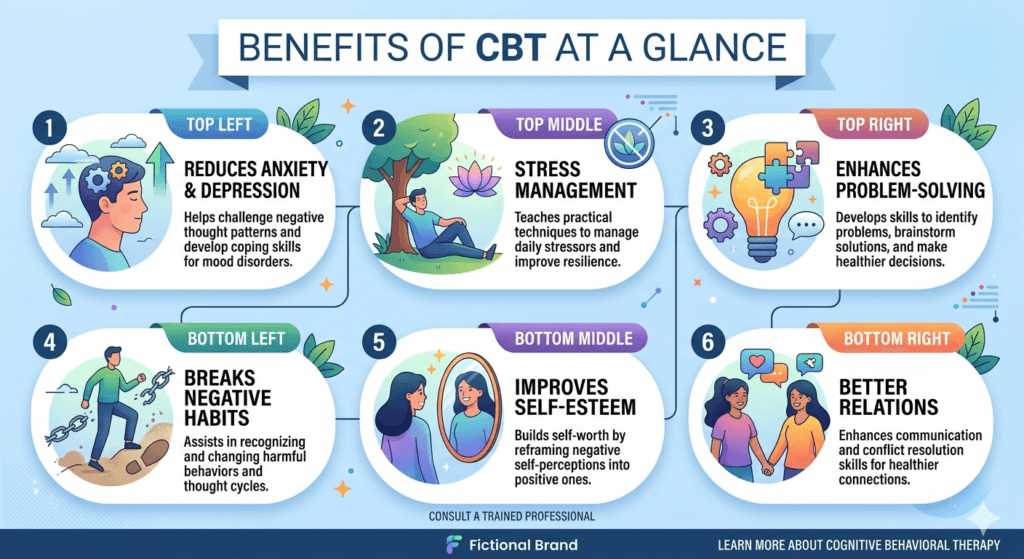
Key Benefits of Cognitive Behavioral Therapy for Anxiety and Depression
One of the most well-known benefits of cognitive behavioral therapy is its ability to help people manage anxiety and depression. These conditions often involve distorted thinking, fear, hopelessness, and low self-worth.
How CBT Helps Anxiety
CBT helps people identify anxious thought patterns such as:
- Catastrophizing
- Overthinking
- Fear of failure
- Constant worry about the future
By challenging these thoughts, individuals begin to feel more in control and less overwhelmed.
How CBT Helps Depression
For depression, CBT helps people recognize negative self-talk and replace it with more balanced thinking. This can improve motivation, self-esteem, and emotional stability over time.
Why This Benefit Matters
Anxiety and depression can affect work, relationships, sleep, and daily functioning. CBT gives people tools they can actually use in real-life situations, which makes recovery more practical and sustainable.
Long-Term Benefits of Cognitive Behavioral Therapy for Stress Management
Stress is part of life, but chronic stress can wear down both the mind and body. One of the strongest long-term benefits of cognitive behavioral therapy is that it helps people handle stress more effectively.
Changing Stress Reactions
CBT teaches people to notice stress triggers and respond more calmly. Instead of reacting automatically, they learn to pause, evaluate, and choose a healthier response.
Building Better Coping Skills
People who complete CBT often develop:
- Better problem-solving skills
- Stronger emotional control
- More realistic thinking
- Greater resilience under pressure
Long-Term Stress Reduction
Unlike temporary stress relief methods, CBT can create lasting changes in how a person thinks about challenges. That is why it is so helpful for people dealing with ongoing work pressure, family stress, or life transitions.
Surprising Benefits of Cognitive Behavioral Therapy in Daily Life
Many people think CBT is only for serious mental health conditions, but its benefits reach far beyond therapy sessions. It can improve everyday thinking and behavior in subtle but powerful ways.
Better Decision-Making
CBT helps people slow down their thoughts and examine situations more clearly. That often leads to better choices and less impulsive behavior.
Improved Relationships
When people understand their own thought patterns, they often communicate more clearly and react less defensively. This can improve relationships at home, at work, and in friendships.
More Emotional Balance
Daily life becomes easier when emotions are not constantly running the show. CBT supports calmer, more balanced reactions to everyday stress.
Benefits of Cognitive Behavioral Therapy vs Medication for Mental Health
This is one of the most searched comparisons in psychology. Both CBT and medication can be helpful, but they work in different ways.
| CBT | Medication |
|---|
| Teaches long-term coping skills | Provides faster symptom relief |
| Focuses on changing thoughts and behaviors | Focuses on brain chemistry |
| No major side effects | Side effects are possible |
| Builds emotional resilience | May reduce symptoms quickly |
| Long-lasting results | Symptoms may return after stopping |
| Requires effort and practice | Easy to take but needs monitoring |
What Medication Does
Medication may help reduce symptoms more quickly for some people. It can be useful for certain conditions, especially when symptoms are severe.
What CBT Does
CBT focuses on teaching skills that help people manage symptoms and change unhelpful thought patterns. It does not just reduce discomfort; it builds long-term coping ability.
CBT vs Medication: The Main Difference
Medication often targets symptoms, while CBT targets the thinking and behavior patterns behind those symptoms. For many people, the best approach may involve both, depending on clinical guidance.
Why CBT Stands Out
CBT is especially valuable because it gives people tools they can continue using even after therapy ends. That makes it a strong option for long-term mental wellness.
Proven Benefits of Cognitive Behavioral Therapy for Better Sleep
Sleep issues are often tied to stress, anxiety, and racing thoughts. One of the proven benefits of cognitive behavioral therapy is its ability to improve sleep quality, especially when insomnia is connected to mental overload.
How CBT Supports Sleep Health
CBT can help people:
- Reduce bedtime anxiety
- Break negative thought cycles
- Create healthier nighttime routines
- Stop overthinking before sleep
Why Better Sleep Matters
Poor sleep affects mood, concentration, energy, and overall mental health. When CBT improves sleep, it can also improve daily productivity and emotional stability.
CBT for Insomnia
A special form of CBT is often used for insomnia because it helps people change the habits and beliefs that keep them awake. This makes it a highly practical approach for sleep-related concerns.

Mental Health Benefits of Cognitive Behavioral Therapy for Adults
Adults often carry many responsibilities at once: work, relationships, family life, finances, and personal goals. This makes mental health support especially important.
Adults Gain Practical Emotional Tools
CBT helps adults manage pressure in a structured way. It teaches them how to respond to challenges without becoming overwhelmed.
CBT Supports Life Transitions
Major life changes such as career shifts, parenting stress, divorce, or loss can trigger emotional strain. CBT helps adults adapt more effectively during these transitions.
Why Adults Respond Well to CBT
Many adults like CBT because it is clear, focused, and action-based. Instead of feeling stuck in endless reflection, they gain steps they can actually use. Understanding mental health is the first step to mastering in life to Introvert, Extrovert, and Ambivert.
Emotional and Psychological Benefits of Cognitive Behavioral Therapy Sessions
The benefits of CBT sessions go beyond symptom relief. Over time, therapy can improve how a person sees themselves and the world.
More Self-Awareness
CBT helps people notice patterns they may never have questioned before. That self-awareness is often the first step toward lasting change.
Reduced Emotional Reactivity
When people learn how thoughts influence emotions, they become less likely to be controlled by panic, anger, or sadness.
Stronger Psychological Resilience
CBT can improve resilience, which means a person becomes better at recovering from setbacks and adapting to stress.
Healthier Self-Talk
One of the most powerful emotional changes in CBT is replacing harsh inner criticism with more realistic and supportive self-talk.
How to Get the Most Out of Cognitive Behavioral Therapy
CBT works best when a person actively participates in the process. It is not just about attending sessions; it is also about practicing the skills in real life.
Be Honest During Sessions
Open communication helps the therapist understand your patterns more clearly and tailor the treatment to your needs.
Practice Between Sessions
CBT often includes exercises, journaling, thought tracking, or behavior changes. These steps make the benefits stronger and more lasting.
Stay Consistent
Progress in CBT may be gradual, but consistency matters. Even small improvements in thinking and behavior can lead to major long-term results.
Set Realistic Expectations
CBT is powerful, but it is not magic. It works best when combined with patience, commitment, and a willingness to change habits.
- If you know more about CBT Check out Digital Burnout.
Conclusion
The benefits of cognitive behavioral therapy make it one of the most valuable tools in modern psychology. It helps people manage anxiety, depression, stress, sleep problems, and daily emotional struggles in a practical and structured way. Unlike approaches that only focus on symptoms, CBT teaches people how to understand their thoughts, change unhelpful patterns, and build stronger coping skills.
Its long-term value is especially important. Whether someone is dealing with chronic stress, emotional imbalance, or low self-confidence, CBT offers real-life strategies that can improve both mental health and everyday functioning. The emotional and psychological benefits of CBT sessions often continue long after therapy ends because the skills become part of a person’s lifestyle.
For adults, students, professionals, and anyone under pressure, cognitive behavioral therapy can be a powerful path toward better sleep, stronger resilience, healthier relationships, and clearer thinking. In 2026, that makes it not just a treatment option, but a highly practical mental wellness strategy for modern life.
FAQs
Is cognitive behavioral therapy effective for anxiety and depression?
Yes, CBT is widely used for both anxiety and depression because it helps people identify negative thinking patterns and replace them with healthier ones.
How long does it take to see benefits from CBT?
Some people notice improvements within a few sessions, while others need several weeks or months depending on the issue and consistency of practice.
Can CBT help without medication?
For many people, yes. CBT can be effective on its own, but in some cases medication and therapy together may provide better support under professional guidance.

“Hi, I am Umer Hasib. I am a passionate blogger and content creator who loves exploring human psychology, social behaviors, and personal growth. Welcome to my inner space!”