

Featured Snippet Answer:
To make time for nature, start with short outdoor activities that fit naturally into your existing routine. Take a 5–15 minute walk, sit in a garden, eat lunch outside, or visit a nearby park. The key is to schedule regular nature time instead of waiting for a completely free day.
Introduction
Modern life can make spending time outdoors feel like a luxury. Between work, family responsibilities, commuting, household tasks, social commitments, and constant screen time, it is easy to keep postponing a simple walk or quiet moment outside.
The good news is that how to make time for nature does not have to mean planning a long hike, taking a vacation, or completely changing your lifestyle.
Nature can be part of ordinary life.
A short walk through a local park, a few minutes sitting beneath a tree, gardening, watching birds, or simply stepping outside can create an opportunity to reconnect with natural surroundings.
Research has found associations between exposure to green spaces and several aspects of health and wellbeing, including mental health, cognitive function, physical activity, and sleep. However, researchers also note that the strength of evidence varies between outcomes and that the ideal amount, frequency, and type of nature exposure are not fully established.
So instead of asking, “When will I finally have enough free time?” try asking:
“Where can I add five or ten minutes of nature to the life I already have?”
That small change in thinking can make outdoor time much easier to maintain.
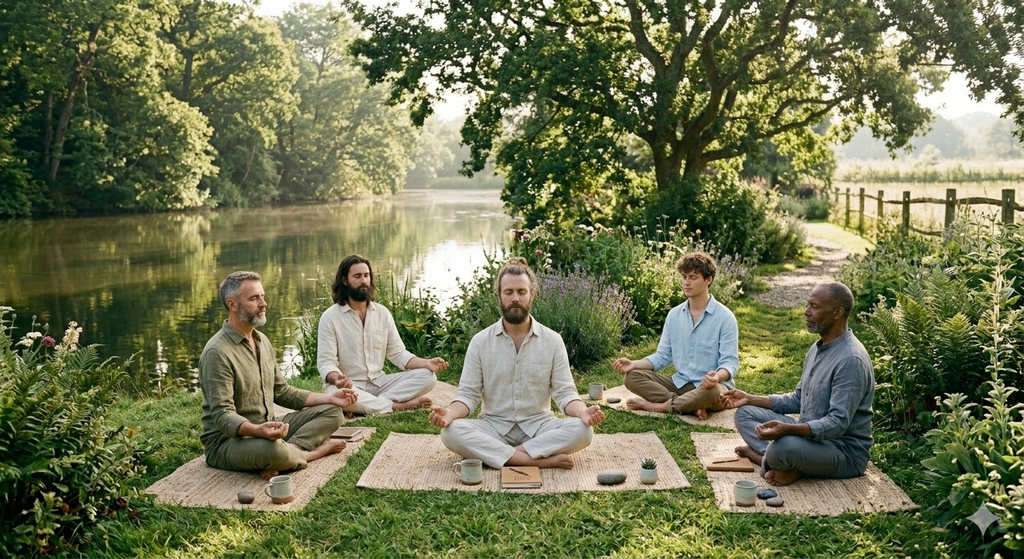
Why Is It So Hard to Make Time for Nature?
The Busy-Life Problem Behind Outdoor Time
One of the biggest barriers to spending time in nature is not necessarily a lack of access. It is the way modern schedules are structured.
A typical day may include:
- Work or school
- Household responsibilities
- Family commitments
- Commuting
- Screen time
- Shopping and errands
- Exercise
- Social responsibilities
- Rest and sleep
After all of that, going outside can feel like another task on an already crowded list.
This is why spending time in nature works better when it becomes connected to activities you already do.
For example, instead of creating a completely new one-hour outdoor routine, you could:
- Walk outside after lunch.
- Take phone calls while walking.
- Read a book in the garden.
- Walk part of your commute.
- Have your morning tea outdoors.
- Take children to a nearby park.
- Do light gardening on weekends.
This approach can improve your work life nature balance without requiring a dramatic schedule change.
Why We Keep Postponing Time Outdoors
There is often a psychological conflict between knowing you need a break and believing you cannot afford to take one.
You might think:
“I should go outside, but I have too much to do.”
Then another task appears, and outdoor time gets postponed again.
Eventually, nature becomes something you plan to enjoy “when life gets easier.”
The problem is that life rarely becomes completely empty.
If you keep waiting for a perfect afternoon, you may continue waiting indefinitely.
This is why questions such as “why should I spend more time outdoors?” and “how do I fit nature into busy life?” are really questions about priorities and routines.
Instead of treating nature as a reward for finishing everything, make it part of the process of living.
Can Small Nature Breaks Really Make a Difference?
Yes, small outdoor breaks can be meaningful, especially when they are realistic enough to repeat.
You do not have to spend an entire day in a forest to experience a change of environment.
A five-minute pause beside a garden, a ten-minute walk, or fifteen minutes in a local green space can interrupt a screen-heavy routine and provide a change of scenery.
Research on nature-based activities has found positive effects on several mental health outcomes, although studies vary in their methods, activities, and durations.
The important lesson is simple:
Consistency is often more practical than intensity.
What Are the Benefits of Spending Time in Nature?
How Nature Supports Everyday Wellbeing
Regular contact with natural environments can become one part of a broader healthy lifestyle.
Research has associated nature and green-space exposure with outcomes involving mental health, cognitive function, physical activity, sleep, and other aspects of wellbeing. At the same time, researchers caution that the evidence is not equally strong for every health outcome.
Outdoor time may also naturally encourage movement.
A person who visits a park may walk more. Someone who gardens may spend time physically active. A family that visits a trail may combine social connection, movement, and outdoor exposure.
In this way, outdoor time for wellbeing does not have to be a separate wellness program.
It can simply become part of everyday life.
Nature, Mindfulness, and Mental Restoration
Nature can also create opportunities to slow down and pay attention.
Instead of continuously switching between notifications, messages, videos, and tasks, you can focus on simple sensory details:
- Birds singing
- Wind moving through leaves
- Clouds changing shape
- Sunlight and shadows
- The smell of plants
- Water moving through a stream
- The texture of tree bark
- Changing temperatures
This type of attention can support nature connection and mindfulness.
Try leaving your phone in your pocket for ten minutes and deliberately noticing five things around you.
You do not need complicated meditation techniques.
The goal is simply to be present.
How Outdoor Time Can Support Stress Management
Stress often builds when there is no clear pause between one demanding activity and the next.
A short outdoor break can create a physical and psychological transition.
For example:
Work → outdoor walk → home
can feel different from:
Work → laptop → phone → television → sleep
Nature should not be presented as a replacement for professional mental-health care or treatment. However, research does suggest that nature-based activities can be associated with improvements in mood, anxiety, positive affect, and negative affect.
This makes nature based stress relief one practical component of a broader stress-management routine.
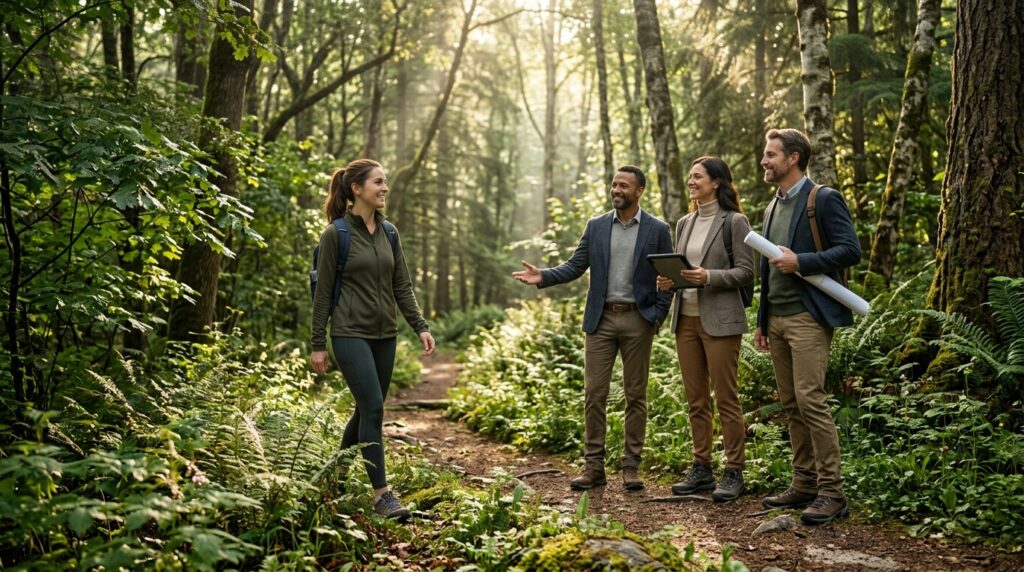
How Can I Spend More Time Outdoors With a Busy Schedule?
How to Fit Nature Into a Busy Life
The easiest approach is to attach outdoor time to something you already do.
Use the habit-stacking method:
Existing habit + outdoor activity = new nature routine
Examples:
- Morning coffee + balcony or garden
- Lunch + ten-minute walk
- Phone call + outdoor walking
- Exercise + local park
- Reading + outdoor chair
- Family time + evening walk
- Weekend shopping + walking route
This is especially useful for people searching how can I spend more time outdoors without creating a complicated schedule.
How to Enjoy Nature With Little Time
You can enjoy nature even when you have only a few minutes.
If You Have 5 Minutes
Try:
- Sitting outside
- Looking at clouds
- Watering plants
- Watching birds
- Taking several slow breaths outdoors
If You Have 10 Minutes
Try:
- Walking around your neighborhood
- Sitting under a tree
- Having tea outside
- Photographing plants or clouds
- Walking around your workplace
If You Have 15 Minutes
Try:
- Visiting a nearby green space
- Taking a mindful walk
- Gardening
- Reading outdoors
- Walking without headphones
These are practical answers to how to enjoy nature with little time.
How to Prioritize Time in Nature
Treat nature time like any other recurring activity.
Put it on your calendar.
You could schedule:
Monday–Friday: 10-minute outdoor break
Saturday: 30–60 minute nature activity
Sunday: flexible outdoor family time
The exact schedule is less important than choosing something you can realistically repeat.
This is how nature time in daily routine becomes normal rather than occasional.
How Much Time Should You Spend in Nature?
Start With Short, Realistic Outdoor Sessions
There is no universal number of minutes that every person must spend in nature.
One observational study involving almost 20,000 people found that reporting at least 120 minutes of recreational nature contact during the previous week was associated with higher likelihood of reporting good health and wellbeing. The researchers also found that the pattern did not depend on whether the time came from one longer visit or several shorter visits.
However, this does not mean that 120 minutes is a mandatory prescription for everyone.
Your starting point can be much smaller.
If you currently spend almost no time outdoors, begin with:
5–10 minutes → repeat → increase gradually
The best routine is one that fits your actual circumstances.
Create a Flexible Nature Routine
Different people have different schedules.
Morning Nature Routine
Try:
- Walking before work
- Drinking coffee outdoors
- Watering plants
- Sitting in the garden
Lunch Nature Routine
Try:
- Eating outside
- Walking around the block
- Sitting in a nearby green space
Afternoon Nature Routine
Try:
- Taking a short walking break
- Gardening
- Photographing nature
Evening Nature Routine
Try:
- Sunset walking
- Sitting outdoors
- Family walks
- Stargazing where conditions allow
A flexible approach makes how to create a nature routine much easier.
What Can I Do Outside Every Day?
You do not need a special hobby.
Here are simple options:
- Walk
- Garden
- Sit outdoors
- Read outside
- Take nature photographs
- Observe birds
- Sketch plants
- Eat a meal outdoors
- Stretch outside
- Walk with a friend
- Explore a local park
- Watch the sunrise or sunset
These simple outdoor wellness habits can be adapted to almost any lifestyle.
How to Take Nature Breaks During the Workday
Turn Short Work Breaks Into Nature Breaks
Many people spend their entire break looking at another screen.
Instead, use part of your break to change your environment.
For example:
10-minute break
- 2 minutes: leave your desk
- 6 minutes: walk outside
- 2 minutes: return and reset
Even a short walk around a building or nearby street can create a useful transition.
How to Take Nature Breaks at Work
If you work in an office, try:
- Walking outside before a meeting
- Eating lunch outdoors
- Taking phone calls outside
- Using a nearby park for a short walk
- Sitting near outdoor greenery during breaks
- Walking around the building instead of remaining at your desk
If leaving the workplace is difficult, look for the closest accessible outdoor area.
The goal is not to create a perfect nature experience.
The goal is to create a repeatable pause.
Build Work-Life-Nature Balance
A healthy work life nature balance does not require equal hours for work and nature.
Instead, think about small transitions throughout the day.
For example:
Morning: 10-minute walk
Lunch: 10-minute outdoor break
Evening: 15-minute neighborhood walk
Together, those small moments can create meaningful outdoor exposure without requiring a large block of free time.
What Are the Easiest Ways to Enjoy Nature?
Choose Nearby Natural Spaces
Nature does not always mean a remote forest or mountain.
Depending on where you live, you may have access to:
- Parks
- Gardens
- Walking trails
- Beaches
- Riversides
- Lakes
- Forests
- Community gardens
- Tree-lined streets
- Outdoor public spaces
The closer the location, the easier it may be to visit regularly.
Reconnecting with natural environments often begins with noticing what is already available near you.
Combine Nature With Activities You Already Enjoy
If you dislike simply “sitting outside,” combine nature with another activity.
Try:
Walking + nature
Explore a local park.
Reading + nature
Take your book outside.
Photography + nature
Look for interesting plants, insects, clouds, or landscapes.
Journaling + nature
Write outdoors for ten minutes.
Exercise + nature
Stretch, walk, cycle, or exercise outside where appropriate.
Family time + nature
Visit a park together.
These mindful outdoor activities make nature time feel enjoyable rather than like another obligation.
Make Nature More Enjoyable and Sustainable
Avoid creating an unrealistic routine.
If you tell yourself:
“I must hike for two hours every morning.”
you may quickly abandon the idea.
Instead:
“I will walk outside for ten minutes after lunch.”
is specific, achievable, and easier to repeat.
Your nature routine should fit your life—not require you to build an entirely new life around it.

How to Reconnect With Nature and Make It a Habit
Start With a Simple Weekly Outdoor Plan
Choose three things:
When?
Choose a realistic time.
Where?
Choose somewhere nearby.
What?
Choose one simple activity.
For example:
Tuesday — 10 minutes — neighborhood walk
Thursday — 15 minutes — local park
Saturday — 45 minutes — longer outdoor activity
This is a simple way to apply how to create a nature routine.
Practice Mindful Time Outdoors
When you go outside, try reducing distractions.
For ten minutes:
- Put your phone away.
- Walk slowly.
- Notice sounds.
- Look at plants and trees.
- Observe light and weather.
- Take slow breaths.
- Notice how your body feels.
- Return your attention whenever your mind wanders.
This simple practice strengthens nature connection and mindfulness without requiring complicated equipment.
Turn Outdoor Time Into a Long-Term Lifestyle
The biggest mistake is thinking that more is always better.
A 15-minute walk that happens four times a week may be more realistic than a three-hour hike that happens once every few months.
Think:
Consistency > perfection
Research on nature-based interventions suggests that structured outdoor activities can support mental health, but studies differ considerably in intervention type, duration, and population.
Your goal should therefore be to create a sustainable relationship with the outdoors.
Nature Time Planner: Simple Ways to Start
Use this quick-reference plan when you are unsure how to make time for nature.
| Available Time | Simple Nature Activity |
|---|---|
| 5 minutes | Sit outside and observe your surroundings |
| 10 minutes | Take a short outdoor walk |
| 15 minutes | Walk through a nearby green space |
| 20–30 minutes | Practice mindful walking |
| 30–60 minutes | Explore a park or local trail |
| Weekend | Plan a longer outdoor activity |
You can also turn this into a simple weekly target.
For example:
Monday: 10-minute walk
Tuesday: 5-minute outdoor break
Wednesday: 15-minute park visit
Thursday: 10-minute walk
Friday: 10-minute outdoor lunch
Weekend: 30–60 minute nature activity
The purpose is not to follow the plan perfectly.
The purpose is to make outdoor time visible and achievable.
Conclusion: Make Time for Nature One Small Step at a Time
You do not need hours of free time to reconnect with nature.
You do not need an expensive vacation, a remote forest, or a complicated outdoor routine.
You can start with five minutes.
The most practical approach to how to make time for nature is:
Start small → schedule it → connect it to an existing routine → stay consistent.
Take a short walk after lunch. Sit outside with your morning drink. Visit a nearby park after work. Spend ten minutes gardening. Put your phone away and notice what is happening around you.
Nature does not have to be something you occasionally escape to.
It can become part of the life you already live.
Choose one 5–15 minute nature break and make it happen today.
Frequently Asked Questions About Making Time for Nature
Connect nature to activities already in your routine. Walk during a lunch break, take phone calls outside, drink your morning coffee outdoors, or spend 10 minutes in a nearby park. Small sessions are often easier to repeat than occasional long outdoor trips.
There is no single amount that applies to everyone. Start with a realistic period such as 5–15 minutes and gradually increase it if it fits your schedule. Some research has associated around 120 minutes of weekly nature contact with better self-reported health and wellbeing, but this is observational evidence rather than a universal prescription.
Nature can create a useful pause from demanding tasks and screen-heavy routines. Walking, sitting outdoors, gardening, or simply observing natural surroundings can provide a change of environment. Research on nature-based activities has found improvements in several measures of mood and anxiety, although outcomes vary between studies.
Start with whatever natural space is easiest to access. Visit a nearby park, garden, trail, beach, riverside, or tree-lined area. Then choose one repeatable activity such as walking, gardening, photography, reading, or mindful observation. Regular small experiences can gradually strengthen your connection with natural environments.

“Hi, I am Umer Hasib. I am a passionate blogger and content creator who loves exploring human psychology, social behaviors, and personal growth. Welcome to my inner space!”
Emily Carter:
“Really helpful article! I especially liked the idea of starting with just 5–10 minutes outdoors instead of waiting for a completely free day. The nature-time planner makes it much easier to turn small outdoor breaks into a consistent daily habit.”
Thank you, Emily! I’m glad you found the nature-time planner useful. Starting with just 5–10 minutes makes the habit feel simple and achievable, and those small moments can gradually become a meaningful part of our daily routine.
James Anderson:
“Excellent guide! The connection between busy schedules and spending less time outdoors really resonated with me. I also liked the practical suggestions for combining nature with activities we already enjoy, such as walking, reading, and taking phone calls outside.”
Thank you, James! I’m glad those practical ideas resonated with you. Combining nature with activities we already enjoy can make outdoor time much easier to fit into a busy schedule without feeling like another responsibility.