
Featured Snippet
Kids Diana educational videos can support toddler learning through counting, colors, vocabulary, pretend play, songs, manners, and everyday routines. However, they are most effective when parents actively watch, ask questions, and turn screen-based examples into hands-on activities. The videos should complement—not replace—real-world play, conversation, movement, and age-appropriate screen-time limits.
Introduction
Parents often feel caught between two worries: “Is my toddler learning something from this screen?” and “Am I allowing too much screen time?” That concern is completely understandable. Colorful children’s videos can be entertaining, but entertainment alone does not automatically equal education.
So, are Kids Diana educational videos actually useful for toddlers?
The answer is potentially yes—but the educational value depends heavily on how children watch them. Diana and Roma’s pretend-play stories can introduce numbers, colors, vocabulary, social behavior, routines, and creative activities. Yet the strongest learning happens when a parent turns passive viewing into active participation.
This guide examines what children can learn, which ages may benefit most, how parents can manage safety and screen exposure, and how to transform favorite video moments into real-world learning.
Are Kids Diana Show Videos Good for Toddler Learning?
Kids Diana Show combines storytelling, pretend play, music, colorful props, costumes, toys, and everyday situations. These elements make the content highly visual, which can be useful for children who are still developing language and cannot read independently.
The key distinction is between watching and learning.
A toddler who simply watches a video may recognize a color or hear a new word. A toddler whose parent pauses and asks, “Can you find something red?” is practicing recognition, communication, attention, and recall.
Evaluating Developmental Value vs. Passive Screen Time
Play-based learning videos for preschoolers can occupy a middle ground between pure entertainment and structured educational programming.
Instead of presenting a lesson like a traditional classroom, pretend-play videos introduce concepts through stories. A child might see characters sorting objects, choosing clothing, preparing food, going to school, playing with toys, or completing a daily routine.
This approach can reinforce foundational concepts such as:
- Colors and shapes
- Numbers and counting
- Object names
- Basic vocabulary
- Following simple sequences
- Social interaction
- Sharing and turn-taking
- Hygiene and daily routines
- Creative pretend play
The broader pocket.watch YouTube Kids edutainment franchise model also illustrates how children’s entertainment can combine storytelling with educational themes.
However, parents should avoid treating every episode as a formal lesson. Some episodes are primarily designed for entertainment, and educational opportunities may be indirect.
What Age Group Is Kids Diana Educational Content Suitable For?
The content is particularly accessible to young children in the 1–5-year-old range, although individual children develop at different rates.
Toddlers Ages 1–3
Toddlers can benefit from:
- Simple object identification
- Color exposure
- Repetition
- Songs and sounds
- Basic counting
- Visual imitation
- Simple daily routines
At this stage, children often learn by observing and copying.
Preschoolers Ages 3–5
Preschoolers may be ready for:
- More vocabulary
- Counting practice
- Story sequences
- Pretend school activities
- Social problem-solving
- Craft-inspired activities
- Questions about characters’ decisions
The concept of early childhood educational pretend play is especially relevant because children can practice real-life situations through imaginary scenarios.
Is Kids Diana Show Safe for Young Children on YouTube Kids?
Safety depends less on the name of a particular show and more on where and how the child watches it.
Parents should consider advertising, autoplay, recommendations, commercial content, and how independently a young child is navigating the platform.
Analyzing Screen Time Safety and Ad Exposure
Parents searching for Diana and Roma screen time safety for kids should think about three separate issues:
- What the child watches
- How long the child watches
- What happens between videos
Even age-appropriate content can become problematic when autoplay leads children from one video to another indefinitely.
For younger children, parents can improve the viewing experience by:
- Using child-focused platform settings
- Disabling unnecessary autoplay where possible
- Choosing videos in advance
- Watching together
- Keeping devices out of bedrooms during bedtime
- Setting a predictable viewing limit
- Taking regular movement breaks
The goal is not necessarily to eliminate screens. It is to make screen use intentional rather than automatic.
Where to Watch Kids Diana Educational Videos Without Ads
Parents who want fewer commercial interruptions can explore premium or subscription-based options available in their region.
Ad-free viewing can be useful because it reduces interruptions and may decrease exposure to commercial prompts. Availability and parental controls can change, so parents should always check the current platform settings before relying on a particular service.
The important point is that an ad-free environment does not automatically make content educational. Content quality and active parental involvement still matter.
The pocket.watch YouTube Kids edutainment franchise ecosystem is one example of how children’s entertainment can be distributed across different platforms, but parents should evaluate each viewing environment independently.
How Diana and Roma Teach Foundational Early Learning Skills
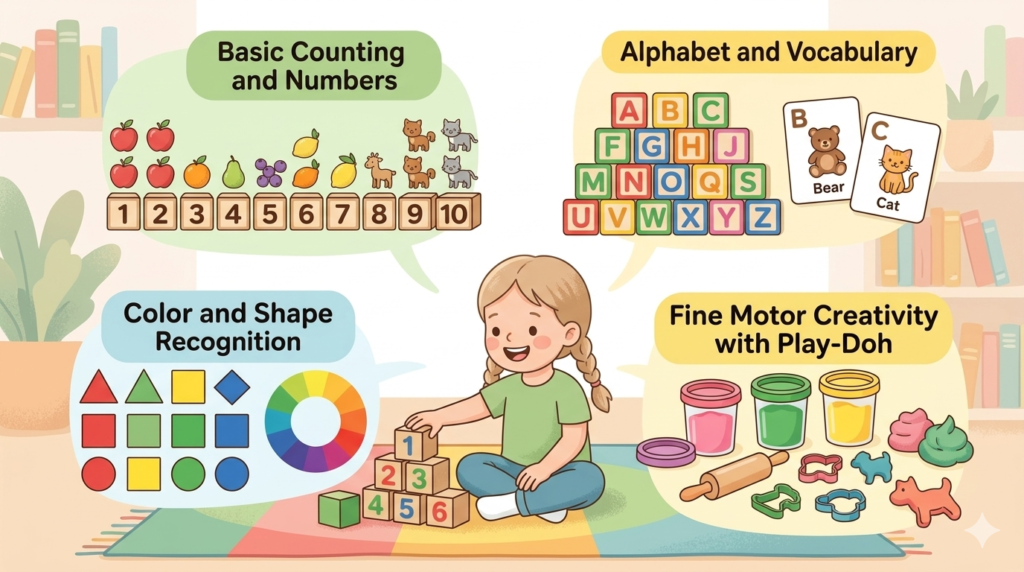
A useful way to evaluate the educational potential is to divide it into four major learning pillars:
| Learning Pillar | Examples |
|---|---|
| STEM & Basic Math | Counting, sorting, shapes, colors |
| Literacy & Vocabulary | Object naming, alphabet songs, storytelling |
| Motor Skills | Crafts, Play-Doh, sorting and manipulating objects |
| Creativity & Social Learning | Pretend play, roleplay, sharing and problem-solving |
This framework makes it easier for parents to identify what the child is actually learning rather than simply assuming that a colorful video is educational.
Can Toddlers Learn Numbers and Counting from Diana and Roma?
Children can encounter basic mathematical concepts through repeated counting, object grouping, number songs, and sorting activities.
Kids Diana Show alphabet and counting content can be especially useful when parents reinforce the lesson away from the screen.
For example, if a character counts three toys, a parent can place three physical toys in front of the child and ask:
“Can you count these?”
This transforms visual exposure into an interactive learning activity.
Similarly, toddler shape sorter and color recognition activities can introduce concepts such as:
- Same vs. different
- Big vs. small
- One vs. many
- Color matching
- Shape identification
- Basic classification
The oversized and brightly colored props often make visual distinctions easier for young children to notice.
How to Use Diana and Roma Videos for Early Vocabulary Building
Language development benefits from repetition, clear labeling, songs, and meaningful conversation.
Preschool vocabulary building videos for children can introduce words for:
- Animals
- Clothing
- Food
- Toys
- Body parts
- Colors
- Numbers
- Everyday actions
Parents can pause after a new word and ask the child to repeat it or find the corresponding object.
For example:
Video: “Apple.”
Parent: “Apple! Can you find an apple?”
This small interaction encourages listening, recognition, speech practice, and memory.
Songs can also support repetition. Diana Roma nursery rhymes and educational songs may make vocabulary easier to remember because rhythm and repetition give children additional memory cues.
Recreating Interactive Toy Unboxing for Learning at Home
Toy-focused videos can become more educational when parents recreate the experience offline.
Instead of simply watching an interactive toy unboxing for learning, give the child a real object and ask them to:
- Identify the object.
- Describe its color.
- Find its matching shape.
- Count its parts.
- Explain what it does.
- Put it away after playing.
For younger children, Play-Doh fine motor skill activities for toddlers can provide a simple hands-on alternative.
Children can roll, flatten, pinch, cut with child-safe tools, and create basic shapes while practicing vocabulary.
Teaching Social Skills, Manners, and Healthy Lifestyle Habits
Educational value isn’t limited to ABCs and numbers.
Pretend-play stories can also provide opportunities to discuss behavior, relationships, and everyday routines.
How Diana and Roma Teach Social Sharing and Playground Etiquette
Children often learn social behavior by observing what others do.
Diana Roma social skills and good manners can be discussed through situations involving:
- Sharing toys
- Waiting for a turn
- Saying please and thank you
- Helping another person
- Resolving disagreements
- Following simple rules
Parents can pause during a conflict and ask:
“What should Diana do next?”
That question turns a passive scene into a social-emotional learning conversation.
How Does Kids Diana Teach Children Healthy Lifestyle Habits?
Everyday routines can be valuable learning themes for preschoolers.
Parents can discuss examples involving:
- Washing hands
- Brushing teeth
- Getting dressed
- Eating fruits and vegetables
- Cleaning toys
- Going to bed on time
- Making healthier food choices
The phrase Kids Diana healthy habits versus junk food can be used as a discussion point rather than a strict lesson.
For example:
“Which foods help our bodies grow?”
The parent can then connect the answer to real food at home.
What Lessons Do Kids Learn from Diana and Roma School Stories?
School-themed pretend play can help make unfamiliar situations feel more predictable.
Early childhood educational pretend play can introduce concepts such as:
- Sitting in a classroom
- Listening to instructions
- Meeting teachers
- Sharing supplies
- Completing simple tasks
- Making friends
- Following routines
Parents can use these stories to prepare children for preschool by connecting fictional situations with real experiences.
Why Do Toddlers Love Watching Kids Diana Pretend Play Videos?
The popularity of pretend-play videos isn’t difficult to understand from a developmental perspective.
Young children are naturally attracted to:
- Bright colors
- Facial expressions
- Music
- Repetition
- Movement
- Familiar objects
- Simple stories
- Costumes
- Surprise and novelty
The Psychology of Visual Edutainment and Roleplay
Early childhood educational pretend play works because it resembles the way children naturally explore the world.
A child may pretend to be a doctor, teacher, parent, shopkeeper, or superhero. Watching characters perform similar roles can provide ideas for their own play.
Meanwhile, play-based learning videos for preschoolers can use short story sequences that are easier for young children to follow than lengthy explanations.
Still, attention-grabbing design should not be confused with educational quality. A video can be highly engaging without teaching much.
That’s why parental interaction remains important.
How to Teach Toddlers Colors Using Diana and Roma Videos
Try this simple activity:
1: Choose a video featuring clearly visible colors.
2: Place several colored objects near your child.
3: Pause when a color appears.
4: Ask, “Which one is red?”
5: Let your child point to or pick up the matching object.
6: Repeat with two or three colors.
This turns toddler shape sorter and color recognition into an interactive experience rather than passive viewing.
Parent’s Quick Reference Checklist: Educational Value Matrix
| Learning Category | Core Educational Focus | Activity Focus | Parent Action |
| Cognitive & Math | Numbers, shapes, colors | Kids Diana Show alphabet and counting | Ask the child to count or match objects |
| Language Development | Vocabulary, rhymes, songs | Preschool vocabulary building | Repeat words and sing together |
| Fine Motor Skills | Crafting and dexterity | Play-Doh activities | Recreate simple shapes offline |
| Social-Emotional | Sharing and manners | Diana Roma social skills and good manners | Discuss character behavior |
| Healthy Habits | Nutrition and routines | Healthy habits themes | Connect stories to daily routines |
The key principle: Don’t measure educational value only by how much a child watches. Measure what the child can do, say, identify, or practice afterward.
How to Recreate Diana and Roma DIY Learning Crafts at Home
The best educational opportunity may actually begin when the video ends.
Hands-On Pretend Play Activities for Off-Screen Time
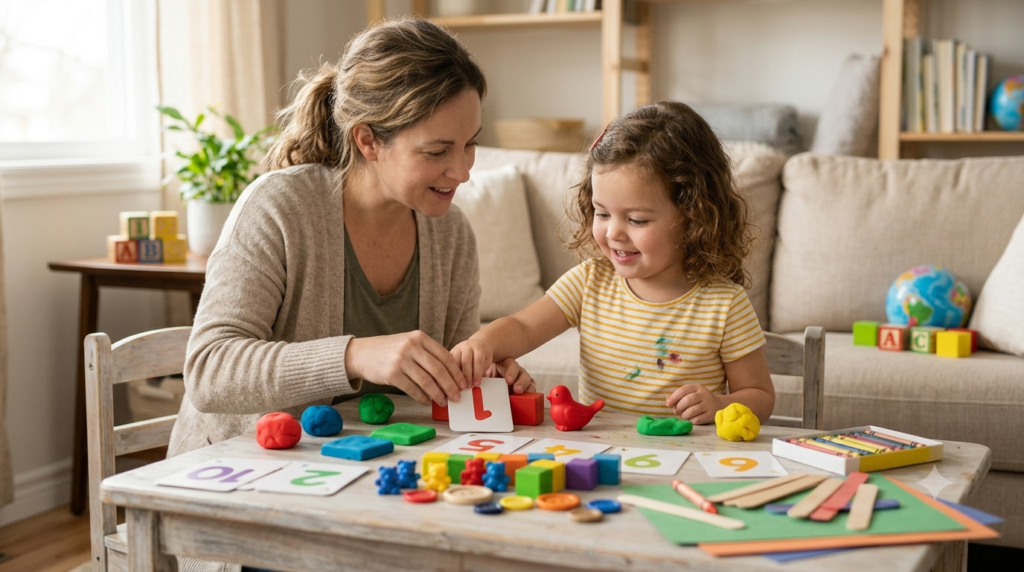
Create a simple 10-minute Diana-inspired learning station.
Step 1: Choose Three Materials
Use safe household materials such as:
- Play-Doh
- Plastic cups
- Large blocks
- Paper
- Crayons
- Large toy shapes
Avoid small objects that could present a choking risk for young children.
Step 2: Pick One Learning Goal
Choose only one:
- Colors
- Shapes
- Counting
- Vocabulary
- Fine motor skills
- Pretend play
Step 3: Start the Activity
For example, give your child three colors of Play-Doh.
Ask them to:
- Name each color.
- Make a ball.
- Make a simple shape.
- Count the shapes.
- Put matching colors together.
Step 4: Add Pretend Play
Turn the activity into a mini story.
“Let’s open a pretend bakery.”
The child can make pretend cookies from Play-Doh, count them, name their colors, and serve them to family members.
This approach transforms screen inspiration into Diana and Roma toddler learning games that involve movement, imagination, communication, and hands-on practice.
Final Verdict: Balancing Kids Diana Videos for Healthy Toddler Development
Kids Diana educational videos can provide useful learning opportunities, but they should not be treated as a replacement for real-world learning.
Their strongest educational features are visual imitation, repetition, storytelling, pretend play, vocabulary exposure, counting, colors, social scenarios, and everyday routines.
The biggest difference comes from how parents use the content.
Passive viewing can provide entertainment and limited exposure to concepts. Active co-viewing can turn the same video into a learning experience by encouraging children to answer questions, repeat words, count objects, identify colors, discuss behavior, and recreate activities offline.
A practical approach is:
Watch → Pause → Ask → Practice → Play offline.
That simple cycle gives toddlers a bridge between digital entertainment and real-world development.
Ultimately, the best role for Kids Diana content is as one small part of a balanced childhood that also includes conversation, physical activity, books, creative play, social interaction, outdoor exploration, and plenty of parent-child time.
Frequently Asked Questions
No. Videos can reinforce basic concepts, but they cannot replace hands-on play, social interaction, physical activity, books, or structured early-childhood education.
Co-viewing is generally more useful than leaving a young child to watch independently. Parents can ask questions, explain unfamiliar words, and connect video concepts with real objects and experiences.
They may provide vocabulary, repetition, songs, and pronunciation examples. However, language development depends heavily on real-world interaction and conversation, not video exposure alone.
Ideally, they should move from watching to doing. Try counting physical objects, sorting colors, making Play-Doh shapes, reading a related book, drawing, or acting out the story together.

“Hi, I am Umer Hasib. I am a passionate blogger and content creator who loves exploring human psychology, social behaviors, and personal growth. Welcome to my inner space!”
Name: Sarah Jenkins This is such a well-structured breakdown! As a parent, it’s always a challenge balancing screen time with actual educational value. I love the point about using their videos as a launching pad for offline Play-Doh and counting activities rather than just passive watching. The checklist section is super helpful for keeping co-viewing intentional!
Thank you so much, Sarah! You hit the nail on the head—turning screen time into an active, hands-on bridge for offline play is really where the magic happens for toddlers. I’m so glad you found the co-viewing checklist helpful!
Name: David Miller
Great insights on early childhood content safety! It’s so easy for toddlers to get absorbed in these colorful pretend-play shows, so having a guide that highlights specific learning outcomes—like shape sorting and vocabulary building—makes a huge difference for caregivers evaluating what’s actually worth showing. Thanks for laying this out so clearly!
Thanks, David! You’re so right—the colorful visuals can be mesmerizing, so focusing on concrete skills like vocabulary and color matching helps turn simple viewing into intentional learning. Appreciate you stopping by and sharing your thoughts!