
SEO Featured Snippet
Looking for a reliable Diana Show parent guide? While Kids Diana Show contains no explicit violence or adult content, its fast-paced editing, exaggerated reactions, and heavy toy-focused themes may affect toddlers’ attention, behavior, and screen habits. Parents can reduce potential risks by limiting screen time, co-viewing, and choosing age-appropriate educational alternatives.
Introduction
Millions of children around the world enjoy watching Kids Diana Show, making it one of YouTube’s most recognizable family entertainment channels. Bright colors, energetic music, imaginative roleplay, and exciting toy adventures attract toddlers and preschoolers almost instantly.
However, many parents eventually ask an important question:
“Is Kids Diana Show actually good for my child?”
This comprehensive Diana Show parent guide examines the show’s age suitability, developmental impact, behavioral concerns, educational value, and practical parenting strategies. Instead of relying on opinions alone, this guide explains both the benefits and limitations so parents can make informed decisions based on their child’s individual needs.
What Is Kids Diana Show?
Kids Diana Show is a family-oriented YouTube channel starring Diana and her family in imaginative roleplay adventures, pretend play, educational games, challenges, songs, and toy-themed stories.
The channel has expanded into multiple languages and reaches millions of viewers worldwide. Besides YouTube videos, the brand includes animated series, toys, mobile games, and licensed merchandise.
Its popularity comes from simple storytelling, expressive acting, colorful visuals, and content that is easy for young children to understand.
Why Children Love the Show
Several characteristics make the channel especially attractive to preschool audiences:
- Bright and colorful visuals
- Repetitive storytelling patterns
- Easy-to-understand English dialogue
- Pretend play scenarios
- Familiar family interactions
- Frequent surprises and exciting discoveries
- Positive background music and sound effects
For young viewers, these elements create entertaining and highly engaging experiences.
Is Kids Diana Show Safe for Toddlers and Preschoolers?
The short answer is:
Generally yes—but with supervision and moderation.
This is one of the most important topics in any Diana Show parent guide because “safe” doesn’t simply mean the absence of inappropriate language or violence.
Parents should also consider:
- Emotional development
- Attention span
- Screen habits
- Consumer influence
- Behavioral imitation
Although Kids Diana Show avoids explicit adult themes, experts often point out that the rapid editing style and exaggerated acting may overstimulate younger viewers.
Content Safety Overview
| Category | Assessment |
|---|---|
| Violence | Very Low |
| Profanity | None |
| Adult Content | None |
| Educational Value | Moderate |
| Commercial Influence | High |
| Fast-Paced Editing | High |
| Parent Supervision | Recommended |
Overall, the channel is considered family-friendly, but not necessarily ideal for unlimited viewing.
Who Is the Target Audience?
Understanding the intended audience helps parents decide whether the content matches their child’s developmental stage.
Kids Diana Show mainly targets children between 2 and 6 years old, although many older children also watch the videos.
The content is designed to entertain rather than provide structured education.
Typical Audience Age
- Toddlers (2–3 years)
- Preschoolers (3–5 years)
- Early elementary children (5–7 years)
Because children develop differently, chronological age alone should not determine whether the content is appropriate.
What Age Is Kids Diana Show Appropriate For?
One of the most searched questions online is about the Kids Diana Show age rating.
There is no official medical or educational rating, so parents should evaluate the content according to their child’s maturity, attention span, and viewing habits.
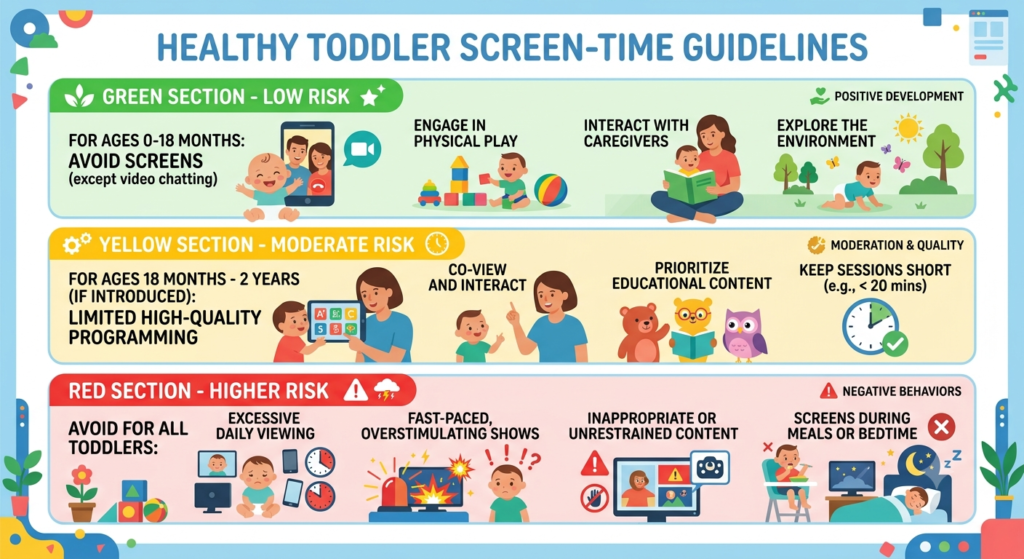
Ages 0–2: Not Recommended
Most pediatric experts recommend avoiding fast-paced online entertainment for infants.
Possible concerns include:
- Difficulty processing rapid scene changes
- Increased screen dependency
- Reduced face-to-face interaction
- Limited language development from passive viewing
Children under two generally benefit much more from direct interaction with caregivers than digital entertainment.
Ages 3–5: Watch Together
Preschool-aged children often enjoy Diana’s imaginative adventures, but this age group also imitates behaviors very easily.
Parents should:
- Watch together whenever possible.
- Explain the difference between pretend play and real life.
- Encourage conversations about kindness and sharing.
- Limit viewing sessions.
Co-viewing transforms entertainment into a valuable learning opportunity.
Ages 6 and Above: Lower Developmental Risk
Older children typically recognize scripted entertainment more easily.
Many children in this age group understand that:
- Videos are planned.
- Reactions are exaggerated.
- Toys shown are promotional.
- Real families do not behave exactly the same way.
Although supervision remains helpful, older viewers are generally better equipped to distinguish fantasy from reality.
Why Do Parents Have Mixed Opinions About Kids Diana Show?
Not every family has the same experience with the channel.
Some parents appreciate:
Positive Experiences
- Encourages imaginative play
- Introduces simple English vocabulary
- Promotes pretend storytelling
- Entertains children during short breaks
- Sparks creative roleplay after watching
Others notice different outcomes.
Common Concerns
Some parents report:
- More whining after viewing
- Increased requests for new toys
- Difficulty stopping screen time
- Shorter attention spans
- Imitating exaggerated reactions
It’s important to remember that these experiences vary widely. A child’s temperament, total daily screen time, family routines, and parental involvement all influence how media affects behavior.
What Makes Kids Diana Show So Engaging?
Understanding why children enjoy the channel helps parents manage viewing habits more effectively.
Several design elements naturally capture young attention:
Bright Visual Stimulation
The videos use vibrant colors, large props, and visually exciting backgrounds that are highly appealing to young viewers.
Fast Scene Changes
Quick editing keeps children focused by introducing something new every few seconds.
Repetition
Repeated phrases, familiar characters, and predictable story patterns help young children follow along.
Pretend Play
Many episodes revolve around imaginative adventures that inspire children to create their own games after watching.
Toy-Centered Stories
Toys frequently play a central role in the videos, making the content exciting while also increasing children’s interest in similar products.
Why This Matters for Parents
The goal isn’t necessarily to avoid Kids Diana Show completely. Instead, parents should understand how different types of content can influence young viewers and use that knowledge to create healthy viewing habits.
Watching together, discussing what happens on screen, and balancing entertainment with offline play can help children enjoy digital content without becoming overly dependent on it.
Behavioral Impact: Why Some Parents Are Concerned
As Kids Diana Show has grown into one of the world’s largest children’s YouTube channels, discussions among parents, educators, and child development specialists have also increased. While many families enjoy the videos without major issues, others report noticeable changes in their children’s behavior after frequent viewing.
It’s important to remember that watching a single video does not automatically cause behavioral problems. Children’s responses vary depending on their age, personality, screen time habits, and parental guidance.
Why Do Some Parents Dislike Kids Diana Show?
One of the most searched topics related to the Diana Show parent guide is why some parents choose to limit or avoid the channel.
The concerns usually focus on the presentation style rather than inappropriate content.
Common Reasons Parents Mention
- Frequent exaggerated emotional reactions
- Loud sound effects and energetic editing
- Heavy emphasis on toys and shopping
- Unrealistic family situations
- Fast-paced storytelling that rarely slows down
Parents who notice behavioral changes often say these patterns become noticeable after repeated viewing over time.
How Children Sometimes Imitate On-Screen Behavior
Exaggerated Reactions on Screen
            │
            ▼
 Toddler Watches Repeatedly
            │
            ▼
 Child Copies Expressions
            │
            ▼
 Uses Same Behavior at Home
            │
            ▼
 Parents Correct and Redirect
Young children naturally learn through observation. If they frequently see dramatic reactions, they may copy those behaviors during play or daily interactions.
This imitation is a normal part of childhood development and is not unique to Kids Diana Show.
Does Watching Kids Diana Show Cause Behavioral Problems?
Current research on children’s media suggests that content alone rarely determines behavior. Instead, several factors work together:
- Total daily screen time
- Adult supervision
- Child temperament
- Sleep quality
- Family routines
- Opportunities for active play
However, some experts believe that highly stimulating videos may make it harder for certain young children to transition back to slower real-world activities.
Possible Short-Term Effects
Some parents report:
- Resistance when screen time ends
- Increased whining
- More excitement before bedtime
- Greater difficulty focusing immediately afterward
These effects are not universal and often improve when families establish consistent screen-time limits.
Can Fast-Paced Videos Affect Attention?
Fast editing is common across many children’s online videos—not only Kids Diana Show.
Rapid scene changes may:
- Keep children highly engaged
- Increase excitement levels
- Make slower activities feel less interesting immediately afterward
This does not mean the videos permanently damage attention spans. Rather, many child development experts recommend balancing digital entertainment with activities such as:
- Reading books
- Outdoor play
- Building blocks
- Drawing
- Pretend play
- Family conversations
A healthy balance supports overall development.
Why Do Some Children Demand More Toys After Watching?
Another topic often discussed in any Diana Show parent guide is children’s growing interest in toys featured in videos.
Many episodes include:
- New playsets
- Costumes
- Ride-on vehicles
- Dollhouses
- Surprise toys
- Roleplay accessories
Young children naturally become interested in objects they repeatedly see.
Why This Happens
Children under six are still developing the ability to distinguish entertainment from advertising or product promotion.
They often think:
“If Diana has this toy, I need it too.”
Parents may notice:
- More requests while shopping
- Asking for specific branded toys
- Comparing their toys with those seen online
These reactions are common among preschool-aged children across many toy-centered YouTube channels.
Encouraging Healthy Consumer Habits
Instead of buying every requested item, parents can encourage creativity.
For example:
Rather than purchasing a new toy kitchen, children can create one using:
- Cardboard boxes
- Plastic bowls
- Wooden spoons
- Paper food
- Recycled containers
This approach promotes imagination while reducing dependence on new products.
Is Kids Diana Show Real or Scripted?
Many younger children believe the videos show completely natural family life.
In reality, Kids Diana Show is professionally produced entertainment.
Behind the Scenes
Videos typically include:
- Planned storylines
- Multiple camera angles
- Professional editing
- Background music
- Visual effects
- Costume changes
- Production teams
Understanding this difference helps older children become more media literate.
Parents can explain:
“This is a fun story, just like a TV show. Real families don’t usually live exactly this way.”
That simple conversation helps children separate fantasy from reality.
The Role of Toy Unboxing and Commercial Content
Modern children’s media often combines storytelling with product marketing.
Kids Diana Show sometimes features:
- Toy reviews
- Pretend shopping
- Gift surprises
- Product-themed adventures
- Brand partnerships
While these videos remain entertaining, parents should recognize that they may also encourage interest in commercial products.
Psychological Effects
| On-Screen Element | Possible Effect on Young Children |
|---|---|
| New toy reveals | Increased excitement about buying toys |
| Surprise gifts | Expectation of frequent rewards |
| Luxury playsets | Unrealistic expectations |
| Constant novelty | Reduced appreciation for existing toys |
| Product-focused stories | Greater interest in branded merchandise |
None of these automatically harm children, but moderation and discussion are important.
Are Love Diana Cartoons Better Than the Original Videos?
Many parents also ask whether the animated Love Diana series is a better choice.
Animation changes the viewing experience in several ways.
Advantages
- Clearer storylines
- More structured episodes
- Less real-life imitation
- Fantasy settings are easier to recognize
Possible Drawbacks
The cartoons still feature:
- Bright visual effects
- Fast pacing
- Merchandise connections
- Character-based product branding
Although some families prefer the animated version, screen-time recommendations remain the same.
Does Kids Diana Show Have Educational Value?
A balanced Diana Show parent guide should also recognize the channel’s strengths.
Despite criticism, the show offers several positive learning opportunities when viewed in moderation.
Language Development
Children may hear:
- Simple English words
- Everyday conversations
- Basic questions and answers
- Repetitive vocabulary
This repetition can help English learners become familiar with common expressions.
Imaginative Play
Many episodes encourage:
- Dress-up games
- Family roleplay
- Pretend cooking
- Doctor games
- Outdoor adventures
Parents can extend learning by recreating these activities offline.
Color, Shape, and Object Recognition
Young viewers are exposed to:
- Bright colors
- Numbers
- Everyday objects
- Basic sorting concepts
Although not a structured educational curriculum, these elements support early recognition skills.
Social Learning Opportunities
When parents watch alongside children, videos become conversation starters.
Questions such as:
- “Was Diana being kind?”
- “What could she have done differently?”
- “How would you solve that problem?”
help children develop critical thinking and emotional awareness.
Development Experts Recommend Balance
Most child development professionals agree on one key idea:
The quality of screen time matters just as much as the quantity.
Instead of relying on videos alone, children benefit most from a balanced routine that includes:
- Outdoor play
- Reading together
- Creative activities
- Family conversations
- Independent play
- Limited, high-quality screen time
Kids Diana Show can fit into that balance when parents stay involved and establish healthy boundaries.
Parent Guide: Healthy Screen Time & Better Viewing Habits
Watching Kids Diana Show occasionally is unlikely to be harmful for most children when parents stay involved. The real goal of this Diana Show parent guide is not to eliminate entertainment but to build healthy digital habits that support learning, creativity, and emotional development.
Parents can reduce potential risks by setting clear boundaries, choosing age-appropriate content, and encouraging plenty of offline play.
How Much Kids Diana Show Is Too Much?
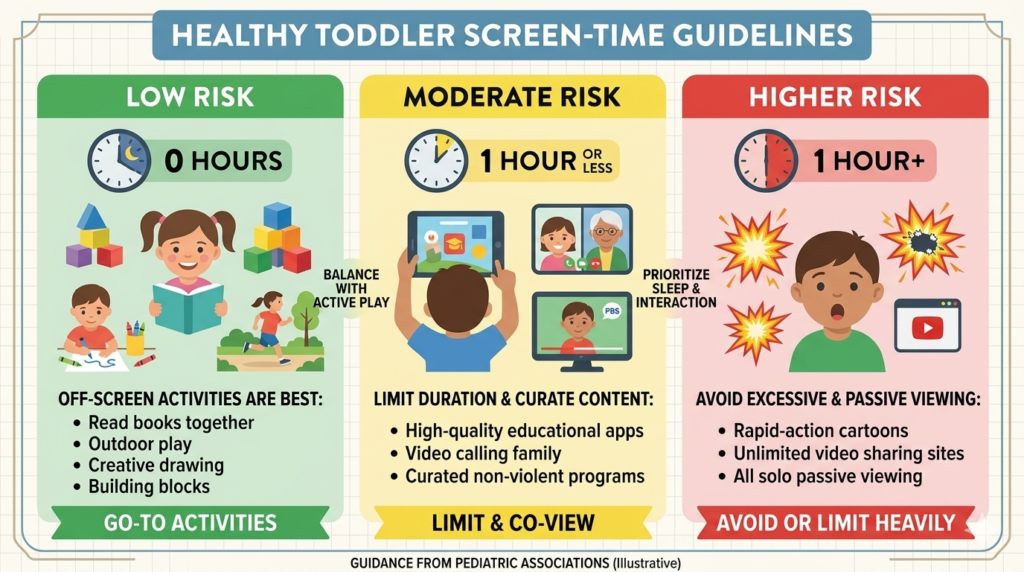
There is no universal number that works for every child. However, many pediatric organizations recommend keeping recreational screen time limited for preschool-aged children and focusing on high-quality content.
Suggested Viewing Guidelines
0–15 Minutes
✔ Low Risk
• Easy transition away from screens
• More time for creative play
• Minimal overstimulation

15–30 Minutes
⚠ Moderate Risk
• May ask for more videos
• Mild resistance when stopping
• Requires parental guidance

30+ Minutes
❗ Higher Risk
• Increased screen dependence
• More difficulty transitioning
• Greater chance of copying on-screen behaviors
Healthy Viewing Tips
- Limit viewing to one short session at a time.
- Watch together whenever possible.
- Take movement breaks after videos.
- Encourage outdoor activities afterward.
- Avoid screen time immediately before bedtime.
- Talk about what happened in the video.
These simple habits help children enjoy entertainment without making it the center of their daily routine.
How to Block Kids Diana Show on YouTube Kids
If you decide the channel is not the right fit for your child, YouTube Kids provides parental controls that allow you to block specific channels.
Step-by-Step Instructions
- Open the YouTube Kids app.
- Sign in using your parent account.
- Find Kids Diana Show.
- Tap the three-dot menu.
- Select Block this channel.
- Confirm your choice.
- Protect settings with your parental passcode.
You can repeat these steps for similar channels if needed.
How to Reduce Similar Recommendations
Even after blocking a channel, recommendation algorithms may suggest similar content.
Parents can improve recommendations by:
- Turning on Approved Content Only mode.
- Clearing watch history occasionally.
- Removing videos from viewing history.
- Personally approving trusted educational channels.
- Reviewing recommendations every few weeks.
These settings give parents much greater control over what young children watch.
Better Alternatives to Kids Diana Show
If you’re looking for slower-paced, educational, and less commercial content, several excellent options are available.
1. Daniel Tiger’s Neighborhood
Why parents love it:
- Emotional learning
- Kindness
- Problem-solving
- Friendship skills
- Calm storytelling
2. PBS KIDS
Excellent for:
- Reading readiness
- Science
- Math
- Creativity
- Social development
3. Bluey
This popular family series encourages:
- Imaginative play
- Parent-child interaction
- Humor
- Emotional intelligence
- Healthy family relationships
4. Numberblocks
Ideal for children learning:
- Counting
- Basic mathematics
- Number recognition
- Logical thinking
5. Alphablocks
Perfect for:
- Letter sounds
- Early reading
- Vocabulary building
- Phonics skills
6. Tumble Leaf
A slower-paced series that encourages:
- Curiosity
- Exploration
- Creative thinking
- Problem-solving
- Hands-on learning
These alternatives focus more on learning, imagination, and emotional development than constant product-focused entertainment.
Practical Tips for Parents
This Diana Show parent guide recommends building healthy media habits rather than relying only on restrictions.
Before Watching
- Choose videos together.
- Set a time limit.
- Explain the rules before starting.
During Watching
- Watch alongside your child.
- Ask simple questions.
- Point out positive behaviors.
- Explain when characters make poor choices.
After Watching
Encourage children to recreate the story using:
- Building blocks
- Dolls
- Art supplies
- Outdoor games
- Dress-up clothes
- Family roleplay
Turning screen inspiration into real-world play helps children develop creativity instead of passive viewing habits.
Final Verdict
Kids Diana Show remains one of the most popular children’s YouTube channels because it is colorful, entertaining, and easy for young viewers to follow. It generally avoids inappropriate language, violence, and adult themes, making it family-friendly on the surface.
However, this Diana Show parent guide also highlights important considerations. The channel’s fast-paced editing, exaggerated reactions, and frequent focus on toys may not suit every toddler or preschooler. Some children may become overstimulated, imitate dramatic behaviors, or ask for products they see on screen.
Rather than banning the show completely, parents can often achieve better results by setting reasonable screen-time limits, watching together, discussing what they see, and balancing digital entertainment with reading, outdoor activities, creative play, and family interaction.
Ultimately, parents know their children best. By observing how your child responds and adjusting viewing habits accordingly, you can create a healthier and more positive media experience.
Frequently Asked Questions (FAQs)
Yes. The videos use simple vocabulary and repetitive phrases that may support basic English listening skills. However, they should supplement—not replace—interactive learning through books, conversation, and educational activities.
The videos themselves may include toy-focused content or branded products. Young children often cannot distinguish entertainment from marketing, so parental guidance is recommended.
Yes. Co-viewing allows parents to explain behaviors, answer questions, reinforce positive lessons, and help children separate pretend stories from real-life situations.
Create a consistent routine by giving advance warnings, ending videos at the same time each day, and transitioning to enjoyable offline activities like puzzles, coloring, or outdoor play.

“Hi, I am Umer Hasib. I am a passionate blogger and content creator who loves exploring human psychology, social behaviors, and personal growth. Welcome to my inner space!”
Name: Diana S.
This is such a balanced and well-explained breakdown! We noticed a huge shift in our 3-year-old’s behavior after she started watching Diana and Roma—mostly the exaggerated whining and constant demands for new toys. It’s so easy for kids to fall into those overstimulation loops. Switching over to Bluey and Daniel Tiger made a world of difference for us. Thanks for including the step-by-step guide on how to block channels and turn off auto-recommendations on YouTube Kids, that was super helpful!
Hi Diana,
Thanks for stopping by and leaving such a great comment! You hit the nail on the head—those overstimulation loops happen so fast, and the unboxing theme really drives that “I want new toys” mindset. Kudos to you for making the shift to Bluey and Daniel Tiger! They are absolute gold standards for toddler viewing. Hope the blocking settings keep your YouTube Kids feed hassle-free!
Cheers,
[Umer Hasib]
Name: Mark Thompson
Spot on about the unboxing aspect. It really does feel like a continuous commercial disguised as play! I didn’t realize how much the fast pacing and rapid cuts affected attention spans until reading this outline. The screen-time risk chart is a great visual reference. We’ve recently set a strict 15-minute cap and switched to “Approved Content Only” mode, and it’s taken away so much of the screen-time drama in our house. Great guide for modern parents!
Hi Mark,
Spot on! The rapid cuts and unboxing themes can affect young attention spans far more than most people realize. It’s fantastic to hear that switching to “Approved Content Only” and capping the time at 15 minutes has cut down the screen-time drama for your family. Thanks for reading and sharing your experience!
Warmly,
[Umer Hasib]