

Spiritual intelligence is the ability to balance intellect, intuition, and self-awareness in daily life and leadership. It helps people make wiser choices by combining logic with inner guidance, while avoiding cognitive bias and impulsive gut reactions. Practices like reflective mindfulness, pattern recognition, and the 10-10-10 rule strengthen mindful decision-making.
What Is Spiritual Intelligence and Why Does It Matter in 2026?
Spiritual intelligence is the ability to understand yourself deeply, listen to your inner guidance, and make decisions that are aligned with truth, purpose, and awareness. It is not about being perfect or overly mystical. It is about becoming wise enough to know when to think, when to feel, and when to pause.
In 2026, spiritual intelligence matters more than ever because people are surrounded by information but still struggle with clarity. We have more data, more opinions, and more pressure than ever before. Yet many decisions still feel confusing. Spiritual intelligence helps bridge that gap by combining logic with meaning.
It allows a person to live with both structure and soul.
How spiritual intelligence differs from emotional intelligence
Emotional intelligence helps you understand emotions. Spiritual intelligence goes a step deeper. It helps you understand purpose, values, inner truth, and the bigger picture behind your emotions.
A person can be emotionally aware and still make choices that feel empty. Spiritual intelligence asks a more powerful question:
“Is this decision aligned with who I truly am?”
Why modern life needs both logic and intuition
Too much logic can make life cold and rigid. Too much intuition without reflection can make life impulsive and unstable. Spiritual intelligence is the balance between the two.
It helps you think clearly without becoming disconnected from your inner self.
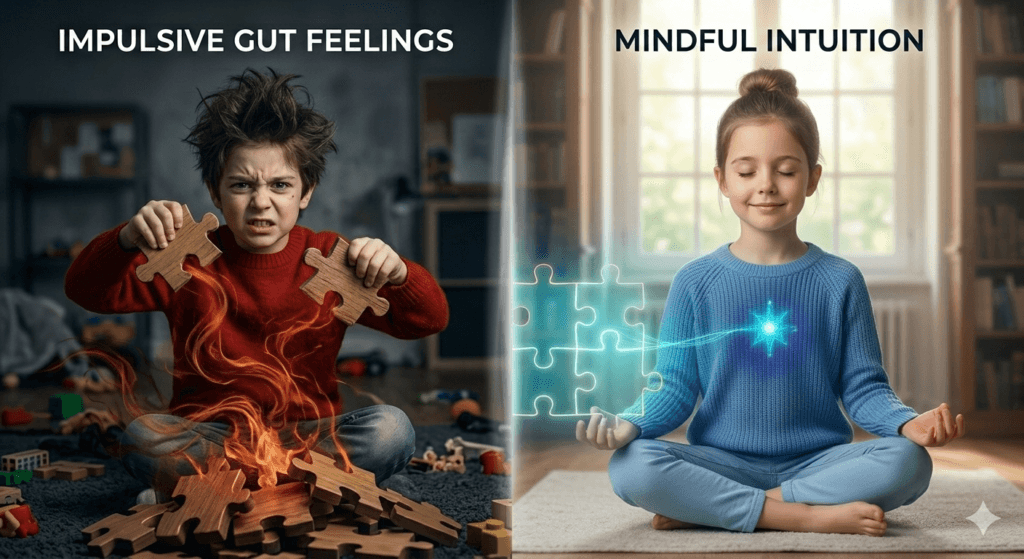
Difference Between Impulsive Gut Feelings and Mindful Intuition
One of the most important parts of spiritual intelligence is learning the difference between impulsive gut feelings and mindful intuition.
Many people confuse the two, but they are not the same.
What impulsive feelings usually feel like
Impulsive gut feelings usually appear fast. They are often driven by fear, insecurity, pride, or anxiety. They can feel intense, but intensity does not always mean truth.
For example, you may want to reject an opportunity immediately because it feels uncomfortable. That may be intuition—or it may be fear.
How mindful intuition develops over time
Mindful intuition does not rush. It becomes stronger when you slow down and listen carefully.
It often feels calm, quiet, and steady. It may not shout, but it keeps returning with clarity.
Why slowing down improves inner clarity
When you pause, you give your mind time to separate emotion from insight. That is why mindful intuition is more reliable than reactive instinct.
Developing Spiritual Intelligence Through Reflective Mindfulness Practices
Spiritual intelligence grows through reflection, stillness, and honest self-awareness.
This is where mindfulness becomes powerful.
Mindfulness as a tool for inner listening
Mindfulness helps you observe your thoughts instead of being controlled by them. It creates space between a feeling and a reaction.
In that space, wisdom can enter.
Reflection, silence, and self-awareness
A reflective mind asks questions like:
- Why do I feel this way?
- Is this thought true or just familiar?
- What is my deeper fear?
- What choice will help me grow?
These questions strengthen spiritual maturity.
Daily habits that strengthen spiritual clarity
You can build spiritual intelligence through small habits:
- journaling after stressful events
- sitting quietly for a few minutes each day
- noticing emotional triggers
- asking yourself what values guide your choices
These habits train the mind to become calmer and wiser.
Applying the 10-10-10 Rule to Synchronize Intellect and Intuition
The 10-10-10 rule is a simple decision-making method that helps synchronize intellect and intuition.
It asks:
- How will I feel about this decision in 10 minutes?
- How will I feel in 10 months?
- How will I feel in 10 years?
This rule is useful because it stops you from making decisions based only on temporary emotion.
What the 10-10-10 rule means
The rule creates perspective. It pulls you out of the emotional moment and forces you to see the long-term cost and value of a choice.
How it helps in emotional and practical decisions
When used properly, it can help in:
- relationships
- career choices
- leadership decisions
- conflict resolution
- financial planning
It is especially useful when your logic says one thing but your emotions say another.
Using it in real-life situations
For example, if you are upset and want to send an angry message, ask:
- How will I feel in 10 minutes?
- How will I feel after the relationship changes?
- How will I feel about my response later in life?
That pause can save you from regret.
Using Interoceptive Awareness to Validate Complex Logical Assumptions
Interoceptive awareness means noticing signals from inside your body, such as breath, tension, heartbeat, or stomach discomfort.
This is one of the most underrated tools in spiritual intelligence.
What interoceptive awareness is
Your body often reacts before your mind fully understands something. Sometimes your stomach tightens when something feels off. Sometimes your breathing changes when you are under hidden stress.
These signals matter.
How the body signals truth and stress
Your body can help validate whether a decision is aligned or forced. If you feel calm, grounded, and clear, your logic and intuition may be working together. If you feel tense, heavy, or scattered, something may need more reflection.
Why inner body awareness improves judgment
People often ignore body signals and later regret it. Interoceptive awareness brings the body back into the decision-making process, where it belongs.
It helps you ask not only, “Does this make sense?” but also, “Does this feel right in my body?”

The Impact of Cognitive Bias on Intuitive Intelligence in the Workplace
In the workplace, intuition can be helpful—but it can also be distorted by cognitive bias.
Bias is what happens when the mind takes shortcuts and treats assumptions like facts.
Common workplace biases that distort intuition
Some common biases include:
- confirmation bias
- halo effect
- fear-based thinking
- overconfidence
- group pressure
These can make a person feel “intuitively sure” when they are actually just repeating a pattern.
How bias affects leadership and team decisions
A leader may trust the wrong person because they remind them of someone familiar. Or they may reject a good idea because it challenges their comfort zone.
That is why spiritual intelligence must include self-checking.
Ways to stay objective without losing intuition
Good leaders do not silence intuition. They test it.
They compare inner feelings with evidence, feedback, and outcomes. That balance reduces blind spots.
Balancing Analytical Logic With Intuitive Decision-Making in Leadership
Great leadership is not only about data. It is also about timing, people, and awareness.
When leaders should trust data
Data is important when decisions involve:
- budgets
- performance
- measurable outcomes
- risk analysis
Logic keeps leadership grounded.
When leaders should trust intuition
Intuition matters when:
- the facts are incomplete
- people’s emotions are involved
- timing is critical
- experience reveals patterns the data cannot capture
In these moments, intuition often fills the gap that logic cannot yet explain.
How balanced leaders make stronger choices
The strongest leaders do not pick one side. They use both. They let logic provide structure and intuition provide direction.
That is a mark of spiritual intelligence.
The Role of Pattern Recognition in Developing Professional Intuition
Pattern recognition is the ability to notice repeated behavior, outcomes, or signals over time.
It is one of the strongest foundations of professional intuition.
How experience teaches the brain patterns
As people gain experience, they begin to notice things faster. A problem starts to look familiar before the full facts are even clear.
This is not magic. It is pattern recognition.
Why pattern recognition supports smart decisions
Experienced professionals often make strong decisions because their brain is recognizing patterns it has seen before.
This can be incredibly useful in leadership, teaching, counseling, and management.
The danger of assuming patterns too quickly
But there is a risk. Sometimes the mind sees a pattern that is not really there. That is why pattern recognition must be paired with humility and observation.
Spiritual intelligence does not mean being certain too fast. It means staying aware.
Conclusion:
Spiritual intelligence is one of the most valuable inner skills a person can develop in 2026. In a world that moves quickly and rewards instant reactions, spiritual intelligence invites a different way of living—one rooted in awareness, reflection, and wisdom.It teaches us that decisions do not have to come only from logic or only from feeling. The best decisions often come from the harmony between both.
Tools like the 10-10-10 rule help synchronize intellect and intuition by adding perspective to your choices. Interoceptive awareness helps you understand how your body responds to truth, stress, and alignment. In the workplace, awareness of cognitive bias protects you from making decisions that are emotionally convenient but spiritually empty. In leadership, balancing analytical logic with intuitive decision-making creates stronger, more trustworthy outcomes. And through pattern recognition, professional intuition becomes sharper, because experience begins to speak with quiet confidence.
In the end, spiritual intelligence is about learning how to trust yourself without becoming careless, and how to think clearly without becoming disconnected from your soul. That balance is rare, but it is also deeply human. And the more you practice it, the more your life begins to feel aligned, grounded, and meaningful.
FAQs
1. Can spiritual intelligence be developed at any age?
Yes. Spiritual intelligence can grow at any age through mindfulness, self-reflection, and conscious decision-making.
2. How do I know if my intuition is real or just fear?
Fear feels urgent, tense, and restless. Mindful intuition usually feels calmer, steadier, and more grounded.
3. Why is cognitive bias dangerous in leadership?
Because it can make leaders trust assumptions instead of evidence, which often leads to poor decisions and unfair judgments.

“Hi, I am Umer Hasib. I am a passionate blogger and content creator who loves exploring human psychology, social behaviors, and personal growth. Welcome to my inner space!”